Choosing the best fabric for bags starts with understanding what the finished bag needs to do. A lightweight drawstring pouch, reusable shopping tote, velvet jewelry pouch and nylon crossbody bag may all be classified as fabric bags, but they require very different material properties.
Fabric selection affects more than appearance. It can influence the bag’s structure, hand feel, weight, durability, print quality, sewing requirements, shrinkage, packing volume and cost.
For this reason, the best fabric should not be selected by material name alone. A more useful approach is to evaluate the complete specification:
Fiber → Fabric Construction → GSM or Yarn Specification → Surface → Bag Construction → Intended Use
Quick Answer: There is no single best fabric for every bag. Cotton is versatile and suitable for many lightweight bags, while canvas provides a more substantial structure for totes and reusable bags. Linen and cotton-linen blends provide a distinctive natural texture, satin creates a smooth and lustrous appearance, and velvet provides a soft pile surface for jewelry and gift pouches. Polyester and nylon are useful when functional performance, lightweight construction or specific technical properties are required. The final choice should also consider fabric weight, weave, printing, sewing and the finished bag structure.
Best Fabrics for Bags at a Glance
| Fabric | Typical Character | Structure | Logo Compatibility | Common Bag Applications |
|---|---|---|---|---|
| Cotton | Soft, natural, versatile | Light to medium | Screen printing, transfer, embroidery | Totes, drawstring bags, dust bags, gift bags |
| Canvas | Dense, substantial | Medium to high | Screen printing, embroidery, transfer | Tote bags, shopping bags, crossbody bags |
| Linen | Natural, textured | Light to medium | Printing and embroidery depending on surface | Gift bags, pouches, wine bags |
| Cotton-Linen Blend | Natural with balanced hand feel | Light to medium | Printing, embroidery | Pouches, gift bags, lifestyle packaging |
| Satin | Smooth, lustrous, drapable | Low | Printing, transfer and other compatible methods | Jewelry, cosmetics, gift pouches |
| Velvet | Soft pile, tactile | Medium | Embroidery and selected printing/transfer methods | Jewelry pouches, gift bags, luxury packaging |
| Polyester | Versatile synthetic fabric | Varies widely | Depends on fabric construction | Drawstring, promotional and functional bags |
| Nylon | Lightweight and functional | Varies widely | Depends on coating and surface | Crossbody bags, backpacks, functional bags |
This table describes general characteristics rather than fixed performance specifications. Fabrics within the same material family can vary substantially according to yarn, weave, GSM, finishing and other production variables.
What Makes a Fabric Suitable for Bags?
A fabric that looks attractive is not automatically suitable for a particular bag.
Before selecting a material, consider at least six factors.
1. Structure
Should the finished bag:
fold flat,
drape naturally,
hold its shape,
stand upright,
or remain soft around the product?
A lightweight cotton pouch and a structured canvas tote require very different fabric behavior.
2. Weight
Fabric weight affects hand feel, opacity, structure, material consumption and shipping weight.
For many woven fabrics, weight is expressed in:
GSM — grams per square meter
Canvas may also be specified in:
oz/yd² — ounces per square yard
However, GSM should not be used as the only measure of quality or strength.
3. Surface Texture
Surface texture affects both appearance and branding.
A logo printed on smooth cotton may reproduce differently on:
coarse canvas,
textured linen,
pile velvet,
or glossy satin.
The material and logo method should therefore be selected together.
4. Durability
The required durability depends on the application.
A small jewelry pouch does not need the same structural performance as a reusable shopping tote.
Durability can be influenced by:
Fiber + Yarn + Weave + Fabric Weight + Seams + Stitching + Handle Construction
5. Sewing and Construction
Some fabrics fold and sew easily, while others may require additional attention to:
edge finishing,
seam construction,
lining,
reinforcement,
needle selection,
or fabric stabilization.
6. Intended Product
The contents should always be considered.
A fabric suitable for a cosmetic pouch may not be suitable for carrying bottles, books or heavier retail products.
Cotton Fabric for Bags
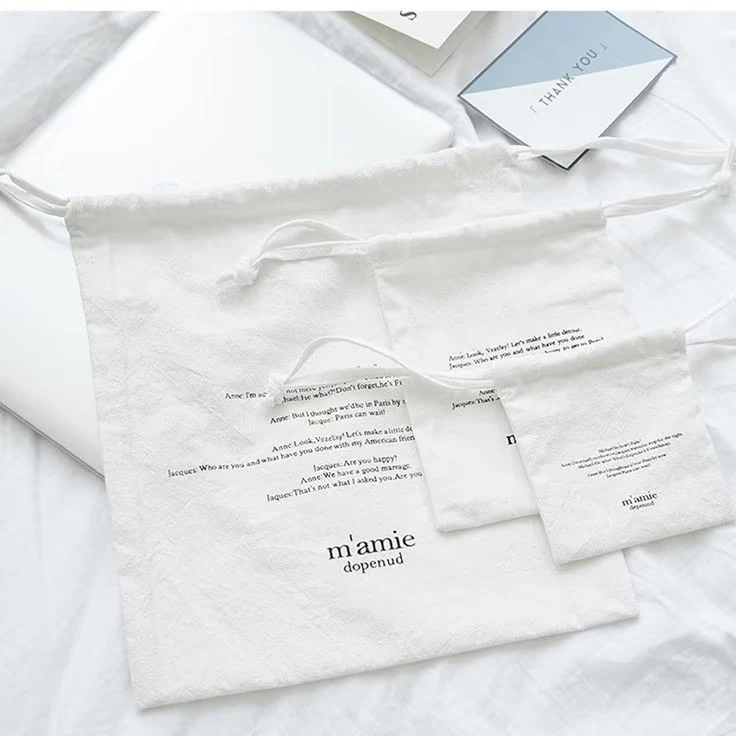
Cotton is one of the most versatile materials used for fabric bags.
Its characteristics can vary considerably depending on how the cotton yarn is woven and finished.
Cotton fabrics may be:
lightweight or heavyweight,
tightly or loosely woven,
natural or dyed,
washed or unwashed,
smooth or textured,
soft or relatively structured.
This is why specifying only “100% cotton” does not provide enough information to define a bag.
Common Cotton Bag Applications
Cotton can be used for:
tote bags,
drawstring bags,
dust bags,
shoe bags,
garment bags,
gift bags,
promotional bags,
and product packaging.
Lightweight cotton can provide a soft and foldable structure, while heavier cotton fabrics can create a more substantial bag.
Advantages of Cotton
Depending on the specific fabric, cotton can provide:
a natural hand feel,
good print compatibility,
good foldability,
a wide range of fabric weights,
multiple weave options,
and a versatile appearance.
What to Check When Specifying Cotton
Instead of requesting simply:
100% cotton bag
a more useful specification includes:
Fiber Content + GSM + Weave / Fabric Type + Color + Finish
For example:
100% cotton, 200 GSM, plain weave, natural color
provides considerably more production information.
Canvas Fabric for Bags
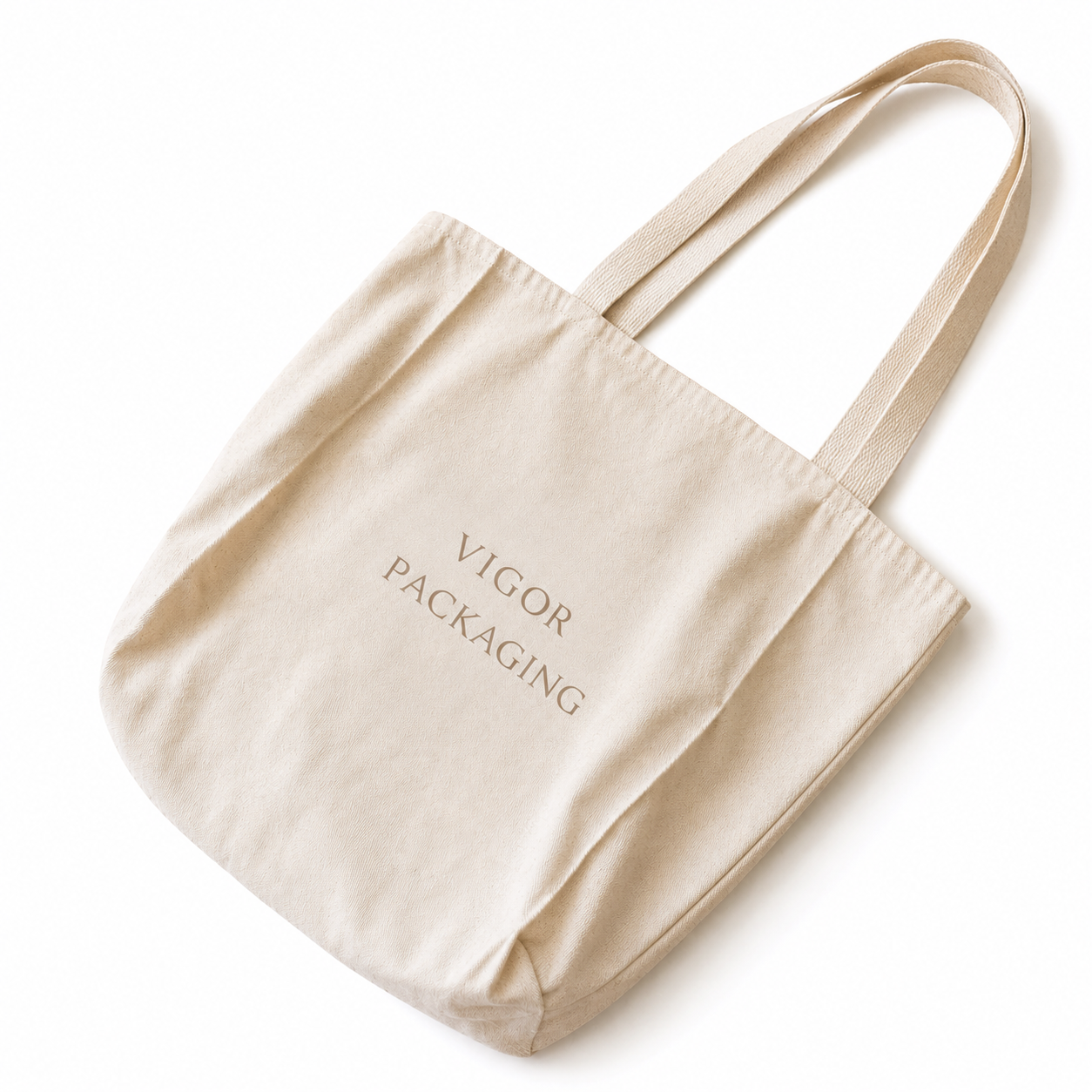
Canvas is one of the most common materials for tote bags and other reusable fabric bags.
One important distinction is:
Cotton and canvas are not necessarily two different material categories.
Cotton describes a fiber, while canvas describes a type of fabric construction traditionally associated with a strong, relatively dense weave.
Canvas can therefore be made from cotton as well as other fibers or blends.
This is why a supplier may describe a material as:
100% cotton canvas
without any contradiction.
Why Canvas Is Popular for Bags
Depending on its weight and construction, canvas can provide:
a substantial hand feel,
good dimensional stability,
a useful printing surface,
stronger visual structure,
and suitability for repeated-use bags.
Common applications include:
tote bags,
shopping bags,
boat totes,
crossbody bags,
zipper bags,
and other lifestyle products.
Not All Canvas Is Heavy
The term canvas does not define one fixed GSM.
Different canvas fabrics can have very different:
weights,
densities,
thicknesses,
stiffness,
surfaces,
and hand feels.
Therefore:
Canvas ≠ One Standard Fabric
When sourcing canvas bags, always specify or confirm the actual fabric construction and weight.
Cotton vs Canvas: What Is the Difference?
This comparison is common in bag sourcing, but it can be misleading if interpreted too literally.
Cotton is a fiber.
Canvas is a fabric construction that is often made from cotton.
In commercial bag sourcing, however, buyers often use cotton bag to describe a relatively lightweight woven cotton bag and canvas bag to describe a heavier or more substantial woven bag.
Under that practical definition:
| Feature | Lightweight Cotton Bag | Cotton Canvas Bag |
|---|---|---|
| Hand Feel | Softer, lighter | More substantial |
| Structure | More flexible | Usually more structured |
| Foldability | High | Depends on weight |
| Material Consumption | Lower | Usually higher |
| Shipping Volume/Weight | Usually lower | Usually higher |
| Typical Use | Promotions, packaging, light carry | Retail, reusable totes, lifestyle bags |
| Printing | Often suitable | Often suitable; surface texture matters |
The actual specification remains more important than the product name.
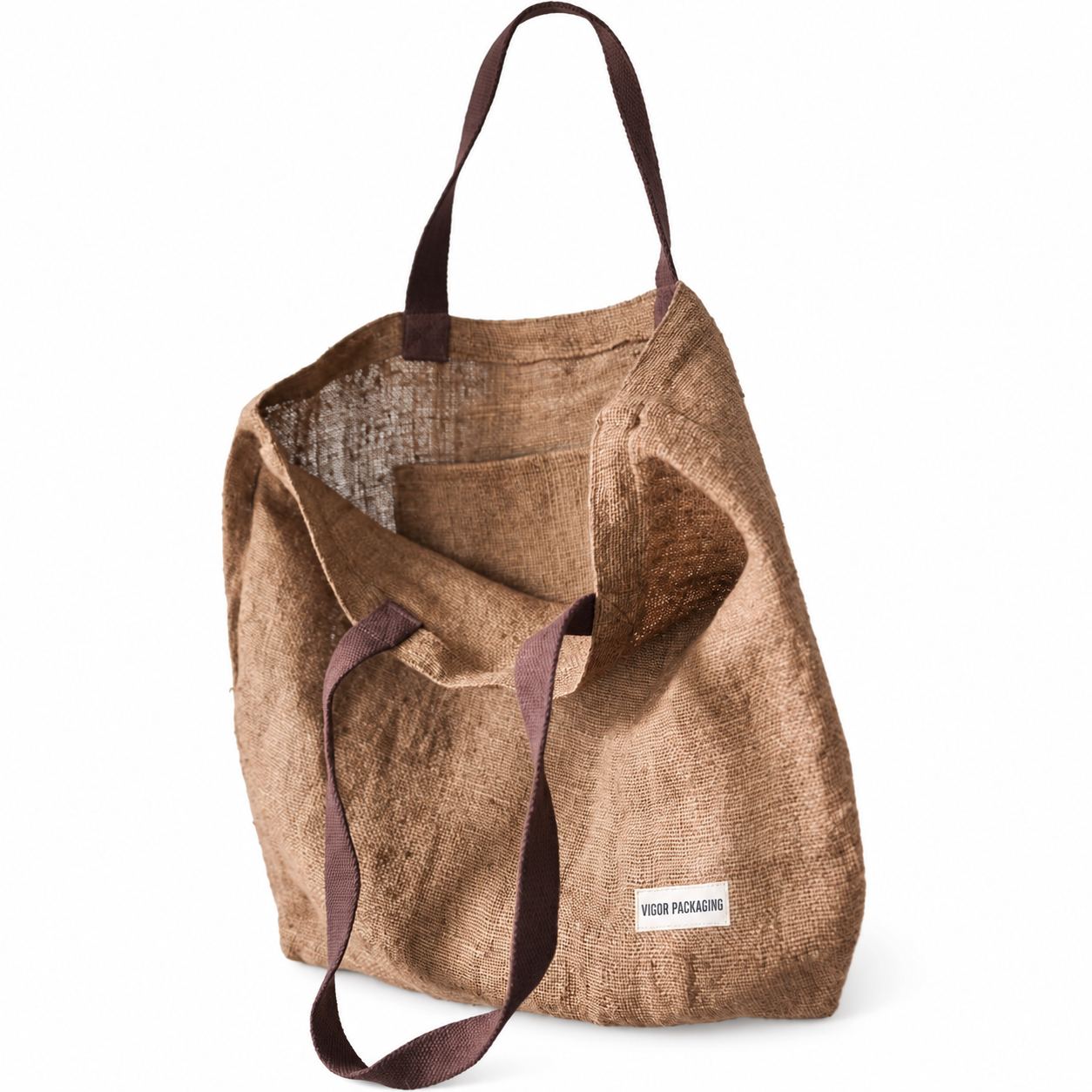
Linen Fabric for Bags
Linen is made from flax fiber and is often selected when the visual and tactile character of the fabric is part of the packaging or product design.
Compared with smooth cotton, linen commonly has a more visible natural texture.
This can work particularly well for:
gift pouches,
wine bags,
cosmetic packaging,
lifestyle products,
drawstring bags,
and premium natural-style packaging.
Why Brands Choose Linen
Linen may be selected for its:
distinctive natural texture,
tactile appearance,
relatively crisp character,
and visual association with natural or understated design.
However, texture can also influence logo reproduction.
Fine artwork printed on a visibly textured linen surface may behave differently from the same artwork printed on smooth cotton.
For this reason, physical printing tests can be useful when artwork contains small typography or fine details.
Pure Linen vs Cotton-Linen Blends
A bag does not necessarily need to use 100% linen to achieve a natural linen-like appearance.
Cotton-linen blends combine fibers in different proportions.
Depending on the specific construction, a blend may provide a different balance of:
texture,
softness,
stiffness,
drape,
cost,
printability,
and dimensional behavior.
Neither is automatically better.
Consider Pure Linen When:
the fiber composition itself is important,
a distinctive linen character is desired,
or the product positioning specifically requires linen.
Consider Cotton-Linen Blends When:
a balanced hand feel is desired,
a particular texture is required,
or the blend provides better performance for the intended construction.
Always specify the actual fiber ratio rather than relying only on the description “linen blend.”
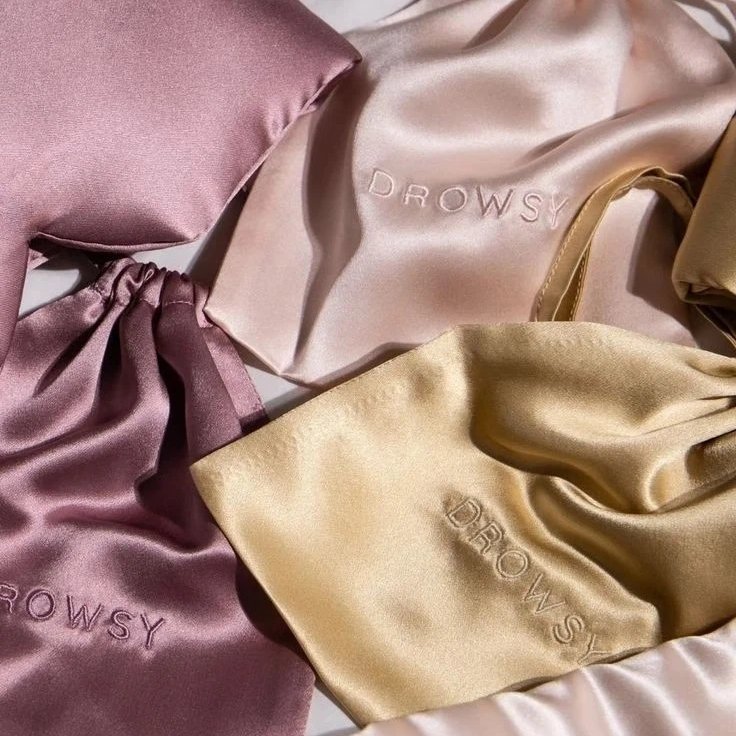
Satin Fabric for Bags and Pouches
Satin is commonly selected when a smooth, lustrous surface and soft drape are desired.
Another important terminology distinction is:
Satin describes a fabric structure and surface character rather than one specific fiber.
For example, many commercial satin fabrics used for packaging pouches are made from polyester, while other satin fabrics can be made from different fibers.
This means satin alone does not fully describe the material.
Common Satin Bag Applications
Satin is frequently considered for:
jewelry pouches,
cosmetic bags,
perfume packaging,
gift bags,
wedding favors,
lingerie packaging,
and other presentation-focused applications.
What to Consider With Satin
Important factors include:
fiber composition,
fabric weight,
surface gloss,
drape,
snagging resistance,
edge fraying,
sewing quality,
and logo compatibility.
Because satin has a smooth reflective surface, color can also appear different under different lighting conditions.
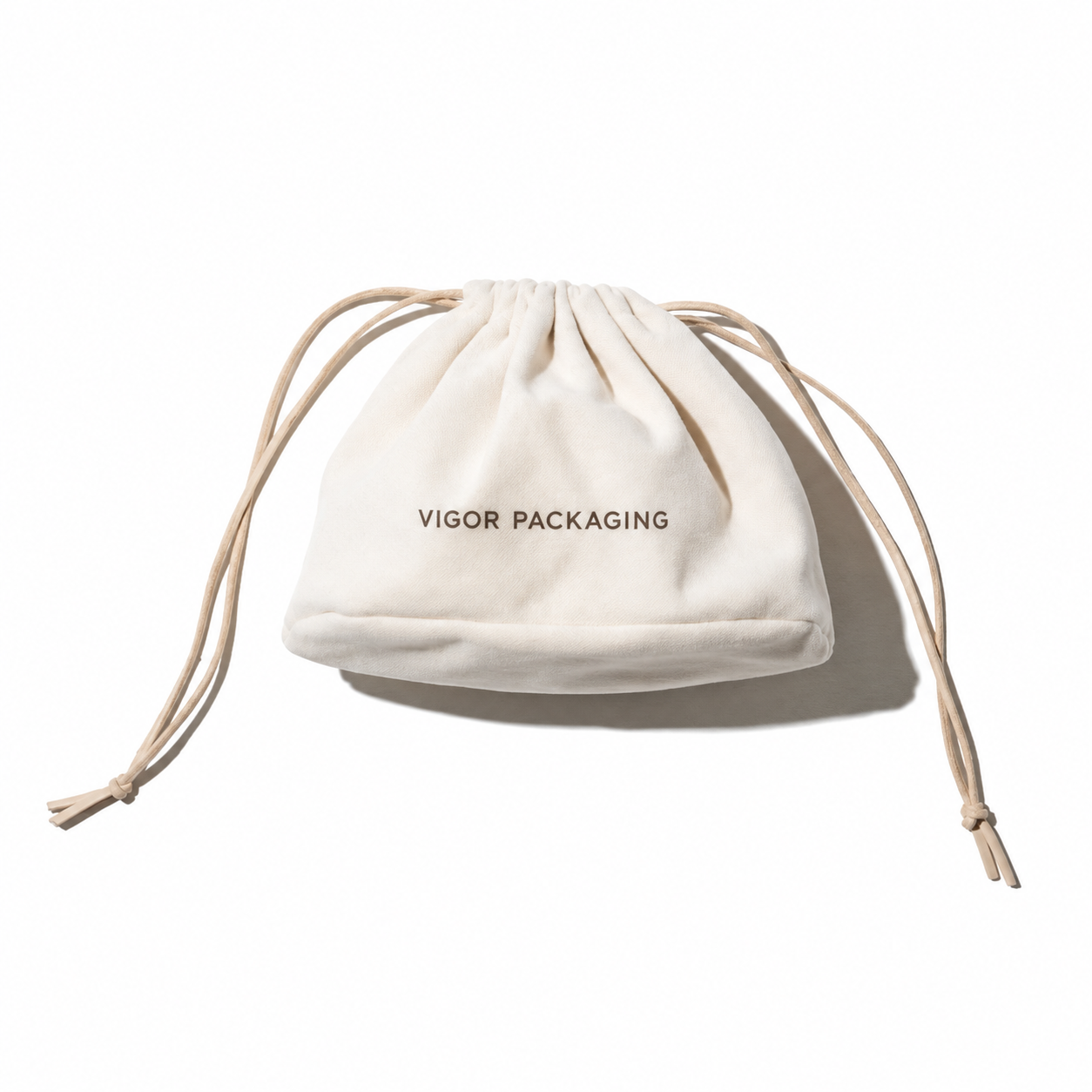
Velvet Fabric for Bags and Pouches
Velvet creates a completely different tactile experience from cotton, canvas or satin.
Its surface contains a pile that produces a soft, dimensional appearance.
This makes velvet particularly suitable for small premium packaging such as:
jewelry pouches,
watch pouches,
accessory bags,
gift packaging,
cosmetic packaging,
and presentation bags.
Not All Velvet Is the Same
Velvet should not be evaluated by color alone.
Important variables can include:
fiber composition,
fabric weight,
pile height,
pile density,
pile direction,
backing,
stretch,
and surface finishing.
The direction of the pile can affect how light reflects from the surface.
As a result, the same velvet can appear lighter or darker when viewed from different directions.
This should be considered when evaluating color samples.
Branding on Velvet
Because velvet has a pile surface, fine printed artwork may not behave the same way it does on flat woven cotton.
Depending on the project, branding options may include:
embroidery,
compatible transfer methods,
foil or heat-transfer processes where suitable,
sewn labels,
or other tested decoration methods.
The exact process should be tested against the selected velvet rather than assumed from the material name.
Satin vs Velvet: Which Should You Choose?
Both materials are frequently used for premium pouches, but their visual effects are very different.
| Feature | Satin | Velvet |
|---|---|---|
| Surface | Smooth | Pile |
| Visual Effect | Lustrous | Soft, deep and dimensional |
| Drape | Usually high | Depends on construction |
| Texture | Smooth | Plush |
| Packing Volume | Generally lower | Generally higher |
| Typical Applications | Cosmetics, jewelry, gifts | Jewelry, watches, premium gifts |
| Fine Logo Reproduction | Depends on method | Pile requires special consideration |
| Color Appearance | Influenced by gloss | Influenced by pile direction |
Choose according to the product and desired presentation rather than assuming one is universally more premium.
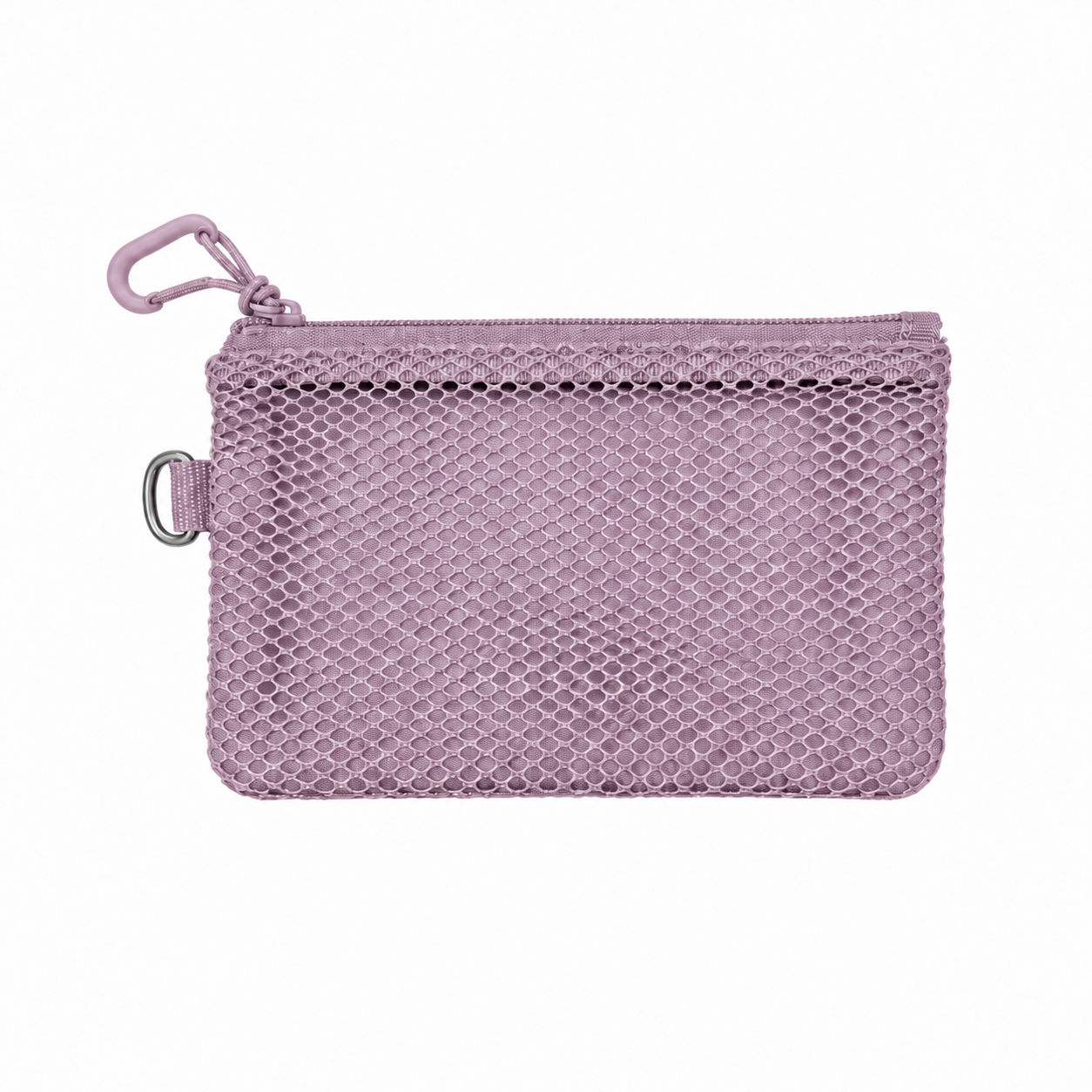
Polyester Fabric for Bags
Polyester is a broad category rather than a single bag material.
Polyester fibers can be used to produce fabrics with very different:
weights,
weaves,
textures,
coatings,
stretch characteristics,
and appearances.
Polyester can be found in:
lightweight drawstring bags,
satin fabrics,
linings,
functional pouches,
promotional bags,
and other sewn products.
Its performance therefore needs to be evaluated at the fabric level, not simply the fiber level.
When specifying polyester, useful information may include:
Fabric Type + GSM + Weave + Coating/Finish + Intended Application
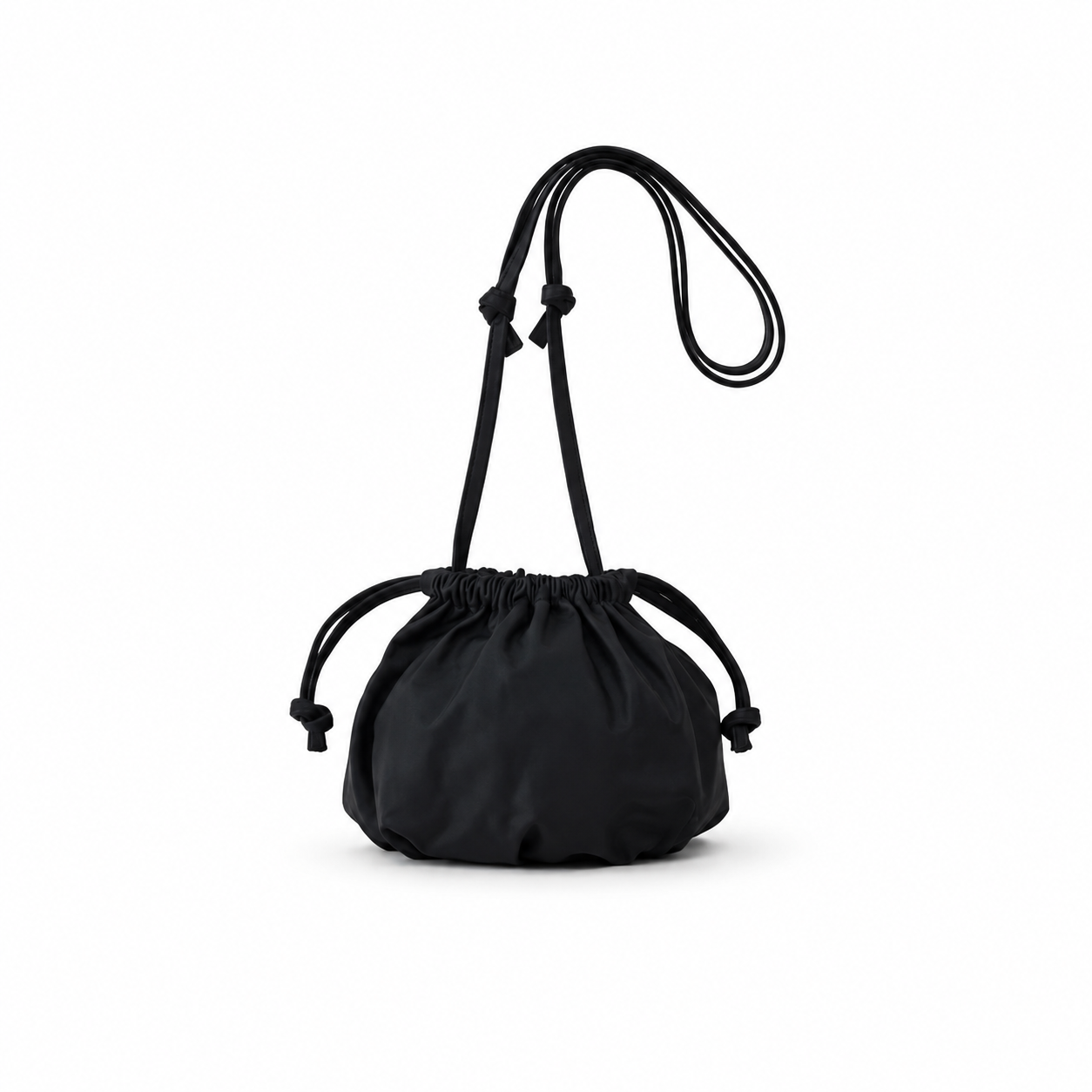
Nylon Fabric for Bags
Nylon is widely used for functional bags where lightweight construction and technical performance are important.
Applications can include:
crossbody bags,
backpacks,
drawstring backpacks,
travel bags,
pouches,
and other functional sewn products.
Nylon fabrics may be specified using terms such as denier, often written as D.
Examples in the market include specifications such as 210D, 420D or 600D.
However:
Denier and GSM are not the same measurement.
GSM measures fabric mass per unit area.
Denier measures the linear mass density of the yarn.
Therefore:
600D ≠ 600 GSM
and a higher denier number alone does not define the finished fabric’s complete performance.
Weave, coating, yarn construction and fabric density also matter.
Natural vs Synthetic Fabrics for Bags
There is no universal rule that natural fibers are better than synthetic fibers or vice versa.
The correct choice depends on the application.
| Consideration | Natural-Fiber Fabrics | Synthetic-Fiber Fabrics |
|---|---|---|
| Examples | Cotton, linen | Polyester, nylon |
| Hand Feel | Often natural/matte | Varies widely |
| Surface | Depends on weave | Can be engineered extensively |
| Moisture Behavior | Fiber-dependent | Fiber/coating-dependent |
| Technical Coatings | Less common in basic forms | Widely available |
| Printing | Depends on fabric | Depends on surface/coating |
| Typical Positioning | Natural, lifestyle, retail | Functional, lightweight, performance-oriented |
Environmental performance should also be evaluated using the complete product and lifecycle rather than assuming that fiber type alone determines sustainability.
What Does GSM Mean for Bag Fabrics?
GSM stands for:
grams per square meter
It measures the mass of one square meter of fabric.
For example:
A 200 GSM fabric weighs approximately 200 grams per square meter.
GSM is useful because terms such as:
lightweight
heavy cotton
thick canvas
are subjective.
A numerical fabric weight provides a better starting point for comparing specifications.
However, GSM does not tell you everything about the fabric.
Why GSM Alone Does Not Determine Bag Strength
This is one of the most important concepts when selecting bag fabric.
Two fabrics can both be:
200 GSM
while having very different:
yarn sizes,
weave density,
fiber composition,
stiffness,
opacity,
surface texture,
tear behavior,
and hand feel.
The performance of the finished bag also depends on how the fabric is converted into a product.
A useful way to think about it is:
Finished Bag Performance = Fiber + Yarn + Weave + GSM + Construction + Stitching + Reinforcement
For tote bags in particular, handle attachment can be just as important as fabric weight.
A heavier fabric does not compensate for an unsuitable seam or handle construction.
Fabric Weight Also Affects More Than Strength
When increasing fabric weight, buyers should consider possible effects on:
Structure
Heavier fabrics may provide more body, although this also depends on weave and finishing.
Hand Feel
The bag may feel more substantial.
Opacity
Some heavier or denser fabrics may reduce show-through, although GSM alone does not guarantee opacity.
Sewing
Thicker seams and multiple folded layers can affect sewing requirements.
Printing
Surface texture and fabric density can influence ink appearance.
Packing
A heavier or thicker bag may occupy more carton space.
Shipping
Additional fabric mass increases finished product weight.
Cost
More material may increase fabric cost, but final bag pricing also includes sewing, printing, accessories and other production steps.
Weave Matters as Much as Fiber
A common sourcing mistake is to focus entirely on fiber composition.
For example:
100% Cotton
tells you what the fiber is made from.
It does not tell you exactly how the fabric behaves.
Cotton yarn can be used to create fabrics with different constructions such as:
plain weave,
canvas,
twill,
poplin,
crepe,
and other structures.
These can behave very differently even when they use the same fiber.
A useful specification hierarchy is:
Fiber → Yarn → Weave → Weight → Finish
rather than evaluating fiber content alone.
Fabric Finish Can Change How a Bag Feels
Two fabrics with similar fiber composition and GSM may still feel different because of finishing.
Possible treatments include:
washing,
pre-shrinking,
dyeing,
brushing,
coating,
softening,
calendaring,
and other textile finishing processes.
For example, washed cotton may feel and drape differently from an untreated greige cotton of a similar nominal weight.
This is another reason why fabric samples are useful when hand feel is important.
Washed vs Unwashed Fabric
Washing or pre-treatment can change the character of certain natural-fiber fabrics.
Depending on the material and process, washing may influence:
softness,
texture,
shrinkage,
dimensional stability,
surface appearance,
and color.
However, the term pre-washed should not automatically be interpreted as zero shrinkage.
Actual dimensional change depends on the specific fabric and subsequent washing and drying conditions.
For washable fabric bags, shrinkage requirements should be discussed before bulk production.
Fabric Shrinkage Should Be Considered During Bag Development
Cotton, linen and blended fabrics can change dimensions after washing or drying.
But there is no single shrinkage percentage that applies to all cotton or all linen fabrics.
Actual shrinkage can depend on:
Fiber + Weave + Fabric Finishing + Pre-Washing + Washing Temperature + Drying Method
This means two 100% cotton fabrics can have very different shrinkage behavior.
If the finished bag must remain within a specific dimension after washing, testing the actual fabric and finished construction is more reliable than relying on a generic shrinkage assumption.
How Fabric Affects Logo Printing
The same logo can look different when printed on different fabrics.
Smooth Cotton
A relatively smooth surface can support cleaner edges and fine artwork, depending on the fabric and printing method.
Canvas
The heavier texture of some canvas fabrics may become visible through printed areas.
Linen
Natural surface irregularities can influence fine lines and small typography.
Satin
The smooth, reflective surface creates different visual behavior and may require a compatible decoration process.
Velvet
Pile creates an uneven three-dimensional surface, making conventional flat printing more challenging for certain designs.
Polyester and Nylon
Surface finishing, coating and heat sensitivity can influence which printing or transfer process is appropriate.
For this reason:
Choose the Fabric and Branding Method Together
rather than selecting the fabric first and assuming every logo process will work equally well.
Which Fabric Is Best for Tote Bags?
For many tote applications, cotton and canvas are common starting points.
Consider lighter cotton when you want:
easy folding,
lower material weight,
a soft structure,
promotional use,
or lightweight retail packaging.
Consider canvas when you want:
a more substantial hand feel,
greater structure,
reusable retail positioning,
larger tote constructions,
or a more durable appearance.
But the final decision should still consider GSM, weave, handles, stitching and intended load.
Which Fabric Is Best for Drawstring Bags?
Drawstring bags can use a much wider range of fabrics because their applications vary considerably.
Possible choices include:
Cotton — natural, versatile and suitable for many everyday applications.
Canvas — more substantial and structured.
Linen / Cotton-Linen — natural textured appearance.
Satin — smooth and presentation-focused.
Velvet — tactile and premium.
Polyester / Nylon — useful for lightweight or functional applications.
The best choice depends heavily on what will be placed inside the bag.
A drawstring bag for jewelry and a drawstring bag for shoes may share the same closure concept but require completely different fabrics.
Explore our Custom Drawstring Bags for different material and construction options.
Which Fabric Is Best for Jewelry Pouches?
Jewelry packaging often prioritizes:
surface softness,
presentation,
product protection,
compact size,
and branding.
Common materials include:
Velvet
for a soft, tactile presentation.
Satin
for a smooth, lustrous appearance.
Microfiber or other soft fabrics
where compatible with the product and required construction.
Cotton / Linen Blends
for a natural or understated presentation.
The best material also depends on the jewelry itself. A pouch for a necklace, ring, bracelet or watch may require different dimensions, lining and closure construction.
Which Fabric Is Best for Crossbody Bags?
Crossbody bags generally require more attention to structural performance than simple packaging pouches.
Possible materials include:
canvas,
cotton canvas,
polyester,
nylon,
and other suitable functional fabrics.
Material selection should be considered together with:
strap construction,
lining,
zipper,
pockets,
hardware,
seams,
and expected load.
For functional bags, fabric alone should never be used to predict the performance of the complete product.
How to Choose the Best Fabric for Your Bag
Instead of asking:
“Which fabric is best?”
start with these questions.
What Will Go Inside?
Determine:
product dimensions,
weight,
shape,
surface sensitivity,
and number of items.
How Will the Bag Be Used?
Is it:
disposable packaging,
gift packaging,
promotional merchandise,
reusable shopping packaging,
a retail product,
or a functional everyday bag?
How Should It Feel?
Do you want:
lightweight,
soft,
natural,
textured,
structured,
smooth,
glossy,
or plush?
Does It Need to Hold Its Shape?
This immediately changes the range of suitable fabrics and constructions.
How Will the Logo Be Applied?
Consider printing and branding before finalizing the fabric.
Will It Be Washed?
If yes, dimensional change, dye stability, printing and care instructions become more important.
What Quantity Will Be Produced?
Material availability, custom dyeing and fabric minimums can influence what is practical for a particular order quantity.
Material Selection by Bag Application
| Bag Application | Fabrics to Consider | Main Selection Priority |
|---|---|---|
| Promotional Tote | Cotton, lightweight canvas | Cost, printability, foldability |
| Retail Tote | Cotton canvas, canvas | Structure, branding, durability |
| Premium Tote | Heavy canvas, specialty woven fabrics | Hand feel, construction, branding |
| Drawstring Gift Bag | Cotton, linen blend, satin | Presentation, closure, printing |
| Jewelry Pouch | Velvet, satin, soft specialty fabrics | Surface feel, protection, presentation |
| Shoe Dust Bag | Cotton, flannel or suitable soft fabrics | Size, breathability, surface |
| Wine Bag | Cotton, canvas, linen blend | Bottle support, structure, branding |
| Crossbody Bag | Canvas, polyester, nylon | Structure, durability, hardware |
| Cosmetic Pouch | Cotton, canvas, polyester, satin | Surface, lining, zipper, branding |
| Gift Packaging | Cotton, linen blend, satin, velvet | Presentation, tactile character |
These are starting points rather than universal material rules.
Common Fabric Selection Mistakes
Choosing by Material Name Alone
“Cotton” or “canvas” is not a complete specification.
Assuming Higher GSM Always Means Better Quality
GSM measures fabric weight, not the quality of sewing, weave or bag construction.
Choosing the Logo Method After the Fabric
Fabric and branding should be evaluated together.
Ignoring Shrinkage
This is particularly important if the bag will be washed.
Ignoring the Contents
A bag should be designed around what it needs to carry or protect.
Comparing Supplier Prices Without Comparing Fabric Specifications
Two quotations may use the same material name but completely different fabric weights and constructions.
Approving Color Only on a Screen
Texture, gloss and pile direction can all influence how a physical fabric color appears.
What Should You Specify When Requesting a Fabric Bag Quote?
For more accurate sourcing, provide as much of the following information as possible:
| Specification | Information to Provide |
|---|---|
| Bag Type | Tote, drawstring, pouch, crossbody, etc. |
| Application | What the bag will carry |
| Dimensions | Width × height × gusset if applicable |
| Fiber | Cotton, linen, polyester, nylon, etc. |
| Fabric Type | Canvas, satin, velvet, twill, etc. |
| Fabric Weight | GSM or oz/yd² |
| Color | Stock color or custom Pantone target |
| Construction | Flat, gusseted, lined, zipper, etc. |
| Branding | Screen printing, embroidery, transfer, label, etc. |
| Artwork | Logo or pattern file |
| Quantity | Total quantity |
| Designs | Quantity per color / artwork |
| Special Requirements | Washing, shrinkage, coatings, packaging, etc. |
If the material has not yet been selected, provide the intended application first.
A manufacturer can evaluate materials more effectively when they understand what the finished bag needs to do.
Why Physical Fabric Samples Matter
Specifications are essential, but they do not completely communicate how a fabric looks and feels.
A physical sample can help evaluate:
texture,
softness,
stiffness,
weave density,
thickness,
opacity,
gloss,
pile,
color,
drape,
and overall hand feel.
This is particularly important when comparing fabrics such as:
linen vs cotton-linen
satin vs velvet
or different weights and finishes of:
cotton vs canvas
For demanding projects, the most useful evaluation sequence may be:
Fabric Sample → Bag Sample → Branding Sample → Bulk Approval
because approving a fabric alone does not confirm how the finished bag will perform.
Frequently Asked Questions About Fabrics for Bags
What is the best fabric for making bags?
There is no single best fabric for all bags. Cotton and canvas are common for totes and reusable bags, while linen blends suit natural-style packaging, satin and velvet suit presentation pouches, and polyester or nylon may suit functional bags. The intended use should determine the material.
Is cotton or canvas better for bags?
It depends on the application. Cotton is a fiber, while canvas is a fabric construction that is often made from cotton. In commercial bag terminology, lighter cotton is often chosen for soft and foldable bags, while heavier cotton canvas is selected when more structure and substance are required.
What is the best fabric for tote bags?
Cotton and canvas are common choices. Lightweight cotton can work well for promotional or lightweight retail totes, while heavier canvas can provide a more substantial structure for reusable or premium tote bags. Fabric weight, weave and handle construction should also be considered.
What GSM is best for bags?
There is no universal best GSM. The appropriate weight depends on the material, bag size, construction, intended contents and desired hand feel. GSM should be used together with fiber, weave and construction rather than as a standalone measure of quality.
Does higher GSM mean stronger fabric?
Not necessarily. Higher GSM means more fabric mass per unit area, but strength also depends on fiber, yarn, weave, fabric construction and finishing. Finished bag strength additionally depends on seams, stitching, handles and reinforcement.
Is canvas always made from cotton?
No. Canvas describes a fabric construction and can be produced from cotton, other fibers or blends. Cotton canvas is common in bag manufacturing, but the fiber content should always be confirmed.
Is linen good for bags?
Yes, linen can be suitable for gift bags, pouches, wine bags and other applications where natural texture is desirable. However, its surface characteristics, fabric weight, shrinkage and branding requirements should be considered.
Is satin a material or a weave?
Satin generally refers to a weave structure and characteristic smooth, lustrous surface rather than one specific fiber. Commercial satin fabrics can be made from polyester, silk and other fibers, so the fiber composition should be specified separately.
Is velvet suitable for printing?
It depends on the artwork, velvet construction and decoration method. Because velvet has a pile surface, fine conventional printing can behave differently from printing on flat woven fabrics. Embroidery, compatible transfers, labels or other tested processes may be considered depending on the project.
What is the difference between GSM and denier?
GSM measures fabric mass per unit area in grams per square meter. Denier measures the linear mass density of yarn. They describe different textile properties, so a 600D fabric does not mean 600 GSM.
Why do two fabrics with the same GSM feel different?
GSM measures weight, but fabrics with the same weight can use different fibers, yarn sizes, weave densities and finishing processes. They can therefore have different thickness, stiffness, texture, opacity and drape.
Should I request a fabric sample before ordering custom bags?
For custom projects, physical samples are useful when texture, hand feel, color, thickness or printing quality matters. For more complex projects, a finished bag sample is also important because fabric behavior can change after cutting, folding, sewing and branding.
Choosing the Right Fabric for Your Custom Bags
The best bag material is not determined by a single specification.
A more reliable selection process considers:
Application → Contents → Fiber → Fabric Construction → GSM → Surface → Bag Structure → Branding
This approach helps avoid common sourcing problems such as selecting fabric that is unnecessarily heavy, too flexible, difficult to print, unsuitable for the product or inconsistent with the desired brand presentation.
For brands developing custom fabric packaging or reusable bags, explore our Custom Fabric Bags, or contact us with your product dimensions, preferred appearance, quantity and artwork. We can help evaluate suitable material and construction options.