Canvas is one of the most widely used fabrics for tote bags, shopping bags, crossbody bags and other reusable sewn products. But specifying “canvas fabric for bags” is not enough to define the material.
Two fabrics described as canvas can have different fiber compositions, yarn structures, fabric weights, weave densities, finishes and surface textures. As a result, they may produce bags with very different structure, hand feel, print appearance and sewing behavior.
A more useful canvas specification considers:
Fiber → Yarn → Weave → Fabric Weight → Finish → Bag Construction → Intended Use
Quick Answer: Canvas is a relatively dense woven fabric commonly made from cotton, although other fibers and blends can also be used. For bags, canvas should be selected according to the required structure, fabric weight, weave, surface, printing method and finished construction. GSM or oz/yd² helps describe fabric weight, but heavier canvas is not automatically stronger or better for every bag. The most suitable specification depends on what the bag needs to carry, how it should look and feel, and how it will be manufactured.
Canvas Fabric for Bags at a Glance
| Factor | What It Tells You | Why It Matters for Bags |
|---|---|---|
| Fiber | Cotton, polyester, blends, etc. | Affects hand feel, shrinkage, finishing and other material properties |
| Weave / Construction | How yarns form the fabric | Influences surface, density, flexibility and structure |
| GSM | Grams per square meter | Helps compare fabric weight |
| oz/yd² | Ounces per square yard | Another common way to specify fabric weight |
| Yarn | Yarn size and construction | Influences texture, density and fabric behavior |
| Finish | Washing, dyeing, coating, softening, etc. | Can change hand feel, appearance and performance |
| Surface | Smooth, coarse, washed, coated, etc. | Influences branding and visual character |
| Bag Construction | Seams, gussets, handles, lining and reinforcement | Strongly affects finished bag performance |
| Intended Use | What the bag carries and how it is used | Determines which canvas specification is appropriate |
Canvas should therefore be evaluated as a complete fabric specification rather than by the word canvas alone.
For a broader comparison of bag materials, see our Best Fabrics for Bags guide.
What Is Canvas Fabric?
Canvas is a woven fabric traditionally associated with a relatively dense and substantial construction.
In modern bag manufacturing, cotton canvas is especially common, but canvas can also be produced from:
- polyester,
- cotton-polyester blends,
- and other suitable fibers.
This leads to an important distinction:
Canvas describes a fabric construction or fabric category, while cotton describes a fiber.
A fabric can therefore be both:
100% Cotton
and:
Canvas
at the same time.
For example:
100% cotton, 340 GSM canvas
is a much more useful specification than simply:
cotton fabric
or:
canvas fabric.
Is Canvas the Same as Cotton?
Not exactly.
This is one of the most common sources of confusion when sourcing fabric bags.
Cotton is a fiber.
Canvas is a fabric construction/category.
Cotton yarn can be used to create many different fabrics, including:
- lightweight plain-weave cotton,
- canvas,
- twill,
- poplin,
- crepe,
- and other woven constructions.
Canvas can also be made from fibers other than cotton.
However, in commercial bag sourcing, buyers and suppliers sometimes use the terms more practically.
A cotton bag may refer to a relatively lightweight woven cotton bag, while a canvas bag may refer to a denser, heavier or more structured woven bag.
That distinction can be useful in everyday communication, but the actual fabric specification is more important than the product name.
Cotton Canvas vs Lightweight Cotton Fabric
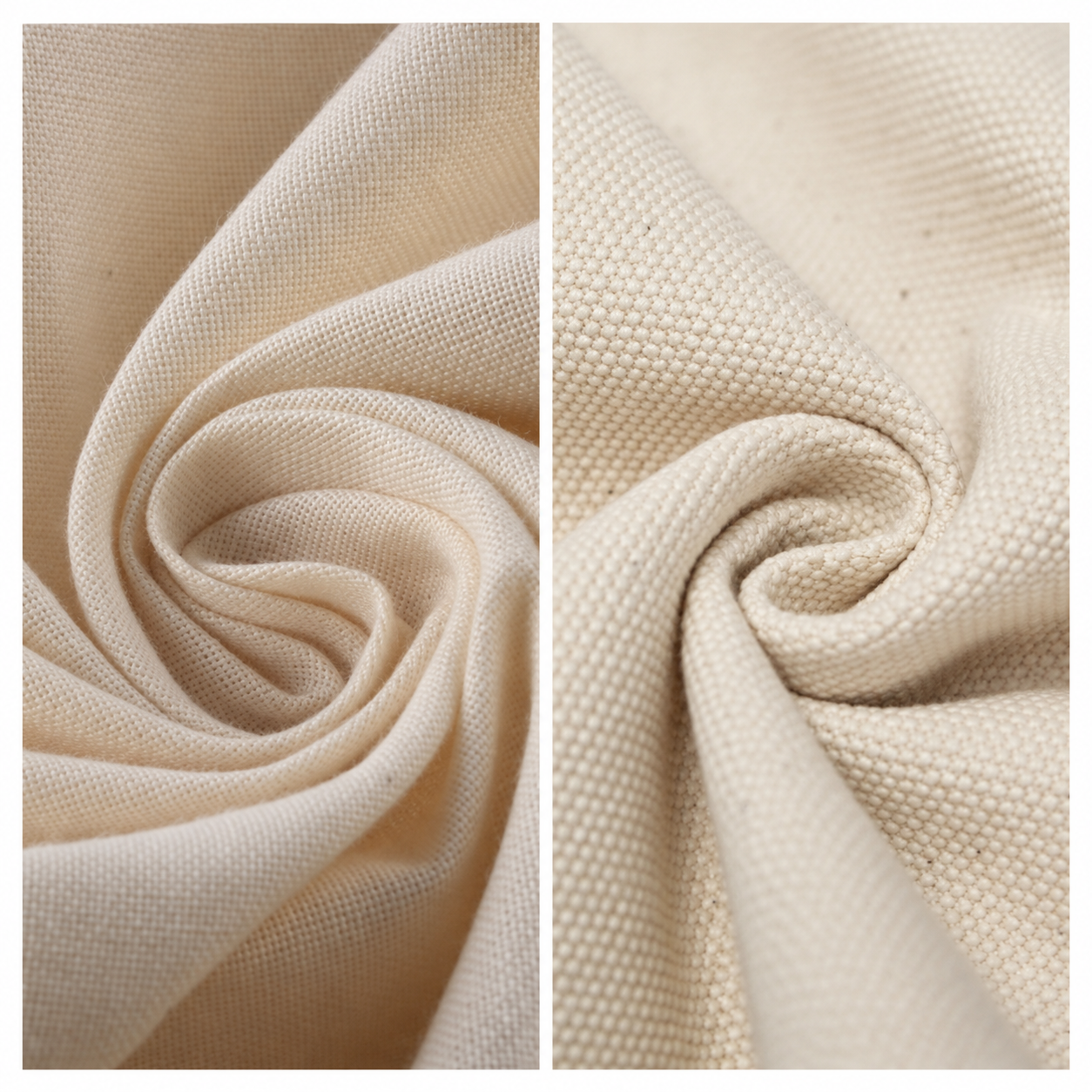
A lightweight cotton fabric and cotton canvas can both be made from 100% cotton while behaving very differently.
| Feature | Lightweight Cotton Fabric | Cotton Canvas |
|---|---|---|
| Fiber | Often cotton | Often cotton |
| Fabric Character | Light, soft, flexible | Denser and more substantial |
| Structure | Usually lower | Usually higher |
| Foldability | Generally high | Depends on weight and finish |
| Surface | Varies | Varies by yarn and weave |
| Typical Bag Use | Dust bags, lightweight totes, packaging bags | Totes, shopping bags, crossbody bags, structured fabric bags |
| Material Consumption | Generally lower | Generally higher for comparable bag dimensions |
| Branding | Depends on surface | Depends on surface and fabric construction |
This distinction becomes especially important when comparing quotations.
Two suppliers may both quote a:
100% cotton tote bag
while using significantly different fabrics.
For this reason, quotations should ideally specify the fabric construction and weight rather than fiber composition alone.
Canvas vs Denim: What Is the Difference?
Canvas and denim can both be made from cotton, and both can be used for bags. However, they are different fabrics.
One of the clearest differences is their typical weave and visual structure.
Canvas is commonly associated with a dense woven construction, often using a plain weave or related construction.
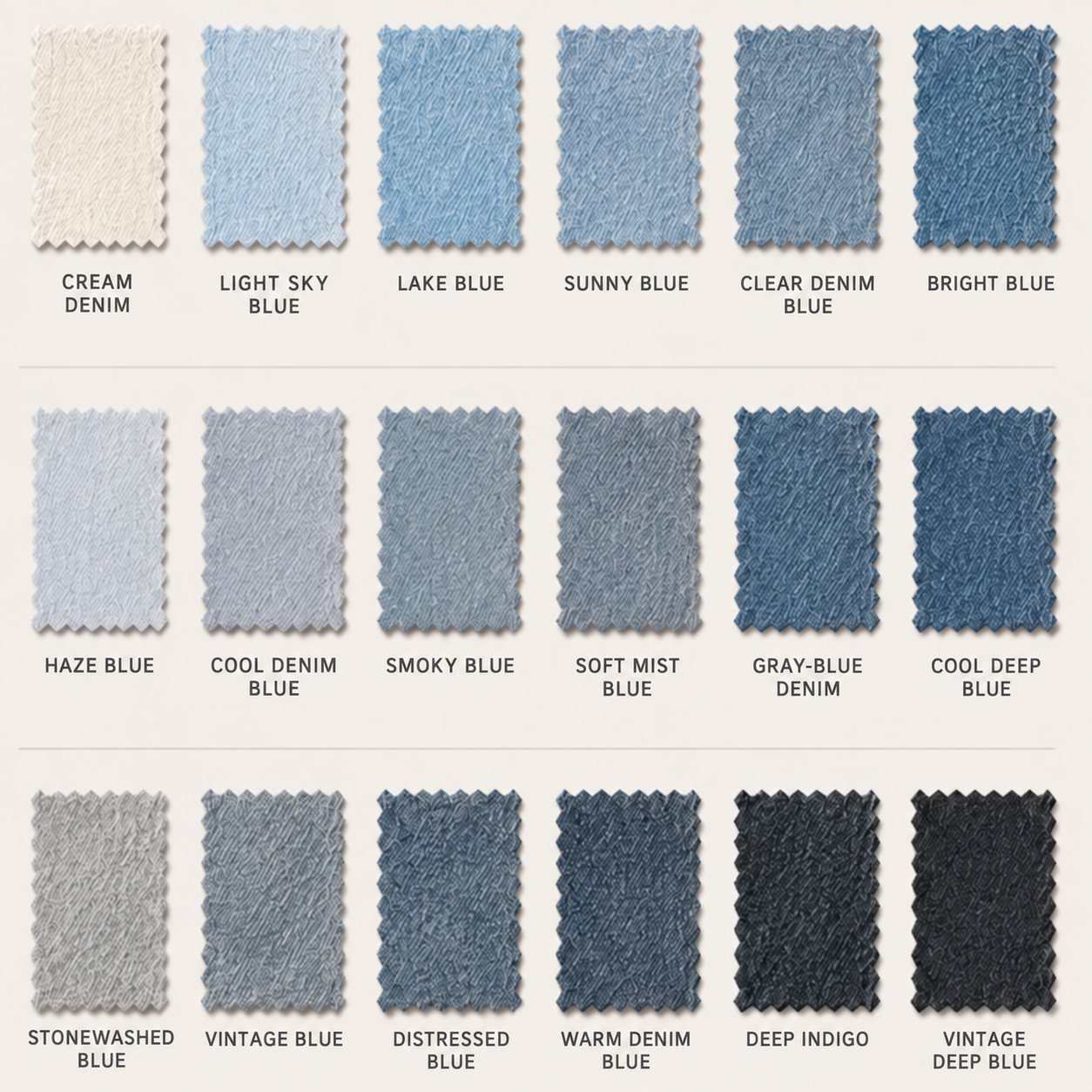
Denim is characteristically a twill-woven fabric, which creates the familiar diagonal lines visible on the surface.
| Feature | Canvas | Denim |
|---|---|---|
| Common Fiber | Cotton, polyester or blends | Traditionally cotton; blends are also available |
| Typical Weave Character | Commonly dense plain-weave constructions | Twill weave |
| Surface | Relatively even; varies by yarn and finish | Characteristic diagonal texture |
| Typical Color Treatment | Natural, piece-dyed, printed or otherwise finished | Classic denim commonly uses dyed warp yarns with lighter weft yarns |
| Front / Back Appearance | Depends on construction | Often visibly different |
| Visual Style | Natural, clean, workwear or structured | Casual, fashion, vintage or washed |
| Common Bag Applications | Totes, shopping bags, boat totes, crossbody bags, utility bags | Totes, backpacks, handbags, crossbody bags, fashion bags |
Classic indigo denim can also develop distinctive fading and washed effects through wear and finishing.
Canvas generally provides a different visual language and is often selected when the desired appearance is:
- clean,
- natural,
- minimalist,
- structured,
- or utilitarian.
Denim may be preferred when the design calls for:
- casual styling,
- visible twill texture,
- washed effects,
- vintage character,
- or a fashion-oriented appearance.
Neither fabric is automatically stronger or heavier than the other.
The actual specification still matters.
What Is Cotton Duck Canvas?
The term duck canvas, also called cotton duck, is frequently encountered when sourcing heavier cotton fabrics.
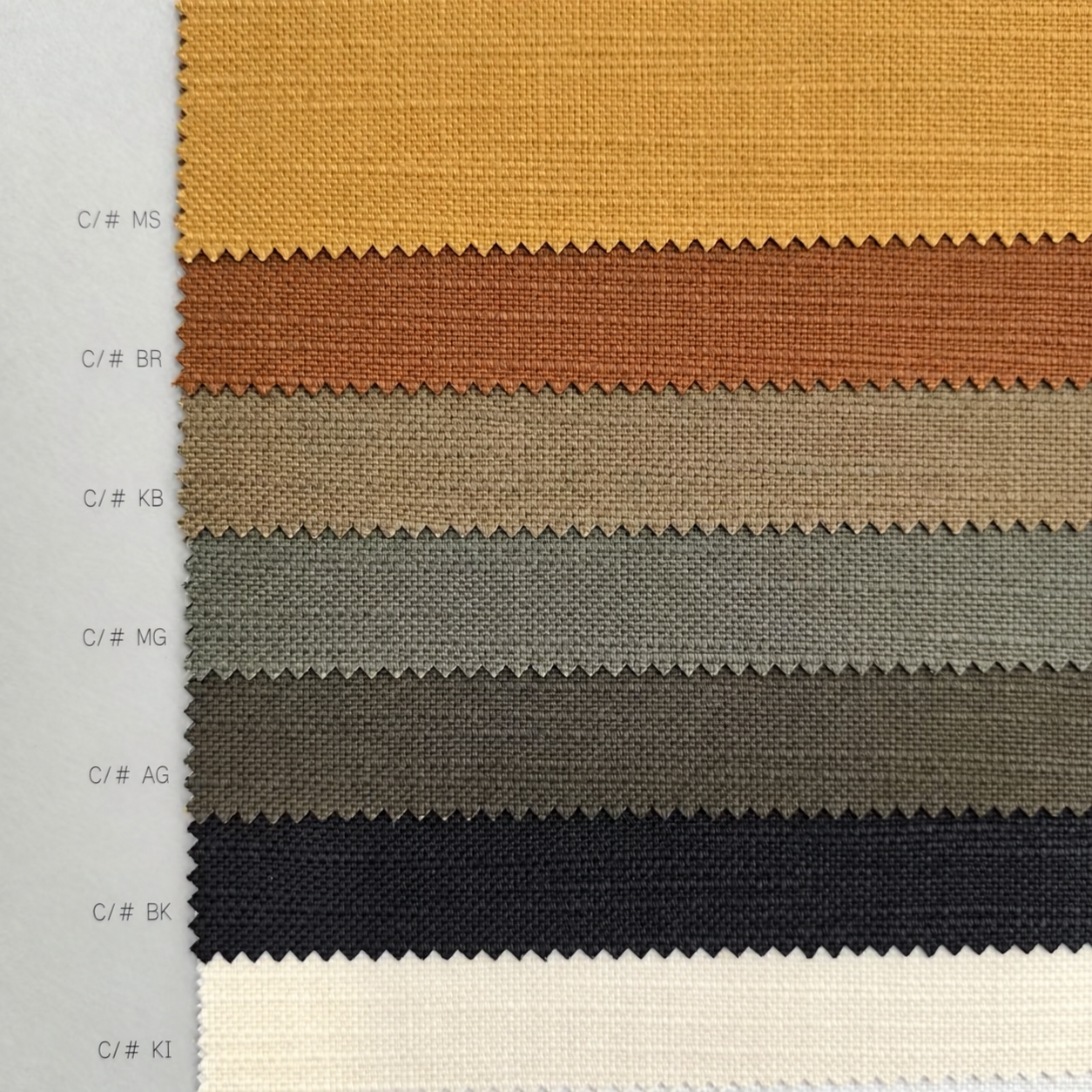
Duck canvas generally refers to a tightly woven, substantial fabric construction.
Depending on the specification, yarn construction and fabric weight can vary considerably.
It is commonly considered for applications requiring:
- a dense fabric surface,
- substantial hand feel,
- useful dimensional structure,
- and durable sewn construction.
For bags, duck canvas may be used in:
- substantial tote bags,
- utility bags,
- structured shopping bags,
- work bags,
- crossbody bags,
- and other heavier sewn products.
However:
Duck canvas is not one single fabric weight.
The actual specification should still be confirmed.
Plain Canvas vs Duck Canvas
Terminology can vary between textile suppliers, so these terms should not be treated as universal grades.
As a practical sourcing distinction:
| Feature | General Canvas | Duck Canvas |
|---|---|---|
| Construction | Can cover different canvas constructions | Commonly dense woven construction |
| Weight | Light to heavy | Often medium to heavy |
| Surface | Depends on yarn and weave | Often relatively dense and compact |
| Structure | Varies widely | Often more substantial |
| Bag Applications | Totes, pouches, shopping bags, lifestyle bags | Heavy totes, utility bags, structured bags |
| Specification Required | Yes | Yes |
The safest approach is not to rely on the fabric name alone.
When hand feel and structure matter, confirm:
Fiber + GSM/oz + Weave/Construction + Finish + Physical Sample
What Does GSM Mean for Canvas?
GSM stands for:
grams per square meter
It measures fabric mass per unit area.
For example:
300 GSM canvas
means one square meter of the fabric has a nominal mass of approximately 300 grams.
GSM is useful because descriptions such as:
- light canvas,
- medium canvas,
- heavy canvas,
- thick canvas,
are subjective.
A numerical fabric weight makes supplier comparisons more meaningful.
However:
GSM measures weight, not thickness, stiffness or finished bag strength.
Those properties can be related to fabric construction, but they are not interchangeable.
Canvas GSM vs oz: What Is the Difference?
Canvas is frequently specified in either:
GSM — grams per square meter
or:
oz/yd² — ounces per square yard
Both describe fabric mass per unit area.
A useful approximate conversion is:
1 oz/yd² ≈ 33.9 GSM
| oz/yd² | Approximate GSM |
|---|---|
| 6 oz | 203 GSM |
| 8 oz | 271 GSM |
| 10 oz | 339 GSM |
| 12 oz | 407 GSM |
| 14 oz | 475 GSM |
| 16 oz | 542 GSM |
| 20 oz | 678 GSM |
These conversions are useful when comparing specifications expressed using different measurement systems.
However, buyers should be careful with the word ounce.
When a fabric supplier describes canvas as 12 oz, the intended specification should be confirmed as fabric weight per unit area rather than treating “12 oz” as a complete material specification.
What GSM Is Best for Canvas Bags?
There is no universal best GSM for canvas bags.
The appropriate weight depends on:
- bag size,
- intended contents,
- desired structure,
- yarn,
- weave density,
- handles,
- gussets,
- lining,
- reinforcement,
- printing,
- sewing construction,
- and target cost.
Instead of asking:
“What GSM is best?”
a more useful question is:
“What fabric construction provides the right balance of structure, hand feel, performance and cost for this bag?”
As a general selection framework:
| Canvas Weight Direction | Typical Fabric Character | Possible Bag Applications |
|---|---|---|
| Lighter Canvas | Softer, easier to fold, lower material mass | Lightweight totes, small bags, cosmetic bags, storage pouches |
| Medium Canvas | More body while remaining relatively flexible | Shopping bags, everyday totes, handbags |
| Heavy Canvas | More substantial and structured | Tote bags, backpacks, briefcase-style bags |
| Extra-Heavy Canvas | Thick, rigid and high in material mass | Workwear-style bags, large travel bags, tool bags |
These are selection directions rather than fixed engineering standards.
A physical sample is more reliable than choosing fabric solely from a GSM number.
Canvas Weights and Fabric Options We Commonly Evaluate
In actual bag development, fabric weight becomes easier to understand when it is connected to the hand feel and intended construction of the finished product.
The following are examples of canvas and related fabrics we may evaluate when developing custom fabric bags.
They should be treated as practical material references rather than universal industry classifications, because stiffness and hand feel can vary with yarn, weave density, finishing and supplier specifications.
| Fabric Reference | Typical Hand Feel / Character | Common Applications |
|---|---|---|
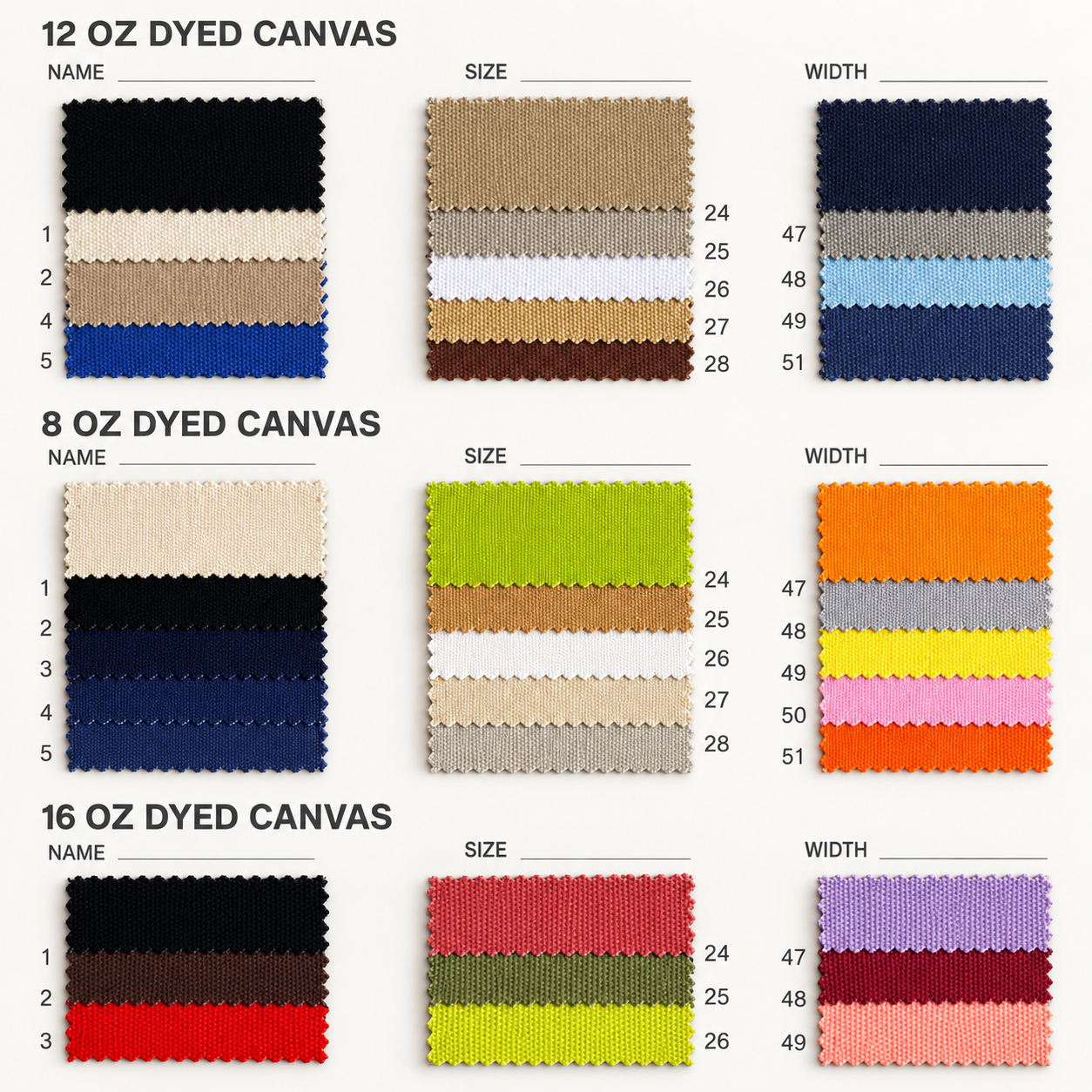
| 8 oz Dyed Canvas | Relatively light and soft | Linings, lightweight small bags, cosmetic bags, storage pouches |
| 12 oz Dyed Canvas | Medium body with a balance of softness and structure | Everyday commuter bags, shopping bags, handbags and totes |
| 16 oz Dyed Canvas | Noticeably firmer and more structured | Tote bags, backpacks, briefcase-style bags |
| 20 oz Dyed Canvas | Thick, substantial and relatively rigid | Workwear-style bags, large travel bags, tool bags |
| 10858 Full-Process Fabric | General-purpose construction with a broad available color selection | Main bag panels, luggage linings and footwear applications |
| 247 Waterproof Laminated Fabric | Laminated or treated construction intended to improve resistance to water | Outdoor bags, commuter bags, camping equipment and protective covers |
These examples also illustrate why selecting canvas by weight alone can be misleading.
Moving from an 8 oz to a 20 oz canvas generally changes much more than the number on the specification sheet.
The finished bag may become:
- more structured,
- less foldable,
- heavier,
- more difficult to gather or turn during sewing,
- bulkier at multi-layer seams,
- and heavier to pack and ship.
At the same time, heavier is not automatically better.
An 8 oz canvas may be more appropriate than a 16 oz canvas for a lightweight cosmetic pouch, while a more substantial canvas may be desirable when a tote needs a visibly structured silhouette.
What Do “10858” and “247” Mean?
Fabric references such as 10858 and 247 may appear in supplier catalogs and sourcing discussions.
They should not automatically be treated as universal international fabric grades.
Instead, they are more useful as supplier or market references for particular fabric constructions or specifications.
A fabric described as 10858 by one source should therefore not automatically be assumed to have exactly the same:
- fiber composition,
- GSM,
- yarn specification,
- weave density,
- finish,
- color range,
- or performance
as a similarly named fabric from another source.
For international sourcing, local fabric references should ideally be translated into a more complete technical specification:
Fiber Composition + Weave/Construction + GSM or oz/yd² + Color + Finish + Functional Treatment
This makes supplier comparisons more reliable and reduces misunderstandings during sampling.
A Note About Waterproof Canvas and Laminated Fabrics
The word waterproof should be used carefully when developing bags.
A fabric may receive a:
- coating,
- lamination,
- or other functional treatment
that improves its resistance to water.
However, the performance of the finished bag also depends on its construction.
Water may potentially enter through:
- seams,
- needle holes,
- zippers,
- openings,
- or untreated components.
Therefore:
Water-resistant or waterproof fabric does not automatically make the finished bag completely waterproof.
If a finished product requires a defined level of water protection, the complete bag construction should be designed and tested for that requirement.
Does Higher GSM Mean Stronger Canvas?
Not necessarily.
Higher GSM means there is more fabric mass per unit area.
It does not directly tell you:
- tensile strength,
- tear resistance,
- abrasion resistance,
- yarn strength,
- seam strength,
- handle strength,
- or finished bag load capacity.
Consider two fabrics that are both:
300 GSM
One may use finer yarns and a compact weave, while another may use coarser yarns and a visibly different construction.
Their hand feel and mechanical behavior may differ even though their nominal GSM is identical.
A more complete way to think about the fabric is:
Canvas Performance = Fiber + Yarn + Weave + Density + GSM + Finish
After the fabric becomes a bag:
Finished Bag Performance = Fabric + Pattern + Seams + Stitching + Handles + Reinforcement + Hardware
Does Higher GSM Mean Thicker Canvas?
Not always.
GSM measures:
mass per unit area
while thickness describes a different physical property.
Two fabrics with the same GSM can have different thicknesses because of differences in:
- yarn size,
- yarn compression,
- weave density,
- finishing,
- coating,
- and other construction variables.
Likewise, a thicker-feeling fabric is not automatically heavier or stronger.
For sourcing purposes, do not use GSM as a substitute for thickness when actual thickness is an important design requirement.
Why Two Canvas Fabrics With the Same GSM Can Feel Different
Suppose two suppliers both offer:
100% cotton canvas, 300 GSM
The fabrics may still feel noticeably different.
Possible reasons include:
Yarn Size
Coarser and finer yarns produce different textures and structures.
Yarn Construction
Different yarn constructions can change the fabric’s surface and behavior.
Weave Density
The number and arrangement of warp and weft yarns affect how compact the fabric feels.
Finishing
Washing, softening and other finishing processes can change the hand feel.
Dyeing
Different dyeing and finishing routes can alter the final surface.
Dimensional Change During Processing
Processing and finishing can change fabric density and final dimensions.
Therefore:
Same fiber + same GSM does not necessarily mean the same canvas.
Physical samples are especially useful when matching an existing bag or developing a specific hand feel.
How Canvas Weight Affects Bag Structure
Fabric weight can influence structure, but it should be considered together with the complete bag design.
Lighter Canvas
May provide:
- softer sidewalls,
- easier folding,
- lower material weight,
- and a less structured silhouette.
Heavier Canvas
May provide:
- more body,
- a more substantial hand feel,
- greater resistance to collapsing,
- and a more structured appearance.
However, increasing fabric weight is not the only way to create structure.
Bag structure can also be changed through:
- lining,
- interlining,
- backing materials,
- reinforced bases,
- gussets,
- binding,
- piping,
- seams,
- and panel construction.
Sometimes changing the construction is more effective than simply increasing GSM.
How Canvas Weight Affects Cost
Heavier canvas generally uses more material mass for the same fabric area, but fabric weight is only one part of finished bag cost.
Pricing can also be influenced by:
- fiber composition,
- yarn,
- fabric width,
- dyeing,
- custom colors,
- washing,
- coatings,
- printing,
- embroidery,
- dimensions,
- gussets,
- lining,
- handles,
- zippers,
- hardware,
- reinforcement,
- sewing complexity,
- quantity,
- and packaging.
Heavier or thicker canvas can also affect:
Sewing
Multiple folded layers can create bulky seam areas.
Packing
Thicker bags may occupy more carton space.
Shipping
Additional material increases finished product weight.
For this reason, using the heaviest available canvas is not automatically the most economical way to create a premium bag.
Natural, Dyed and Washed Canvas
Canvas appearance can change substantially through finishing.
Natural Canvas
Natural cotton canvas commonly has an off-white, cream or unbleached appearance.
It is frequently selected for:
- natural-style retail bags,
- branded totes,
- promotional bags,
- and minimalist packaging.
Natural fabric should not automatically be assumed to have one fixed shade. Cotton source, yarn and processing can create visible variation.
Dyed Canvas
Canvas can be dyed into a wide range of colors.
Custom projects may involve:
- stock colors,
- custom dyeing,
- Pantone color targets,
- and fabric dyeing minimum quantities.
A Pantone reference can provide a color target, but fiber, texture and dyeing process can influence the final physical appearance.
Washed Canvas
Washing can create a softer or more relaxed appearance.
Depending on the process, washed canvas may show changes in:
- hand feel,
- surface character,
- dimensions,
- color,
- and overall visual style.
When a washed appearance is important, the actual washed fabric or finished bag should be evaluated physically.
Does Canvas Shrink?
Cotton canvas can experience dimensional change when exposed to washing and drying.
There is no single shrinkage percentage that applies to every cotton canvas.
Actual shrinkage can depend on:
Fiber + Yarn + Weave + Fabric Finishing + Pre-Washing + Washing Conditions + Drying Conditions
A pre-washed or pre-shrunk fabric may provide better dimensional stability, but these descriptions should not automatically be interpreted as:
zero shrinkage
If the finished canvas bag will be washed and dimensional stability is important, testing should be based on the actual selected fabric and finished construction.
How Canvas Affects Logo Printing
Canvas is commonly used for branded bags, but the print result depends heavily on the fabric surface.
A logo printed on fine, dense canvas can look different from the same artwork printed on coarse, textured canvas.
Important variables include:
- surface smoothness,
- weave density,
- yarn texture,
- fabric color,
- absorbency,
- coating,
- artwork detail,
- ink or transfer system,
- and curing requirements.
The correct question is therefore not simply:
“Can canvas be printed?”
but:
“Which branding method is suitable for this specific canvas and artwork?”
Screen Printing on Canvas
Screen printing is widely used for canvas bags, particularly for:
- logos,
- typography,
- spot colors,
- simple illustrations,
- and larger solid graphic areas.
However, fabric texture matters.
A coarse canvas may make extremely fine lines or small typography more difficult to reproduce cleanly than a smoother fabric.
The artwork should therefore be evaluated together with the selected canvas.
Embroidery on Canvas
Canvas can also work well with embroidery because many canvas constructions provide a relatively substantial base.
Embroidery may be considered for:
- logos,
- monograms,
- badges,
- decorative elements,
- and premium branding.
However, large or dense embroidery areas can influence:
- fabric distortion,
- stiffness,
- production time,
- and cost.
The embroidery design should therefore be adapted to the fabric and bag panel.
Heat Transfer and Other Branding Methods
Depending on the selected canvas, branding options may also include:
- heat transfer,
- digital transfer,
- sewn labels,
- patches,
- foil or specialty transfer methods,
- and other compatible processes.
Not every method works equally well on every canvas.
Fiber composition, surface finish and heat sensitivity should be confirmed before selecting the decoration process.
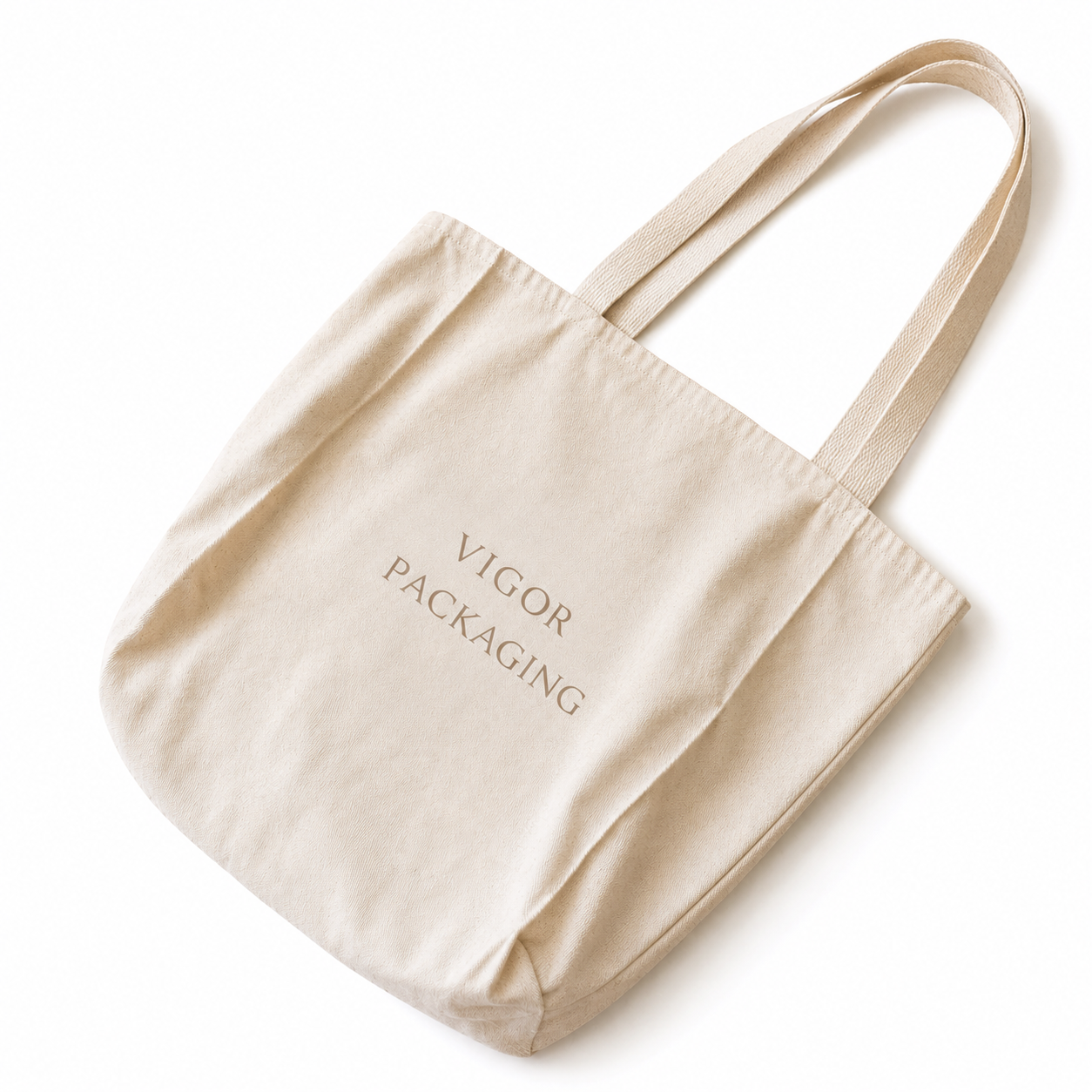
Which Canvas Is Best for Tote Bags?
Canvas tote bags can range from lightweight promotional products to highly structured retail bags.
Consider:
- desired hand feel,
- bag dimensions,
- handle construction,
- intended contents,
- print area,
- foldability,
- and budget.
For a more substantial tote, additional considerations may include:
- gusset construction,
- reinforced handles,
- internal pockets,
- lining,
- base reinforcement,
- and hardware.
A heavier canvas alone does not guarantee a better tote.
The fabric should be selected as part of the complete bag construction.
Which Canvas Is Best for Boat Tote Bags?
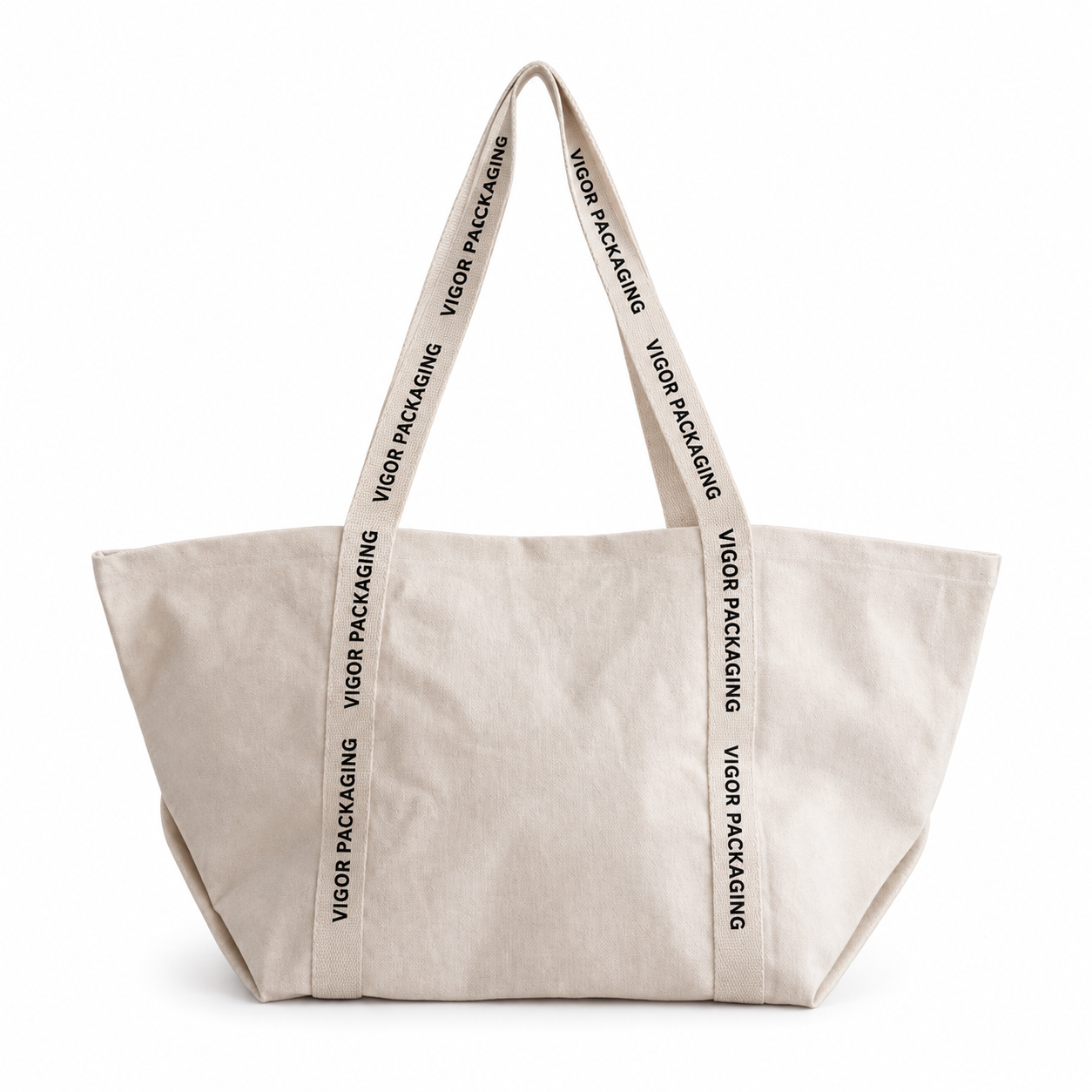
Boat totes typically rely on a more substantial visual structure than basic promotional totes.
Depending on the design, they may use:
- heavier canvas,
- reinforced handles,
- contrasting fabric panels,
- bottom reinforcement,
- gussets,
- and internal pockets.
The characteristic appearance therefore comes from:
Fabric + Construction
rather than fabric weight alone.
If a bag needs to stand more upright, increasing GSM is only one possible solution.
Which Canvas Is Best for Crossbody Bags?
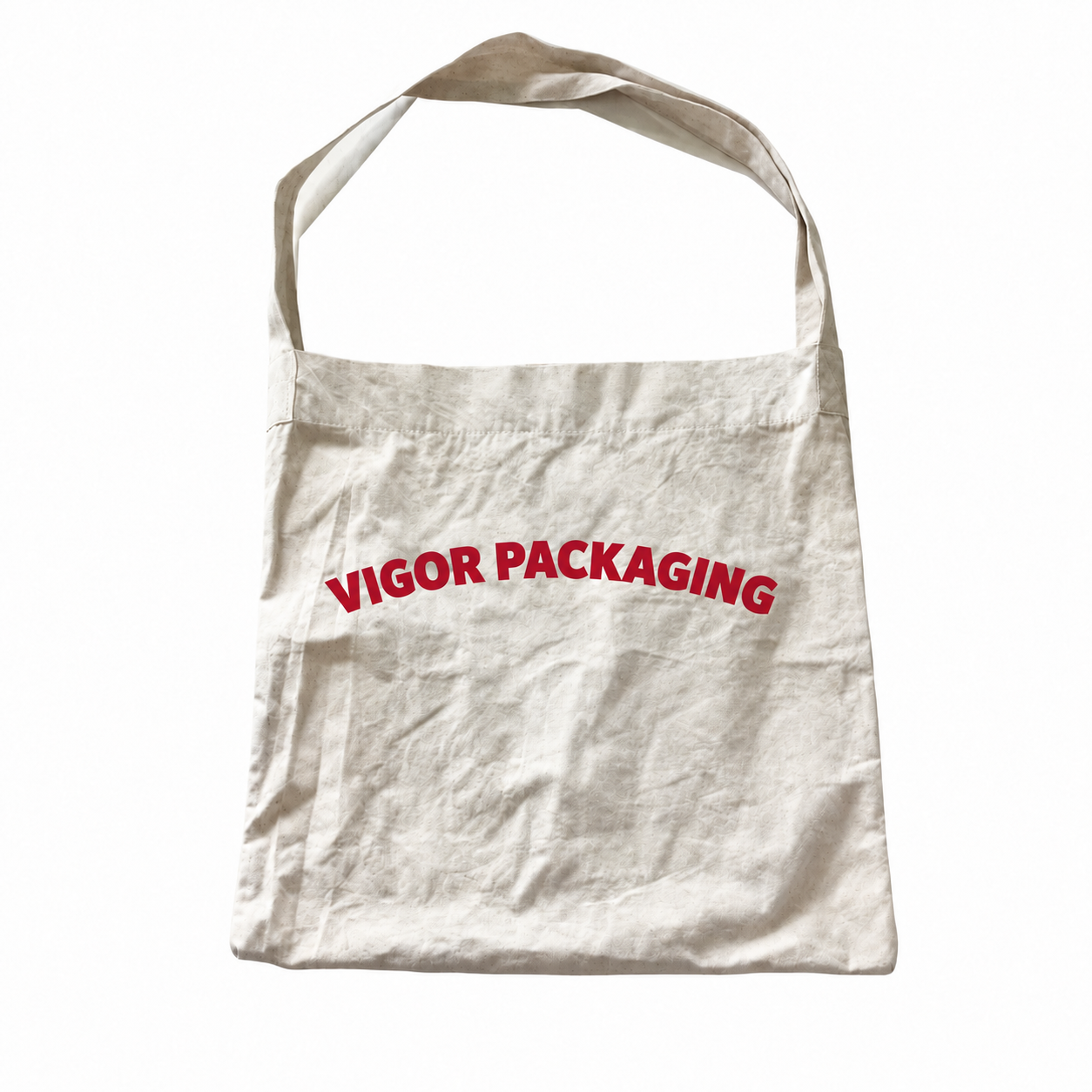
Canvas crossbody bags generally require more construction planning than simple open-top totes.
Important considerations include:
- body structure,
- lining,
- zipper construction,
- adjustable straps,
- pockets,
- hardware,
- reinforcement points,
- and expected contents.
Depending on the design, medium or heavier canvas may be considered, but the correct weight depends on the complete structure.
A lined crossbody bag, for example, may achieve sufficient structure without using the heaviest possible outer canvas.
Which Canvas Is Best for Drawstring Bags?
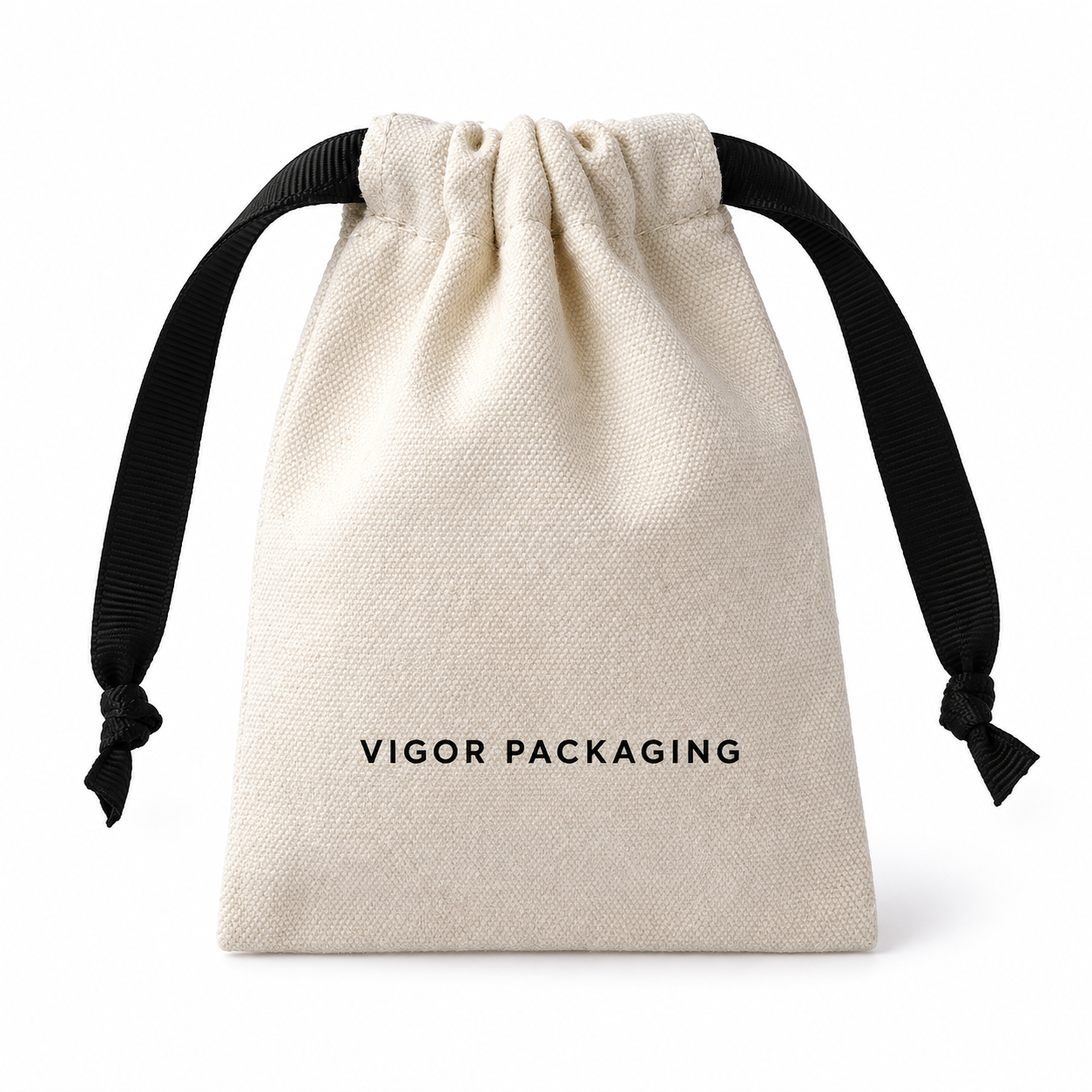
Canvas can be used for drawstring bags when a more substantial structure is desired.
However, very heavy or stiff canvas may not gather around the drawstring channel as easily as a softer fabric.
Consider:
- fabric flexibility,
- drawstring channel dimensions,
- cord thickness,
- opening and closing behavior,
- seam thickness,
- and bag size.
This illustrates an important principle:
The fabric should work with the bag mechanism, not just the visual design.
Canvas for Bags With Gussets
Gussets add depth and capacity to a bag.
Common forms include:
- side gussets,
- bottom gussets,
- and side-and-bottom gussets.
As canvas becomes heavier, folded intersections can contain several layers of material.
This can influence:
- seam thickness,
- sewing difficulty,
- corner formation,
- binding,
- and finished appearance.
For heavy canvas constructions, the complete seam stack should be evaluated rather than considering each material independently.
Canvas Handles Matter as Much as the Bag Body
Handle construction is often overlooked when buyers focus on canvas GSM.
A tote made from substantial canvas can still perform poorly if the handle attachment is unsuitable for its intended load.
Handle options may include:
- self-fabric handles,
- cotton webbing,
- polyester webbing,
- rope,
- leather or synthetic trim,
- and other materials.
Attachment can also involve different stitch patterns and reinforcement structures.
Therefore:
Bag performance should never be specified using body fabric GSM alone.
Should Canvas Bags Be Lined?
Not every canvas bag needs a lining.
A simple tote may intentionally use an unlined construction.
A lining may be considered when the design requires:
- a cleaner interior,
- additional pockets,
- concealed seams,
- additional structure,
- protection of contents,
- or a different interior appearance.
Adding a lining changes:
- material consumption,
- sewing complexity,
- finished weight,
- bag structure,
- and cost.
The decision should therefore be made according to the finished product rather than added automatically.
Can Canvas Be Coated?
Canvas can be treated or coated to modify its surface or functional characteristics.
Depending on the system, treatments may influence:
- water resistance,
- surface feel,
- stiffness,
- appearance,
- or cleanability.
However:
coated canvas is not one standardized material.
Different coating and lamination systems can behave differently and may affect:
- printing,
- sewing,
- folding,
- adhesion,
- color,
- hand feel,
- and end-of-life considerations.
The required function should therefore be defined before the fabric treatment is selected.
Common Canvas Selection Mistakes
Specifying Only “Canvas”
Canvas is not one standard material.
Define the specification more clearly.
Choosing Only by GSM
GSM is useful, but it does not define yarn, weave, thickness, surface or finished strength.
Assuming Heavier Means Better
Unnecessarily heavy canvas can increase:
- cost,
- bag weight,
- packing volume,
- and sewing difficulty.
Ignoring Bag Construction
Handles, seams, gussets, lining and reinforcement can matter as much as the body fabric.
Choosing the Fabric Before Considering the Logo
A heavily textured canvas may not reproduce fine artwork in the same way as a smoother fabric.
Comparing Prices Without Comparing Specifications
Two quotations for a canvas tote bag may use different:
- fabric weights,
- yarns,
- finishes,
- handles,
- stitching,
- and branding processes.
Approving Fabric From a Photo Only
A photograph cannot accurately communicate:
- weight,
- stiffness,
- texture,
- weave density,
- thickness,
- or hand feel.
Physical sampling is especially valuable when material character matters.
How to Specify Canvas Fabric When Requesting a Quote
Instead of sending:
“Please quote a canvas tote bag.”
provide a more complete specification.
| Specification | Information to Provide |
|---|---|
| Bag Type | Tote, boat tote, crossbody, drawstring, pouch, etc. |
| Dimensions | Width × height × gusset |
| Intended Use | What the bag will carry |
| Fiber | 100% cotton, blend, polyester, etc. |
| Fabric Type | Canvas, duck canvas or reference sample |
| Fabric Weight | GSM or oz/yd² |
| Color | Natural, stock dyed color or custom target |
| Finish | Unwashed, washed, coated or other requirement |
| Handles | Self-fabric, webbing, rope, etc. |
| Construction | Flat, gusseted, lined, reinforced, etc. |
| Branding | Screen printing, embroidery, transfer, label, etc. |
| Artwork | Logo/pattern file and print dimensions |
| Quantity | Total order quantity |
| Variations | Quantity per color/design |
| Special Requirements | Washing, shrinkage, testing, packaging, etc. |
If you do not know the correct GSM or canvas construction, describe the desired finished result instead.
For example:
“We need a reusable retail tote that feels substantial but can still fold relatively flat.”
This gives the manufacturer more useful information than selecting a fabric weight without considering the finished product.
Why Physical Canvas Samples Matter
Canvas is difficult to evaluate from specifications alone.
A physical sample allows you to compare:
- hand feel,
- stiffness,
- surface texture,
- weave density,
- thickness,
- color,
- opacity,
- foldability,
- and overall appearance.
For custom bag development, an effective approval sequence can be:
Fabric Sample → Fabric & Color Approval → Bag Sample → Branding Approval → Bulk Production
For some projects, the fabric and branding should be tested together because print appearance can change with the canvas surface.
If you are trying to match an existing product, sending a physical reference bag or fabric swatch can also reduce ambiguity.
Frequently Asked Questions About Canvas Fabric for Bags
What is the best canvas fabric for bags?
There is no single best canvas for every bag. The correct material depends on bag type, dimensions, intended contents, desired structure, branding, construction and cost. Fiber, weave, GSM and finishing should be evaluated together.
Is canvas always made from cotton?
No. Cotton canvas is common, but canvas can also be made from synthetic fibers or blends. Fiber composition should be specified separately from fabric type.
Is canvas the same as cotton?
No. Cotton is a fiber, while canvas describes a fabric construction or category. Many canvas bags are made from cotton, which is why the terms are sometimes confused.
What is the difference between canvas and denim?
Canvas is commonly associated with a dense woven construction, while denim characteristically uses a twill weave that creates visible diagonal lines. Classic denim also commonly uses differently colored warp and weft yarns to create its recognizable appearance. Both can be made from cotton and both can be used for bags.
What is cotton canvas?
Cotton canvas is canvas fabric made from cotton fiber. It is commonly used for tote bags, shopping bags, crossbody bags and other reusable fabric products.
What is duck canvas?
Duck canvas generally refers to a dense, substantial woven fabric, commonly made from cotton. It is available in different weights and should not be treated as one fixed specification.
What GSM canvas is best for tote bags?
There is no universal GSM for tote bags. Lightweight promotional totes, reusable retail totes and structured premium totes can require different fabrics. Bag dimensions, weave, handles, seams, gussets and intended load should be considered together with GSM.
Is 300 GSM canvas heavy?
A 300 GSM canvas has more mass per unit area than a 200 GSM fabric, but whether it feels light or heavy depends on the fabric construction and intended application. GSM alone cannot predict stiffness, thickness or strength.
What is the difference between GSM and oz for canvas?
Both can express fabric mass per unit area when ounces are specified as oz/yd². Approximately 1 oz/yd² equals 33.9 GSM.
Does higher GSM mean thicker canvas?
Not necessarily. GSM measures mass per unit area, while thickness is a separate property influenced by yarn, weave, finishing and other factors.
Does higher GSM mean stronger canvas?
Not automatically. Strength depends on fiber, yarn, weave, density and finishing. Finished bag strength additionally depends on seams, stitching, handles and reinforcement.
Can canvas bags be screen printed?
Yes. Screen printing is commonly used on canvas bags, but print detail and appearance depend on surface texture, weave density, artwork and the printing system.
Can canvas bags be embroidered?
Yes. Many canvas fabrics provide a suitable base for embroidery, but stitch density, design size and fabric construction should be considered.
Does cotton canvas shrink?
Cotton canvas can change dimensions during washing and drying. The amount depends on the actual fabric, finishing, pre-treatment and care conditions, so there is no universal shrinkage percentage for all cotton canvas.
Is waterproof canvas the same as a waterproof bag?
No. A water-resistant or waterproof-treated fabric does not automatically make the finished bag completely waterproof. Seams, needle holes, zippers, openings and other components also affect water protection.
Should I use canvas or regular cotton for tote bags?
It depends on the intended result. Lightweight woven cotton can work well for soft, foldable totes, while canvas is often considered when a more substantial or structured bag is desired. The actual specification matters more than the material name alone.
Do I need a fabric sample before ordering custom canvas bags?
A physical sample is useful when fabric weight, texture, stiffness, color or print appearance matters. For custom projects, a finished bag sample provides additional information that a fabric swatch alone cannot show.
Choosing the Right Canvas for Your Bag
The best canvas is not necessarily the heaviest canvas.
A better selection process is:
Bag Application → Contents → Desired Structure → Fiber → Weave → GSM → Finish → Branding → Bag Construction
This helps avoid two opposite sourcing problems:
Under-specifying — the selected fabric does not provide the desired structure or performance.
Over-specifying — unnecessarily heavy material increases cost, sewing difficulty, packing volume and shipping weight without providing meaningful benefit.
Canvas should therefore be selected as part of the complete bag design rather than as an isolated material specification.
For a broader comparison of cotton, canvas, linen, satin, velvet, polyester and nylon, read our Best Fabrics for Bags guide.
For custom development, explore our Custom Fabric Bags, or contact us with your bag dimensions, intended use, quantity, artwork and preferred hand feel. We can help evaluate suitable canvas and construction options.