Custom garment bags provide a protective outer layer for suits, dresses, coats, uniforms, costumes, and other hanging apparel during storage, retail presentation, customer collection, and travel. Their full-length format helps reduce exposure to dust and direct surface contact while keeping garments grouped with their hangers and accessories.
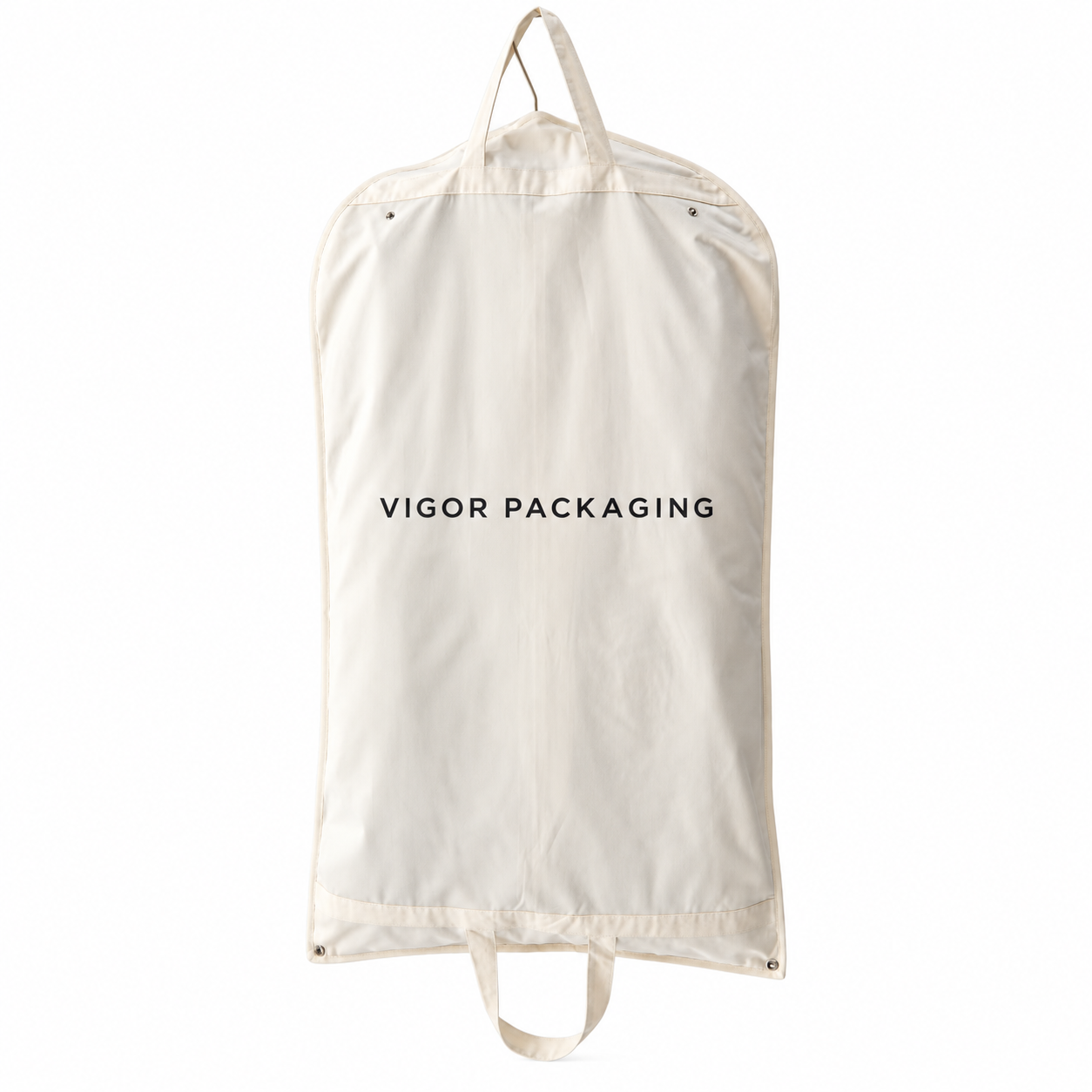
The example shown features a long rectangular body with rounded shoulders, bound edges, reinforced carrying handles, upper and lower hardware points, and a large printed logo area. The handles at both ends suggest a foldable construction that can convert the hanging cover into a more compact hand-carried format.
Unlike a standard flat fabric bag, a garment cover must account for hanger width, garment length, shoulder shape, closure position, and the volume created by structured or layered clothing. Side gussets can be added for coats, gowns, or multiple garments, while pockets and identification windows can organize accessories, documents, and order information.
The image represents one possible configuration. Material, dimensions, gusset, hanger opening, zipper, handles, pockets, windows, reinforcement, color, logo method, and packing can all be customized. Garment bags provide dust and handling protection but should not be described as waterproof, impact-proof, or suitable for long-distance shipping without testing the complete packaging system.
| Customization Features | Service Availability |
|---|---|
| Free Dieline / Pattern | ✔ Available (Custom patterns developed according to garment length, shoulder width, gusset depth, hanger type, and carrying structure) |
| Graphic Design | ✔ Available (Logo scale, artwork position, identification areas, and printable panels tailored to the garment bag) |
| Material Customization | ✔ Available (Natural cotton, canvas, cotton-polyester blends, polyester, nylon, non-woven polypropylene, PEVA, selected recycled fabrics, and other suitable materials) |
| Size & Gusset Customization | ✔ Available (Custom width, length, side depth, shoulder shape, and capacity for individual or multiple garments) |
| Handle Customization | ✔ Available (Custom top and bottom handles, webbing, self-fabric straps, reinforced attachments, and hand-carrying configurations) |
| Closure & Hardware Customization | ✔ Available (Nylon or metal zippers, snap buttons, hook-and-loop fasteners, eyelets, buckles, D-rings, and other suitable components) |
| Hanger Opening Customization | ✔ Available (Custom hanger slots, reinforced openings, flap covers, and other constructions developed around the selected hanger) |
| Pocket & Window Customization | ✔ Available (Accessory pockets, shoe pockets, document sleeves, identification windows, and transparent viewing panels) |
| Custom Printing & Logo | ✔ Available (Silkscreen printing, heat transfer printing, digital printing, embroidery, woven labels, and printed labels) |
| Pantone Color Matching | ✔ Available (Custom fabric, binding, handles, zippers, and print colors developed according to brand requirements, subject to material and quantity) |
| Custom Packaging Requirements | ✔ Available (Individual folding, polybags, size labels, barcode stickers, hangtags, carton dividers, and outer cartons) |
Versatile Application Scenarios
Designed for hanging storage, garment presentation, and foldable carrying, these custom garment bags adapt to a wide range of fashion, formalwear, hospitality, retail, and professional applications:
Suits & Tailored Clothing: Protect suits, jackets, trousers, shirts, and made-to-measure garments during customer collection, wardrobe storage, and travel.
Bridal & Formalwear: Develop longer or gusseted covers for wedding dresses, evening gowns, tuxedos, and other voluminous garments.
Fashion Retail & E-Commerce: Add branded garment covers to premium apparel orders, capsule collections, personal-shopping services, and customer deliveries.
Uniforms & Workwear: Organize corporate uniforms, hospitality clothing, aviation garments, school uniforms, and professional workwear.
Costumes & Performance Apparel: Store stage costumes, dancewear, theatrical garments, and event wardrobes with identification windows or accessory pockets.
Hotels & Laundry Services: Package pressed clothing, guest laundry, robes, and wardrobe items for hospitality and garment-care services.
Travel & Business Use: Convert foldable designs into hand-carried garment bags for short trips, meetings, events, and destination weddings.
Showrooms & Sample Collections: Protect sales samples, fashion prototypes, showroom pieces, and exhibition garments between presentations.
View more products in our [Custom Fabric Bags] category.
Frequently Asked Questions About Custom Garment Bags
What are custom garment bags commonly used for?
Custom garment bags are commonly used for suits, dresses, coats, uniforms, bridal gowns, costumes, tailored clothing and fashion samples.
They can protect hanging garments during retail collection, wardrobe storage, showroom presentation, laundry service and travel. Handles, pockets, identification windows and foldable constructions can be added according to the application.
For other reusable textile packaging formats, view our custom fabric bags category.
Which material is best for a garment bag?
The best material depends on the required breathability, opacity, durability, garment weight, expected reuse, printing method and budget. Cotton and selected woven fabrics provide a natural appearance, while polyester and nylon can offer lighter weight and different levels of abrasion resistance.
Non-woven polypropylene may suit economical retail garment covers. PEVA or coated materials may provide additional resistance to surface moisture, but material performance must be confirmed through testing.
Fabric names alone do not define performance. Weight, weave, coating, seams, zipper construction and ventilation should be evaluated together.
How do I choose the correct garment bag size?
Measure the garment from the top of the hanger to the lowest hem, then confirm the shoulder width and the garment’s maximum depth. Additional space is required for seams, the zipper, hanger opening and comfortable insertion.
Shorter covers may suit shirts, jackets and suits. Longer formats are generally required for coats, gowns, dresses and ceremonial clothing.
The garment should hang naturally without folding at the bottom or placing pressure on the zipper and seams. A physical sample is recommended for structured or unusually shaped garments.
Can the hanger opening and zipper be customized?
Yes. The top can include a reinforced hanger slot, a shaped opening, a flap-covered opening or another construction developed around the selected hanger.
Zippers can be positioned along the center, side or another suitable seam. Options may include nylon coil zippers, selected metal zippers, single or double sliders and custom zipper pullers.
The opening and closure should be sampled with the actual hanger and garment to confirm accessibility, containment and seam strength.
Can a garment bag hold multiple garments?
Yes. A side gusset can add capacity for several garments, thick coats, layered formalwear or bridal dresses. The required depth depends on the garment volume, hanger quantity and how tightly the items can be grouped.
Reinforced seams, stronger handles and a wider hanger opening may be required when the bag carries additional weight.
A multi-garment cover should be load-tested with the intended clothing and hangers before its capacity is stated.
Can the garment bag fold for carrying?
Yes. Handles can be positioned at the top and bottom so the full-length cover folds into a shorter hand-carried format. Snap buttons, buckles, straps or other components can hold the folded bag in place.
The fold position should avoid crushing structured shoulders, decorations or sensitive garment areas. Internal securing straps may also help control the hanger and reduce movement.
Foldability should be evaluated using the actual garment because long gowns, structured suits and delicate fabrics require different handling.
Are garment bags waterproof and breathable?
A standard fabric garment bag should not automatically be described as waterproof. Cotton, non-woven fabric and untreated polyester may allow water or moisture to pass through the material, seams, zipper or hanger opening.
Breathability depends on the fabric, coating, lining and ventilation features. A highly closed or coated construction may reduce airflow and can trap existing moisture if garments are packed before they are dry.
If water resistance or ventilation is important, the complete bag should be tested under defined conditions before making a performance claim.
Can pockets or transparent windows be added?
Yes. Garment bags can include accessory pockets, shoe compartments, document sleeves, order-card holders and transparent identification windows.
A clear window can help staff or customers identify the garment without opening the bag. Its material, position, dimensions and attachment method should be selected according to the required visibility and flexibility.
Pockets should be positioned so their contents do not press against or mark the garment.
Can our logo be printed on the garment bag?
Yes. Branding methods may include silkscreen printing, heat transfer printing, digital printing, embroidery, woven labels and printed fabric labels, depending on the bag material and artwork.
Large front panels provide useful space for prominent branding, while smaller labels can create a more understated presentation. Embroidery backing should be isolated from delicate garments.
Logo scale, color, placement and print adhesion should be confirmed through a physical sample.
What are the MOQ, price, sample time and production lead time?
The standard minimum order quantity is 1,000 pieces. Custom garment bags start from US$1.00 per piece.
Final pricing depends on the dimensions, material, fabric weight, gusset, zipper, handles, hanger opening, pockets, windows, hardware, logo method, reinforcement, quantity and individual packing requirements.
Custom sample production generally takes 3–7 days, with sample charges starting from US$50.00. Sample delivery generally takes 3–7 days, and mass production normally takes 15–30 days. Project timing may vary according to material availability, construction and order requirements.
For an accurate quotation, please provide the bag dimensions, garment type and dimensions, quantity, preferred material, gusset, hanger style, zipper, handles, pockets, logo artwork, packing requirements and delivery destination. You can contact Vigor Packaging to discuss your project.