Rigid boxes come in nine common structures: lid-and-base, drawer, flip-top, book-style, magnetic closure, ribbon closure, double-door, magnetic double-drawer, and flip-top double-drawer. Which one makes sense for you depends on your product’s size, your budget, how you’re shipping it, the kind of unboxing moment you want to create, and whether the box needs to be reusable.
What Exactly Is a Rigid Box?
A rigid box is built from thick, non-folding paperboard—usually greyboard or chipboard—wrapped in printed paper, specialty paper, fabric, or another decorative material. Unlike a folding carton, it’s formed during production and holds its shape from the factory floor all the way to the customer’s hands.
You’ll see rigid boxes most often in cosmetics, perfume, jewelry, electronics, apparel, chocolate, candles, and corporate gifting—basically anywhere a product needs real protection alongside a premium look.
The structure you pick doesn’t just affect how the box looks. It shapes production cost, how much space it takes up in a shipping container, how long assembly takes, how well the product is protected, and what the unboxing moment actually feels like.
| Rigid Box Style | Best For | Relative Cost | Shipping Efficiency |
|---|---|---|---|
| Lid and Base | Apparel, jewelry and candles | Low–Medium | Medium |
| Drawer Box | Cosmetics, chocolate and accessories | Medium | Medium |
| Flip-Top Box | Skincare sets, apparel and e-commerce | Medium | Medium |
| Book-Style Box | Perfume, stationery and electronics | Medium | Medium |
| Magnetic Book Box | Luxury gift sets and limited editions | High | Medium |
| Ribbon-Closure Box | Weddings, beauty and personal care | Medium–High | Medium |
| Double-Door Box | Wine, skincare sets and VIP gifts | High | Low |
| Magnetic Double-Drawer Box | Advent sets and jewelry collections | Very High | Low |
| Flip-Top Double-Drawer Box | Cosmetics and premium gift sets | Very High | Low |
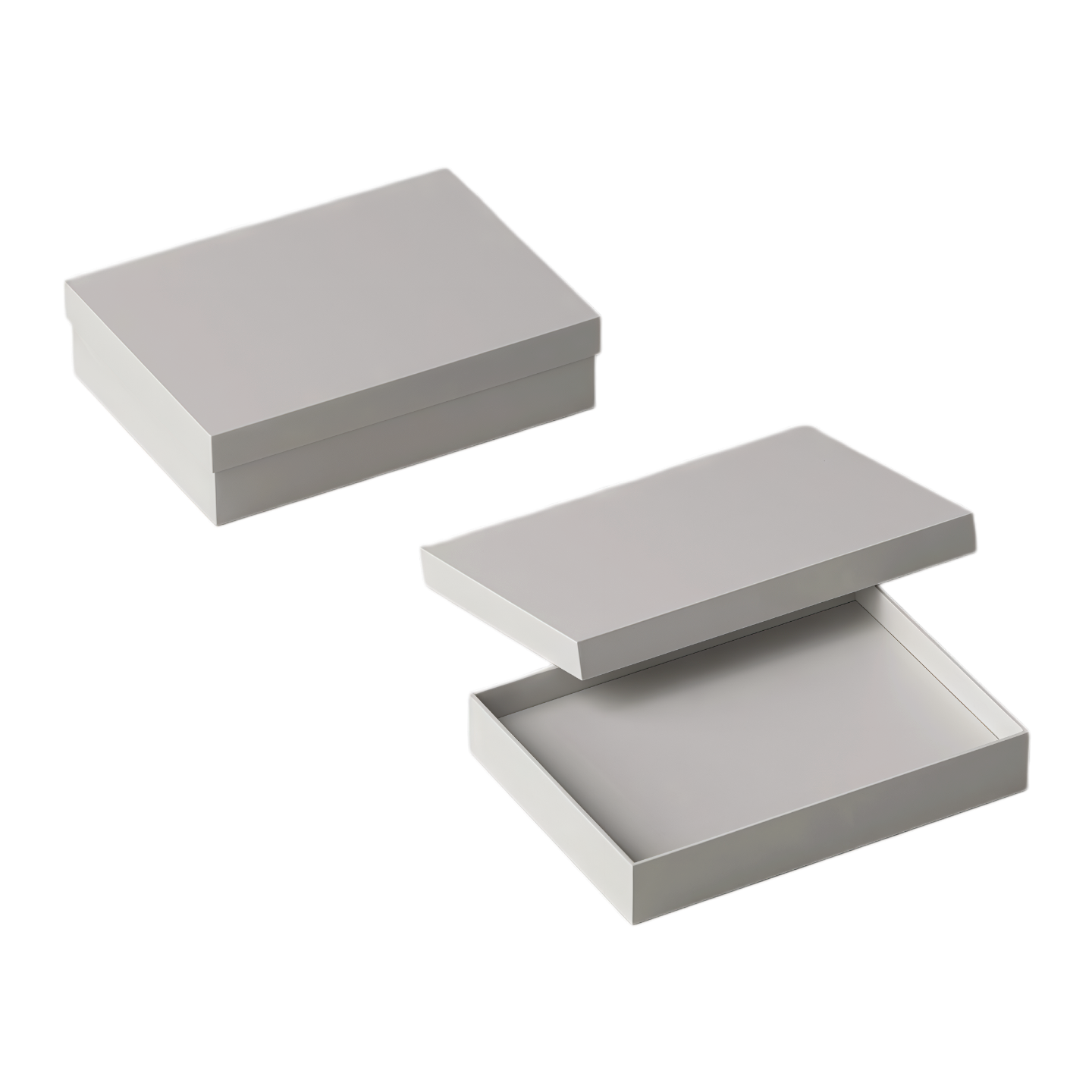
1. Lid-and-Base Rigid Box
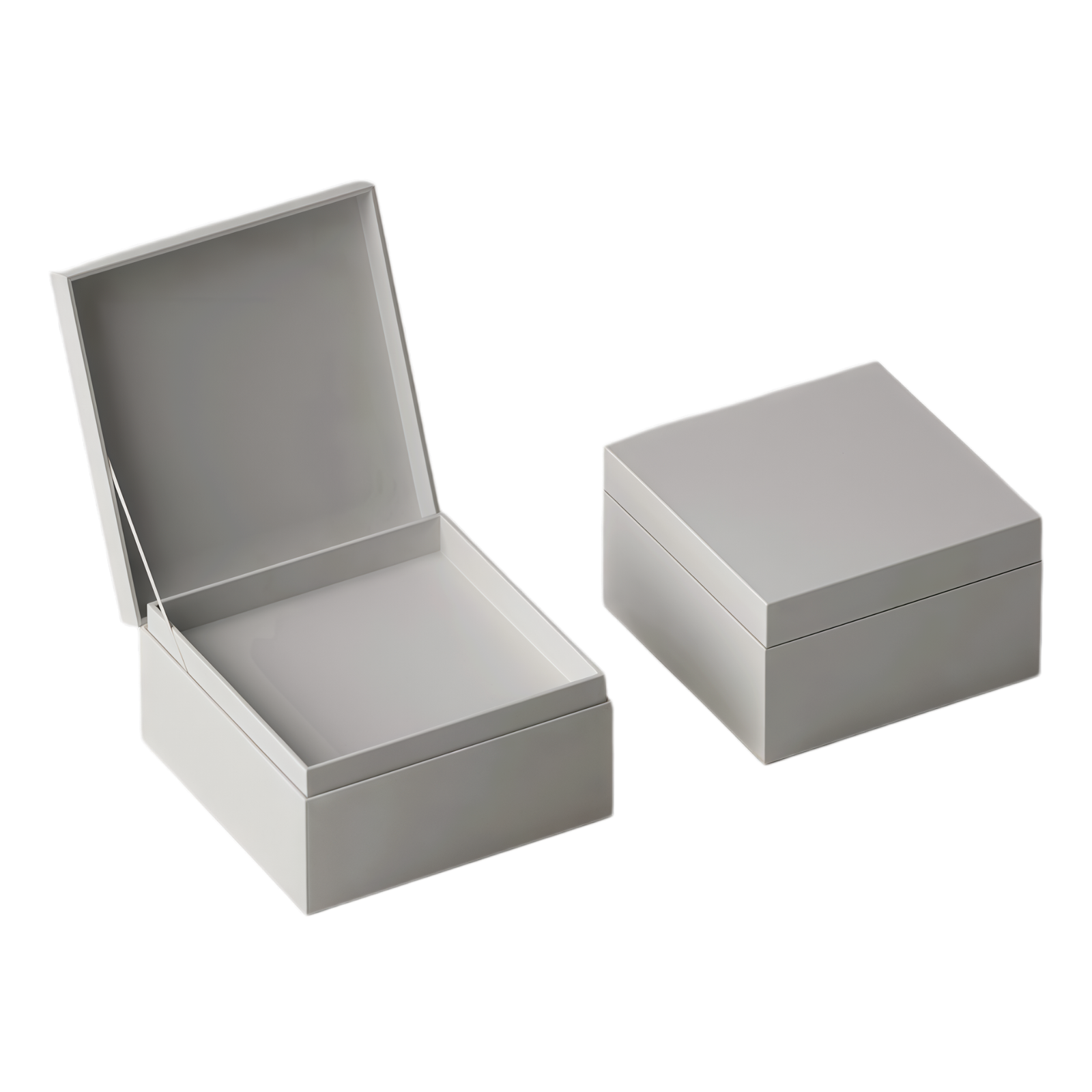
Also called a two-piece rigid box, this one is exactly what it sounds like: a separate lid on top and a tray underneath. The lid can cover the whole base or just part of it, depending on the look you’re going for.
It’s probably the most versatile rigid structure available. The way it opens feels familiar and a little ceremonial, and there’s plenty of surface area for printing, foil stamping, embossing, or a decorative wrap.
Works well for: Apparel, jewelry, footwear, chocolate, candles, cosmetics, and premium gift sets.
Why people choose it:
-
It’s a classic look that customers instantly recognize.
-
It’s flexible enough to fit a wide range of product sizes.
-
It pairs easily with paper, foam, EVA, or molded-pulp inserts.
-
It performs well for product protection and stacking.
-
It’s generally more affordable than magnetic or drawer structures.
Worth knowing: These boxes typically can’t ship flat, so for larger sizes, you’ll want to think about shipping and storage volume early on. It’s also worth testing the fit between the lid and base during sampling—too tight and it’s difficult to open; too loose and it won’t feel premium.
Take a look at our custom two-piece boxes for more structure and finishing options.
2. Drawer Rigid Box
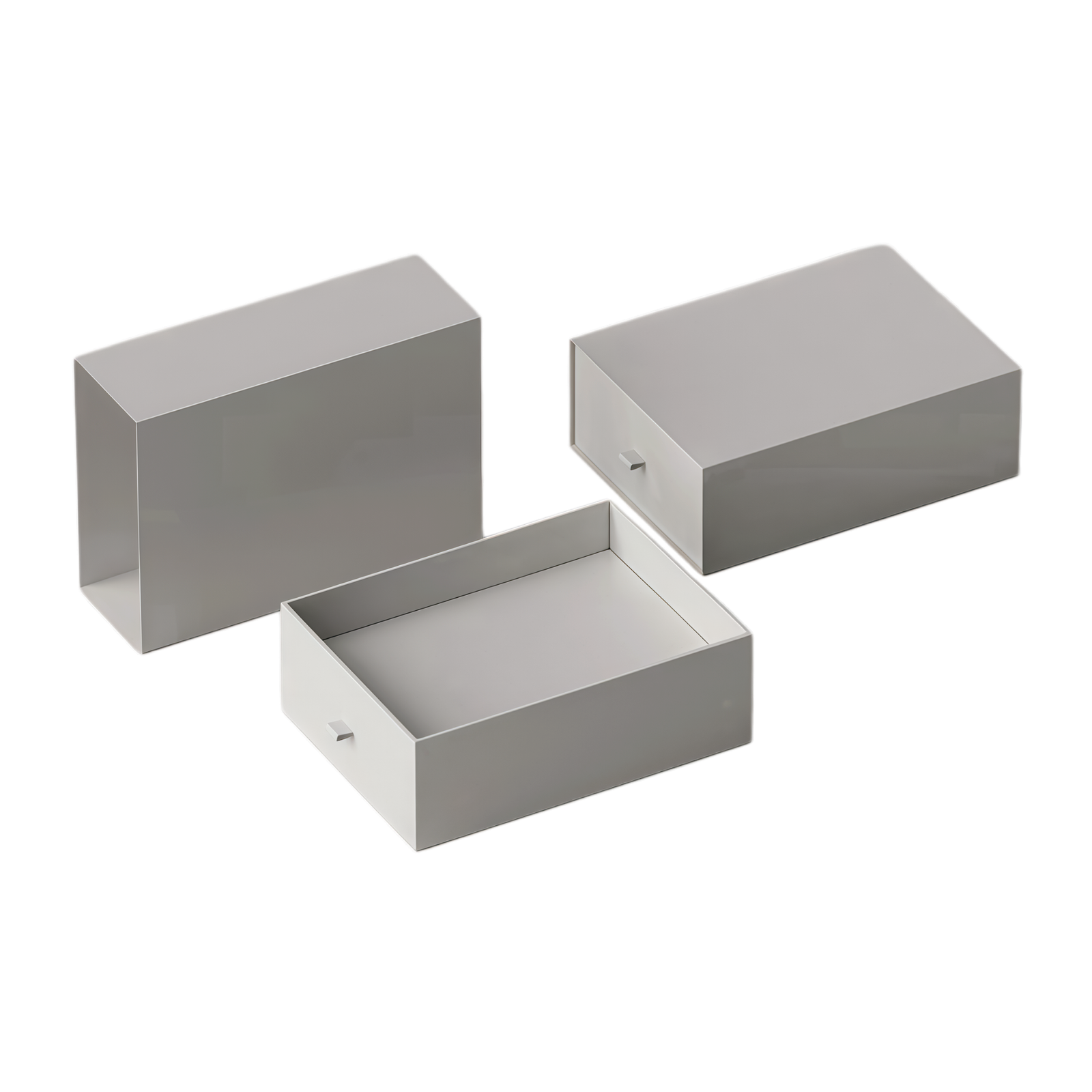
This structure has an outer sleeve and an inner tray that slides out—like an actual drawer. Add a ribbon pull, fabric tab, or thumb notch, and it becomes easy to open.
The slide-out motion reveals the product gradually, making the experience feel more interactive. Using contrasting colors for the sleeve and tray can create even more visual impact.
Works well for: Jewelry, cosmetics, scented candles, premium chocolate, electronic accessories, and personal care products.
Why people choose it:
-
The opening motion is memorable in a good way.
-
It provides a great canvas for color contrast and layered branding.
-
It works well as reusable storage.
-
It’s easy to combine with custom inserts and compartments.
Worth knowing: The sleeve and tray need accurate tolerances. Too snug and the box is frustrating to open; too loose and the tray can slide out during transit. Heavier products may need a sturdier pull tab or some kind of locking mechanism.
Check out our custom drawer boxes for examples.
3. Flip-Top Rigid Box
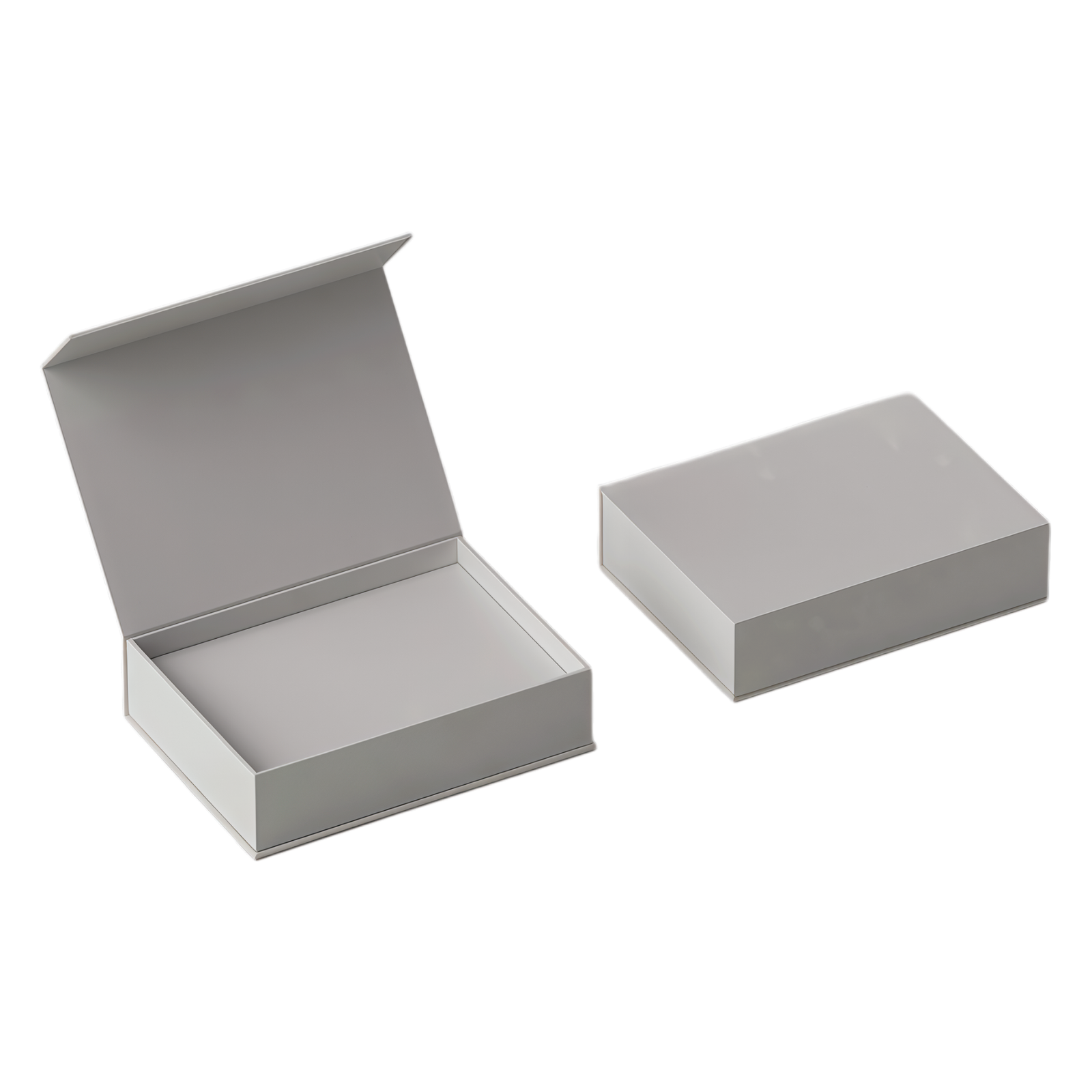
Here, the lid stays attached to the base with a paper hinge, fabric hinge, or reinforced joint and simply flips upward to open.
Because it’s all one piece, it looks clean and is genuinely convenient—especially for products that customers will open and close repeatedly.
Works well for: Apparel gift sets, skincare collections, subscription boxes, electronics, and premium e-commerce packaging.
Why people choose it:
-
It opens in a single, seamless motion.
-
It has a clean, cohesive appearance.
-
It handles repeated use well.
-
It provides plenty of branding space on both the lid and the interior.
Worth knowing: The hinge needs to be strong enough for repeated opening, so test the lid angle, board thickness, and interior clearance with your actual product before committing to mass production.
See our custom flip-top boxes.
4. Book-Style Rigid Box
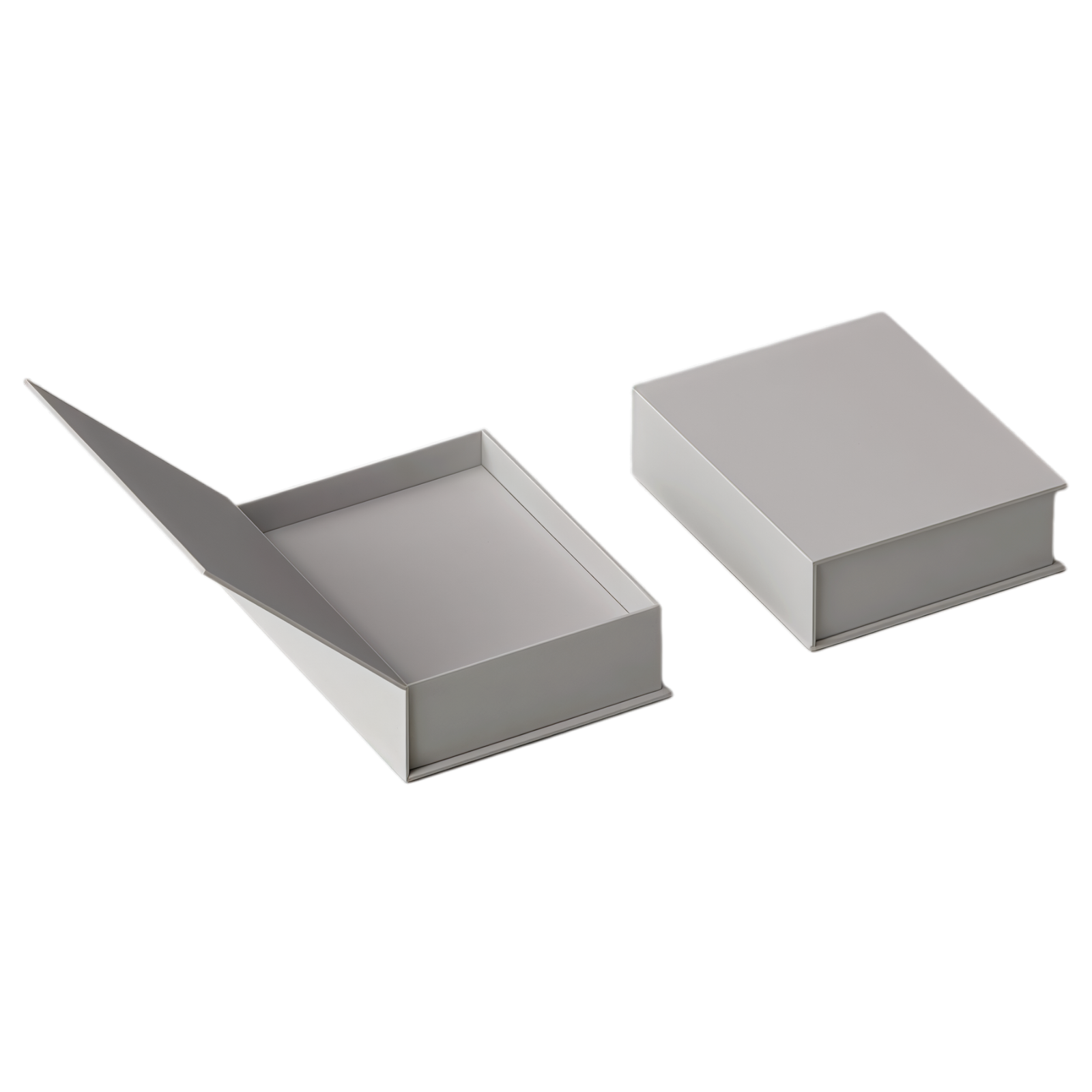
Just like it sounds, this box opens like a hardcover book, with an outer shell wrapping around an inner tray and a spine running down one side.
It’s a structure built for storytelling as much as protection. The large front cover and spine give you valuable space for branding, product information, or decorative design.
Works well for: Perfume, stationery, books, electronics, collectibles, and luxury presentation sets.
Why people choose it:
-
It’s excellent for brand storytelling.
-
It opens in a familiar and elegant way.
-
It works well for products that look their best laid flat.
-
It pairs easily with magnets, ribbons, or other closures.
Worth knowing: The spine and hinge need precise construction. If your product is large or heavy, you may need extra reinforcement to prevent the cover from bending or shifting out of alignment.
For inspiration, take a look at this custom book-style perfume box.
5. Magnetic Book-Style Box
Take the book-style structure and add hidden magnets, and you get a lid that closes with a precise, satisfying snap.
That magnetic click communicates quality without you having to say a word, which is exactly why this style appears so often in luxury launches, influencer kits, and limited-edition collections.
Works well for: Luxury cosmetics, perfume, electronics, holiday gift sets, media kits, and corporate gifts.
Why people choose it:
-
It feels premium and modern every time it closes.
-
It provides a secure closure without visible hardware.
-
It’s designed to be opened and closed repeatedly.
-
It creates strong perceived value.
Worth knowing: Magnet strength and placement require careful testing. Magnets, laminated surfaces, and mixed-material inserts can also complicate recycling. If sustainability is a priority for your brand, ask about a removable magnet system or an alternative closure.
If you need to reduce shipping volume, a collapsible magnetic structure is also worth considering.
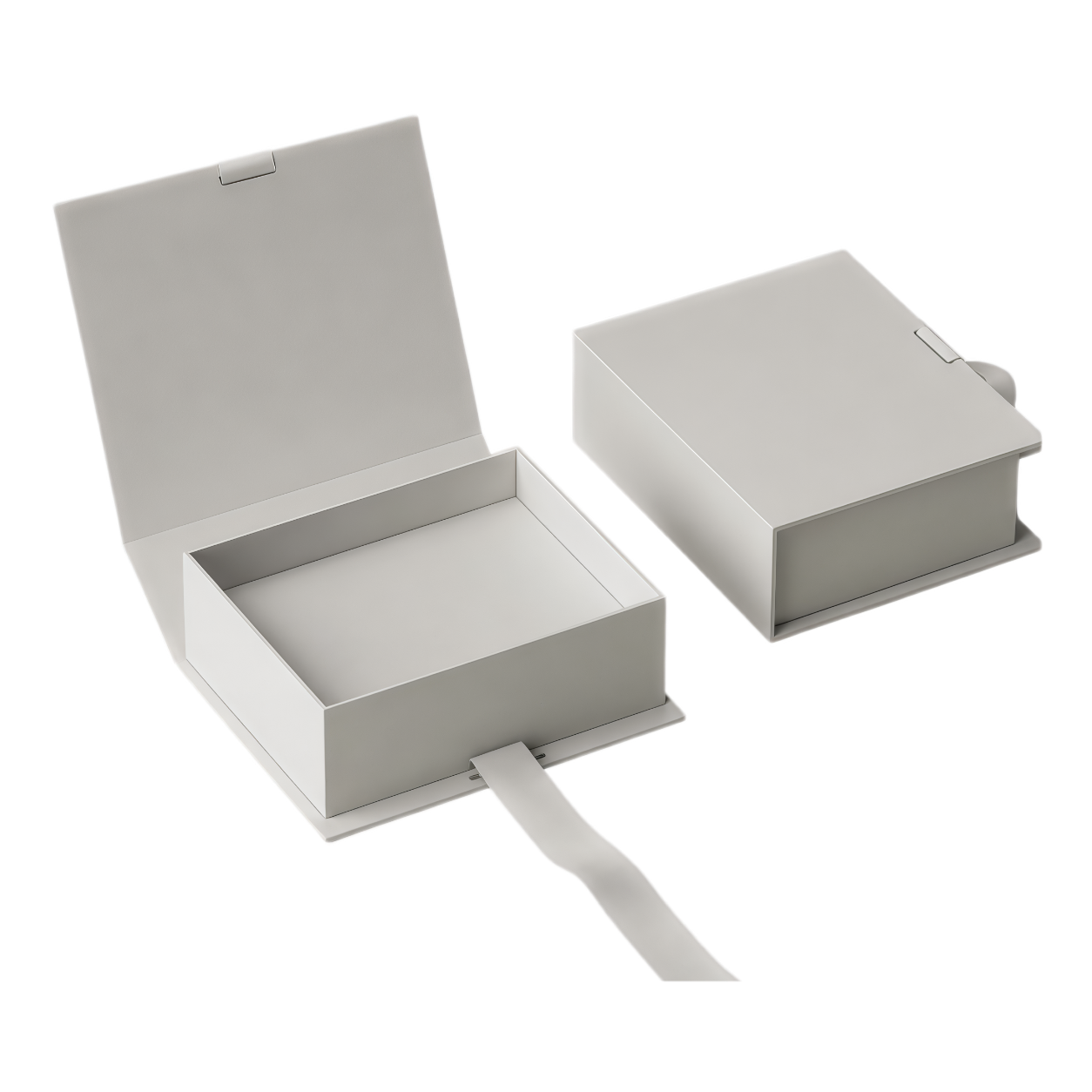
6. Book-Style Box with Ribbon Closure
This style uses the same book-style base, but instead of magnets, one or two ribbons hold it closed. The customer unties the ribbon to open the box, turning the process into a small ceremony in itself.
It feels softer and more romantic than a magnetic version, while the ribbon’s color and texture become part of the brand identity.
Works well for: Wedding gifts, Valentine’s Day collections, lingerie, jewelry, beauty products, and women’s personal care.
Why people choose it:
-
It creates an elegant, highly giftable presentation.
-
There are plenty of ribbon colors and materials to choose from.
-
It doesn’t require magnets.
-
It’s easy to customize for seasonal collections.
Worth knowing: Tying ribbons by hand adds packing labor. It’s worth checking ribbon length, fray resistance, color consistency, and how securely the attachment points hold during sampling.
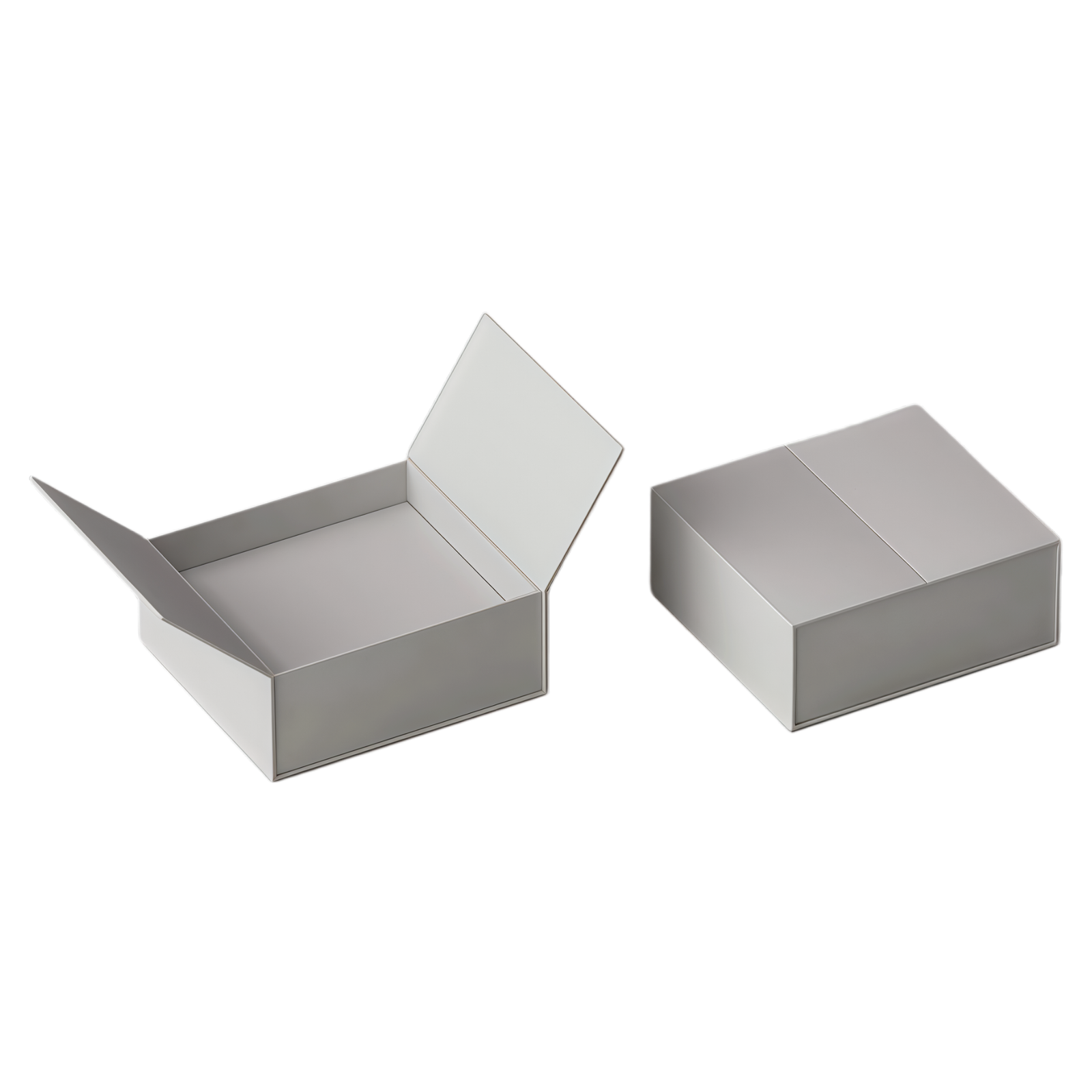
7. Double-Door Rigid Box
Sometimes called a gatefold box, this structure opens from the center outward—two panels swing open to reveal the product sitting in the middle.
It creates a dramatic, almost theatrical reveal and works especially well when you want the product to remain front and center.
Works well for: Wine, spirits, premium skincare sets, luxury food, VIP gifts, and corporate presentation kits.
Why people choose it:
-
It creates a genuinely memorable unboxing moment.
-
It places the product front and center.
-
It offers plenty of branding space inside and out.
-
It works well for premium multi-product sets.
Worth knowing: Double-door boxes use more material and require more assembly time than simpler structures, so the door alignment and insert design need to be precise. Because the finished box takes up more space, it’s worth calculating freight and warehousing costs before production.
For a real example, see our custom gatefold perfume box.
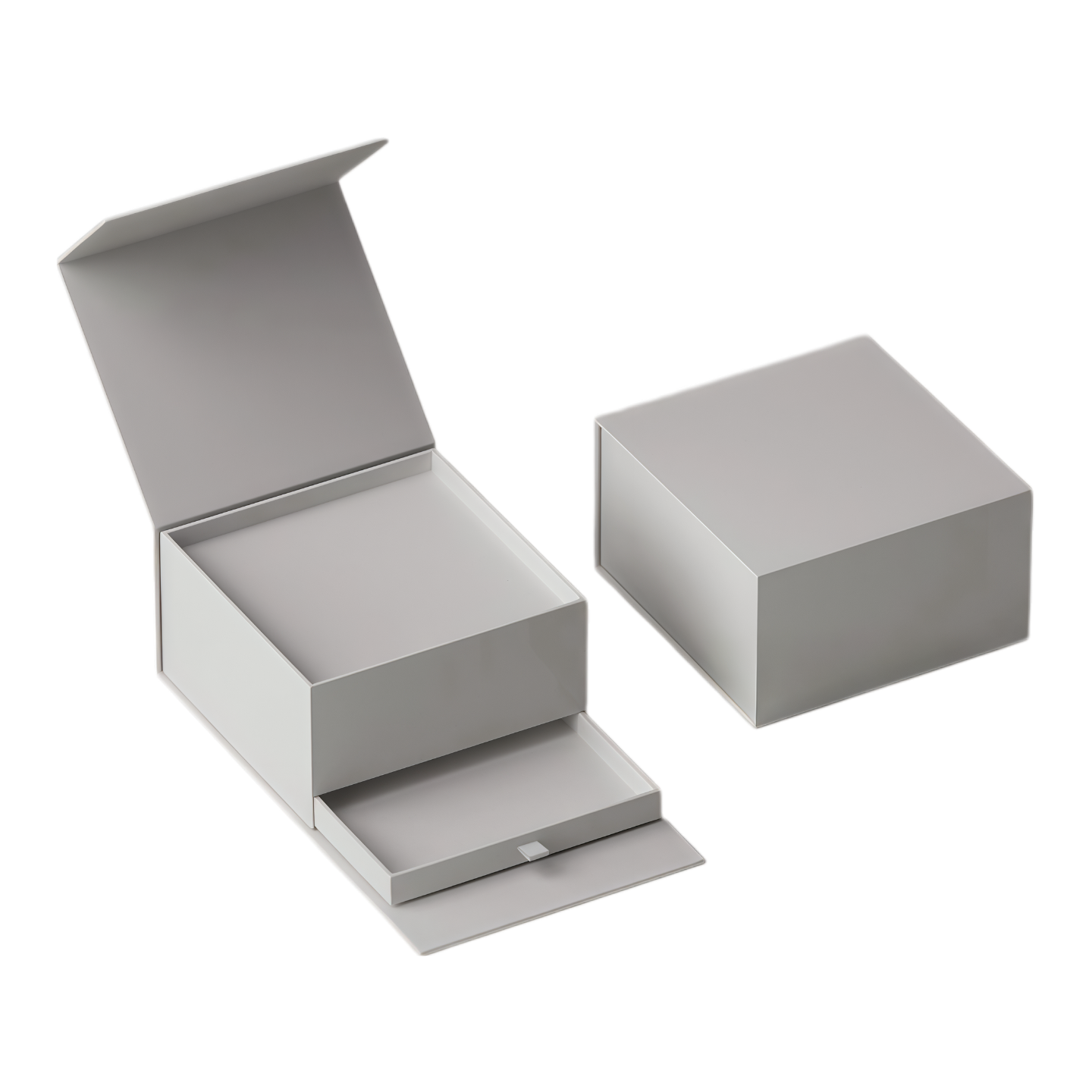
8. Magnetic Book Box with Double Drawers
This structure combines a magnetic book-style outer cover with two drawers inside—stacked vertically or arranged according to the product configuration.
The customer opens the magnetic cover first and then discovers each drawer, creating a layered, almost treasure-hunt-style experience.
Works well for: Advent calendars, jewelry collections, beauty gift sets, fragrance collections, and high-value multi-piece products.
Why people choose it:
-
It creates a layered, genuinely interactive unboxing experience.
-
It keeps multiple products organized and separated.
-
It has strong reuse and storage value.
-
It’s a popular option for limited editions and influencer campaigns.
Worth knowing: All those extra components mean more material, more assembly time, tighter quality control, and greater shipping volume. This style tends to make the most sense for premium products with enough packaging budget to support it.
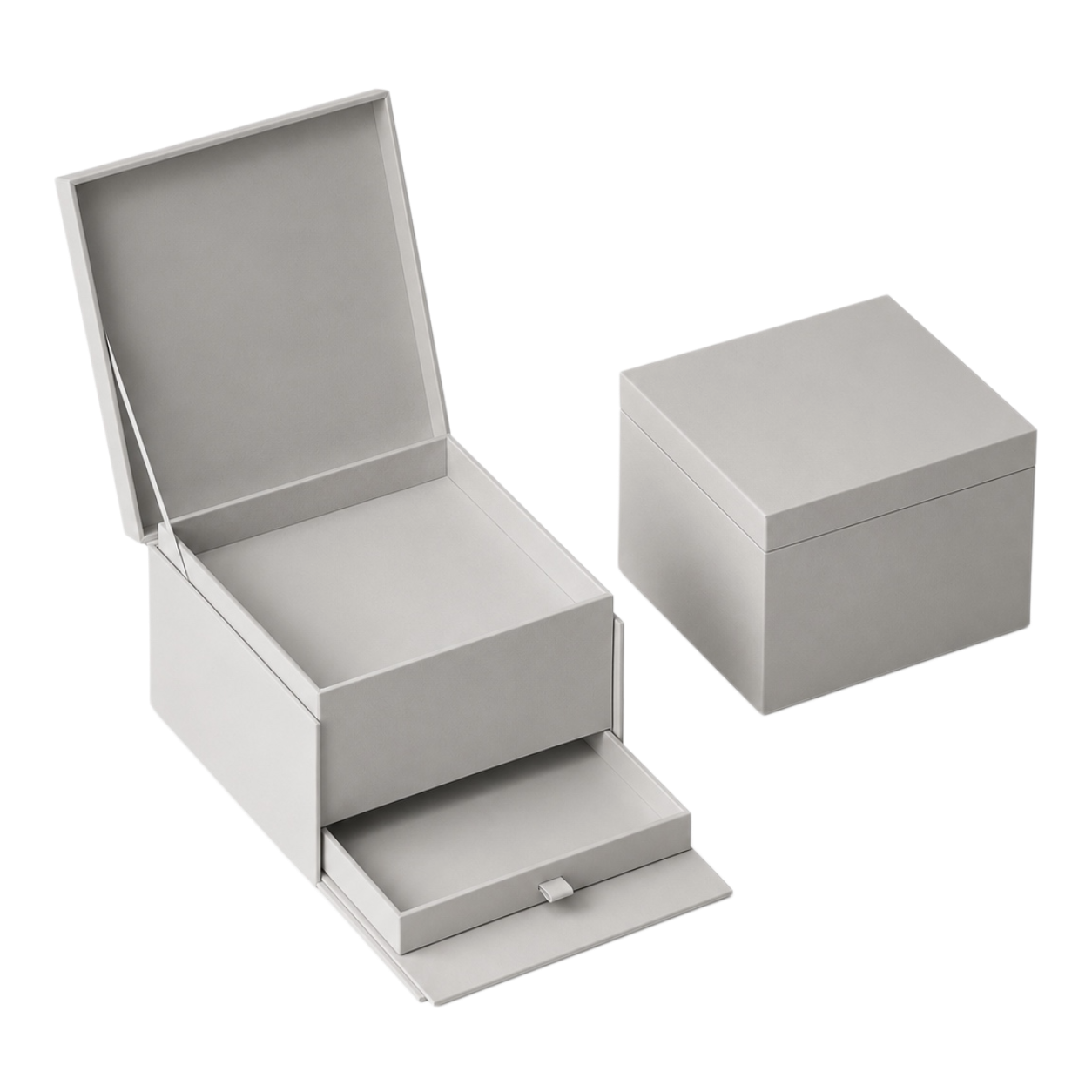
9. Flip-Top Box with Double Drawers
This structure combines an upper display compartment with one or two drawers below. The top section presents your hero product, while the drawers hold accessories or supporting items.
It creates a useful balance: the product is visible immediately, but the box also offers functional storage. That’s often why customers keep it after purchase.
Works well for: Cosmetics, jewelry, food gift sets, corporate gifts, mother-and-baby gift sets, and premium seasonal collections.
Why people choose it:
-
It combines product display with practical storage.
-
It handles complex, multi-product sets well.
-
It has high reuse value.
-
It creates several smaller moments during unboxing rather than just one.
Worth knowing: This is one of the more complex structures on this list. It requires careful sampling, precise drawer tolerances, durable hinges, and a well-designed insert system. Production cost and freight volume are generally higher than with standard rigid boxes.
How to Actually Choose the Right Structure
Here are the main factors worth thinking through before settling on a structure.
Product size, weight, and fragility. Heavy or fragile products need sufficient board strength and a properly designed insert. You should test the packaging with the actual product, not just dimensions on a drawing.
Brand positioning. Magnetic, double-door, and multi-drawer structures generally create a stronger luxury impression. Lid-and-base and flip-top boxes offer a cleaner and usually more cost-efficient presentation.
The unboxing experience you want. Drawer and double-door boxes encourage interaction and tend to work well in social media content. Lid-and-base boxes provide a classic reveal, while book-style boxes offer more room for storytelling.
Freight and warehousing. Conventional rigid boxes hold their shape and can occupy considerable shipping volume. For large orders or oversized boxes, it’s worth asking whether a collapsible structure could reduce logistics costs.
Budget and assembly. More components generally mean more material, assembly work, and quality control. Sometimes, a simpler structure with a premium finish delivers better value than an overly complicated box.
Sustainability. Consider responsibly sourced paper, recyclable wraps, paper-based inserts, removable accessories, and designs that avoid mixing too many materials. It’s worth evaluating the entire box—not only the outer paper.
What Actually Drives the Cost of a Custom Rigid Box?
Several factors determine rigid box pricing:
-
Finished dimensions
-
Board thickness and material
-
Order quantity
-
Printed or specialty wrapping paper
-
Foil stamping, embossing, debossing, and lamination
-
Magnets, ribbons, handles, and other accessories
-
Paper, foam, EVA, fabric, or molded-pulp inserts
-
Number of structural components
-
Manual assembly requirements
-
Individual packing method
-
Shipping destination and delivery timeline
To receive an accurate quotation, share your internal box dimensions, product weight, expected quantity, preferred structure, insert requirements, artwork, delivery destination, and target launch date.
Frequently Asked Questions
What’s the Most Affordable Rigid Box Style?
A standard lid-and-base box tends to be one of the more budget-friendly options because it uses fewer components than magnetic, double-door, or multi-drawer structures.
That said, the final cost still depends on size, materials, finishes, inserts, and quantity.
What’s the Difference Between a Rigid Box and a Folding Carton?
A rigid box is made from thick greyboard and formed during production. A folding carton uses thinner paperboard that is cut, creased, and usually shipped flat.
Rigid boxes feel heavier and more premium, while folding cartons are lighter and occupy less shipping and storage space.
Can Rigid Boxes Ship Flat?
Traditional rigid boxes cannot normally ship flat because they are permanently formed.
Collapsible rigid boxes are the exception. They’re specifically designed to fold flat and reduce freight and storage volume.
Which Structure Works Best for Luxury Products?
Magnetic book boxes, double-door boxes, shoulder-and-neck boxes, and multi-drawer boxes all tend to create a luxury impression.
The right choice depends on your product, brand positioning, budget, and the unboxing experience you want to create.
What Information Do I Need for a Custom Rigid Box Quote?
Prepare your product dimensions, weight, quantity, preferred box style, insert requirements, artwork, finishing preferences, shipping destination, and target delivery date.
Reference images are helpful too.
Are Rigid Boxes Recyclable?
Many rigid boxes use paper-based materials, but recyclability depends on the complete construction.
Magnets, foam inserts, plastic lamination, and permanently bonded mixed materials may need to be removed or separated first. It’s worth asking your supplier about paper-based inserts and components that are easier to separate.
Ready to Start Your Custom Rigid Box Project?
The right rigid box protects your product, works with your production and logistics, and tells customers something about your brand from the moment it reaches their hands.
At Vigor Packaging, we handle structure development, material selection, inserts, printing, finishing, sampling, and production across our full range of custom gift boxes.
Ready for a structure recommendation and quotation? Get in touch with our packaging team—just share your product dimensions, quantity, reference images, delivery destination, and target launch date.