Screen printing remains a valuable printing technique for packaging when a design requires bold spot colors, strong ink coverage, specialty inks or a more tactile printed surface.
For packaging buyers, however, the challenge is often not understanding what screen printing is, but deciding when to use it instead of digital UV printing, offset printing or a surface finish such as UV coating.
A simple one-color logo on a premium rigid box may be an excellent application for screen printing, while a photographic image with gradients may be much better suited to digital UV printing. Production quantity, substrate, number of colors, desired texture and budget can all change the answer.
This guide explains how screen printing works, how mesh count affects the result, where the process is commonly used in packaging, what influences cost, and how to choose between screen printing, digital UV printing and UV coating.
Quick Answer: Screen printing, also known as silk screen printing, transfers ink through selected open areas of a fine mesh screen onto the packaging surface.
It is particularly suitable for solid colors, spot-color logos, specialty inks and relatively heavy ink deposits. Because conventional spot-color screen printing normally requires a separate screen and printing stage for each color, it is often most efficient for designs with a limited number of colors and suitable production quantities.
Screen Printing at a Glance
| Factor | Typical Consideration |
|---|---|
| Best For | Logos, solid colors, spot colors, line artwork and specialty effects |
| Color Reproduction | Particularly strong for solid and spot colors |
| Gradients & Photos | Possible in some applications, but generally not its main strength compared with digital printing |
| Ink Deposit | Can be heavier than conventional offset or digital image printing |
| Surface Character | Can create a bold, tactile and craft-inspired appearance |
| Color Setup | Conventional spot-color work normally requires one screen per color |
| Production Quantity | Particularly attractive for repeat production and larger quantities with limited colors |
| Typical Packaging Uses | Rigid boxes, folding cartons, labels, tags, promotional packaging and selected packaging components |
| Key Cost Factors | Number of colors, screens, print area, substrate, ink type, quantity and registration requirements |
| Artwork Preference | Clean logos, vector graphics, solid-color areas and clearly separated colors |
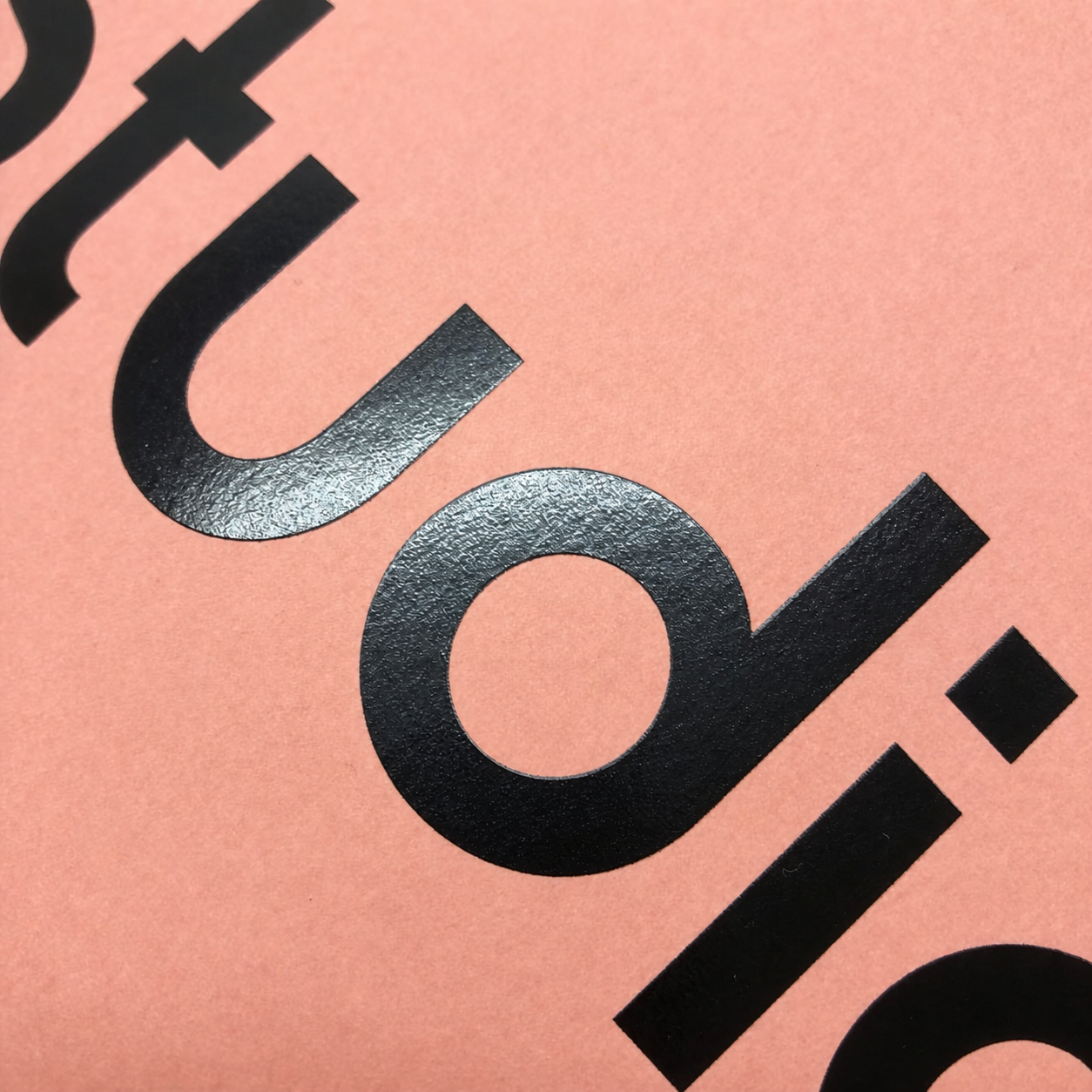
What Is Screen Printing?
Screen printing is a stencil-based printing process in which ink is transferred through open areas of a mesh screen onto a substrate.
A stencil blocks the parts of the screen that should not print. A squeegee then moves ink across the screen, forcing it through the open mesh and onto the packaging material below.
In conventional spot-color screen printing, each color normally requires its own screen. A one-color logo may therefore require one screen and one printing stage, while a three-color design typically requires separate screens and accurate registration for the individual colors.
Although the process is traditionally called silk screen printing, modern production screens generally use engineered synthetic mesh rather than natural silk.
How Does Screen Printing Work?
The exact production workflow depends on the packaging material and equipment, but the process generally follows several stages.
1. Artwork Preparation
The artwork is separated according to the colors or effects that will be screen printed.
Simple vector logos, solid shapes and clearly defined spot colors are particularly suitable because each printable area can be accurately separated.
2. Screen Preparation
A mesh screen is prepared with a stencil corresponding to the artwork.
For multi-color designs, separate screens are normally prepared for each spot color.
3. Material Positioning
The packaging component is positioned and registered under the screen.
Accurate positioning becomes increasingly important when screen printing must align with other printing, foil stamping, embossing, die cutting or structural elements.
4. Ink Transfer
Ink is placed on the screen and a squeegee pushes it across the mesh.
Ink passes through the open areas and is deposited onto the substrate.
5. Drying or Curing
The ink is then dried or cured according to the ink system.
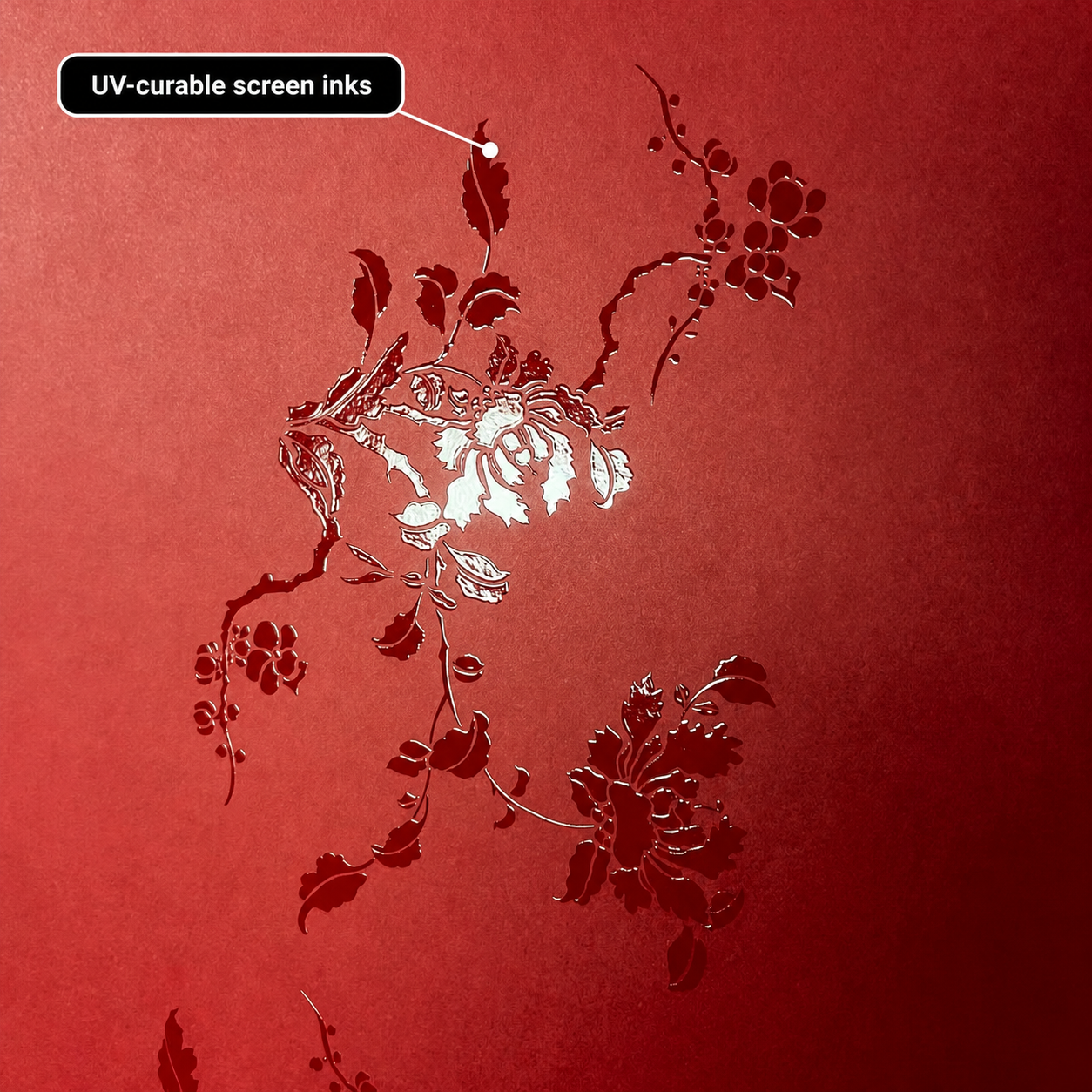
Screen printing can use different ink technologies, including UV-curable screen inks. When UV-curable ink is used, ultraviolet energy rapidly cures the printed ink.
This is an important distinction: using UV-curable ink in screen printing does not make the process the same as digital UV printing. The method used to transfer the ink remains fundamentally different.
Why Mesh Count Matters in Screen Printing
One of the most important technical variables in screen printing is mesh count.
Mesh count describes the density of the screen mesh, commonly expressed as the number of mesh openings or threads within a specified distance. The exact measurement convention can vary by market and mesh specification, so production requirements should be confirmed with the printer rather than selected from a number alone.
In general:
Higher mesh count → finer openings → lower ink deposit → better suitability for fine detail
Lower mesh count → larger openings → heavier ink deposit → stronger surface build
This creates an important production trade-off.
If the mesh is too coarse, more ink may pass through the screen, creating a heavier and more pronounced layer, but very fine details may become harder to reproduce accurately.
A finer mesh can support more detailed graphics but generally deposits less ink.
The correct mesh therefore depends on several factors:
- artwork detail
- ink viscosity
- desired ink thickness
- substrate
- required opacity
- specialty ink or effect
- production quality requirements
For packaging buyers, it is usually better to specify the desired visual and tactile result rather than trying to prescribe a mesh count without production testing.
What Does Screen Printing Look and Feel Like?
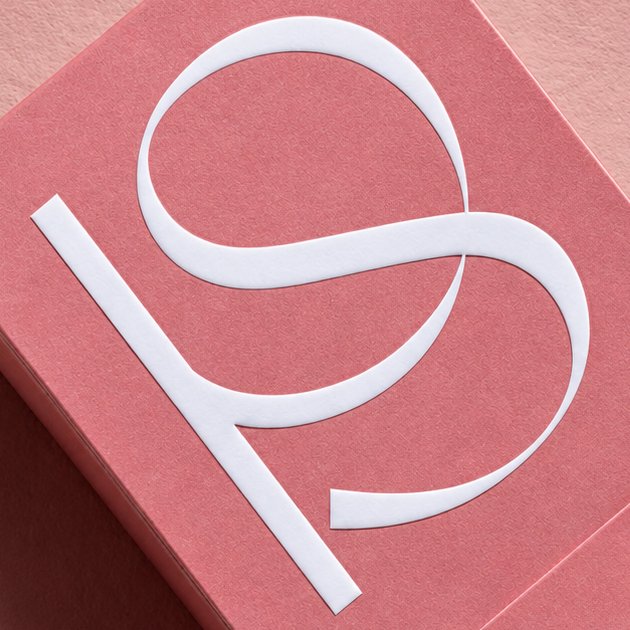
One of the strongest characteristics of screen printing is its ability to produce dense, solid color and a comparatively substantial ink deposit.
This is especially useful for logos and graphics where the printed area is intended to feel visually distinct from the surrounding packaging surface.
Compared with conventional flat image printing, a heavier screen-printed ink deposit can also provide a more noticeable tactile presence.
This makes screen printing especially well suited to packaging that calls for a bold, tactile or craft-inspired character. The heavier ink deposit can give logos and solid graphics a distinctive physical presence, making it an attractive option for premium, heritage-inspired and design-led brands.
The final effect, however, depends on the ink, mesh, substrate, number of passes and production settings. Screen printing should not automatically be assumed to create a raised effect in every application.
Where Is Screen Printing Used in Packaging?
Screen printing can be used for both primary and secondary packaging components, depending on the substrate, shape and production equipment.
Typical applications include:
- luxury rigid boxes
- cosmetic and skincare packaging
- perfume packaging
- wine and spirits packaging
- food outer packaging
- electronics packaging
- hang tags and labels
- book covers and presentation materials
- promotional packaging
- selected plastic, wooden, acrylic and metal packaging components
It is particularly useful when a relatively simple graphic needs to become an intentional visual or tactile feature rather than merely part of a full-color printed image.
Advantages of Screen Printing for Packaging
Strong Solid and Spot Colors
Screen printing is highly effective for bold logos, large solid-color areas and selected spot colors.
This can be particularly valuable when brand graphics need strong visual presence.
Heavier Ink Deposit
The process can transfer a relatively substantial amount of ink compared with many conventional image-printing processes.
This can improve opacity and contribute to a more tactile surface character.
Specialty Ink Possibilities
Depending on the production system, screen printing can be used with various specialty inks and effects.
This makes it useful as both a printing process and a decorative element within a broader packaging design.
Suitable for Repeated Production
Although screens create an initial setup requirement, those setup costs can be distributed over a larger production quantity.
For relatively simple artwork with a limited number of colors, screen printing can therefore become economically attractive as quantities increase.
Distinctive Brand Character
Screen printing can create an appearance that feels more deliberate and physical than conventional image reproduction.
This makes it particularly relevant to packaging concepts built around craftsmanship, heritage, texture or strong graphic identity.
Limitations of Screen Printing
Screen printing is not automatically the best method for every design.
Every Additional Color Adds Complexity
Conventional spot-color screen printing generally requires a separate screen for each color.
More colors can therefore mean:
more screens → more setup → more registration → more printing stages
This affects both production time and cost.
Complex Gradients Are Less Practical
Fine photographic images, subtle shadows and complex gradients are generally easier to reproduce using suitable digital or offset printing technologies.
Screen printing can reproduce halftones, but this is different from saying that it is the most efficient method for photographic artwork.
Registration Becomes More Important
Multi-color artwork requires accurate alignment between individual printing stages.
The more colors and fine details involved, the more demanding registration can become.
Substrate Compatibility Must Be Tested
Ink adhesion depends on the substrate, surface treatment, coating, ink system and curing conditions.
A material being technically printable does not automatically mean that every screen ink will bond properly to it.
For unusual surfaces or critical packaging projects, testing before mass production is recommended.
Screen Printing vs. Digital UV Printing vs. UV Coating
These three terms are sometimes confused because UV-curable materials can be involved in more than one process.
However, they describe fundamentally different production concepts.
Screen printing transfers ink through a physical mesh stencil.
Digital UV printing digitally jets UV-curable ink onto the material and cures it using UV energy.
UV coating applies a UV-curable coating primarily to create surface protection or a decorative finish rather than functioning as the main full-color image-printing process.
For a more detailed explanation of the third process, see our UV Coating guide.
Screen printing and UV printing are printing processes, while UV coating is a surface finishing process applied after printing. If you are comparing screen printing with other methods such as offset, digital, or flexographic printing, see our packaging printing guide for a broader process comparison.
| Factor | Screen Printing | Digital UV Printing | UV Coating |
|---|---|---|---|
| Process | Ink passes through a mesh stencil | Digital printheads jet UV-curable ink directly onto the surface | UV-curable coating is applied to all or selected areas |
| Main Purpose | Solid graphics, spot colors and specialty effects | Detailed and multi-color image reproduction | Surface enhancement, contrast and protection |
| Color Capability | Normally one screen for each spot color | Multiple colors can be reproduced within the digital printing workflow | Usually clear or specialty coating rather than full-color image reproduction |
| Solid Colors | Excellent | Good, depending on device and substrate | Not its primary function |
| Photos & Gradients | Possible but generally less practical | Excellent application | Not intended for photographic reproduction |
| Ink / Coating Build | Can produce a relatively heavy ink deposit | Depends on equipment and passes; normally optimized for digital image reproduction | Depends on coating system; spot and raised effects are possible |
| Setup | Requires screen preparation | No conventional screen or printing plate | Depends on flood or spot coating method |
| Short-Run Lead Time | Setup becomes more significant, especially with multiple colors | Often faster to prepare for short, multi-color runs | Adds a finishing operation to the production workflow |
| Cost Structure | Higher initial setup component; setup cost can be distributed across quantity | Lower conventional prepress/setup requirement, but printing cost continues with output | Additional finishing cost based on area, process and effect |
| Best For | Spot colors, logos, specialty inks, tactile graphics and suitable production runs | Photos, gradients, multi-color graphics, prototypes and customization | Spot gloss, matte/gloss contrast, raised effects and surface protection |
The actual cost and production time of each process depend on the substrate, artwork, printing area, ink coverage, equipment, quantity and quality requirements.
Screen Printing or Digital UV Printing: Which Should You Choose?
A common question when customers send us artwork is:
“Should this design be screen printed or digitally UV printed?”
Neither technology is universally better. They solve different production problems.
The decision becomes much easier when the artwork is evaluated across four areas.
1. Color and Artwork Complexity
Digital UV printing is generally more suitable for:
- photographs
- complex gradients
- shadows
- multi-color artwork
- frequently changing designs
- customized graphics
Screen printing is particularly strong for:
- solid colors
- spot colors
- bold logos
- line artwork
- relatively simple graphic elements
If an artwork contains complex photographic detail and continuous tonal transitions, digital UV printing is normally the more practical starting point.
If the design consists primarily of a bold logo in one or two solid colors, screen printing deserves serious consideration.
2. Ink Deposit and Tactile Character
Screen printing can generally produce a heavier ink deposit, making it particularly useful when the printed graphic itself should contribute to the tactile character of the package.
Digital UV printing is primarily selected for digital image reproduction, although some modern systems can also build texture or raised effects through multiple ink layers.
Therefore, “digital UV = flat” and “screen printing = raised” should not be treated as absolute rules.
The intended effect and available production equipment should determine the process.
3. Quantity and Cost
The two processes have very different cost structures.
Screen printing can be thought of as having a relatively significant setup component.
Each spot color may require:
screen preparation + setup + registration + individual printing stage
A one-color job is therefore substantially simpler than a four-color screen-printed design.
Digital UV printing does not require a physical screen for every conventional CMYK image color. This makes it particularly useful for prototypes, short runs and complex multi-color artwork.
As quantity increases, however, the fixed setup cost of screen printing can be distributed over more pieces.
The practical rule is:
Digital UV printing is often preferred for complex, multi-color and short-run artwork, while screen printing is often preferred for bold spot colors and larger production runs where its setup cost can be spread across more units.
There is no universal break-even quantity. A 100-piece job and a 10,000-piece job can produce very different results depending on print size, number of colors, substrate, ink coverage and production equipment.
4. Material and Packaging Structure
Both processes can be used on a wide range of materials, but neither should be treated as universally compatible with every surface.
Potential substrates include paper and paperboard, plastics, wood, acrylic, metal and other packaging materials.
Actual suitability depends on:
- ink adhesion
- surface energy
- coatings or lamination
- pretreatment
- surface texture
- object geometry
- printing equipment
- curing conditions
For non-standard materials, adhesion and production testing should be completed before mass production.
Quick Decision Guide: Screen Printing or Digital UV Printing?
| If Your Project Requires… | Usually Consider |
|---|---|
| One-color solid logo | Screen Printing |
| One or two spot colors | Screen Printing |
| Strong solid brand colors | Screen Printing |
| Heavy ink deposit | Screen Printing |
| Tactile or craft-inspired appearance | Screen Printing |
| Photographic image | Digital UV Printing |
| Smooth gradients | Digital UV Printing |
| Complex multi-color artwork | Digital UV Printing |
| Prototype or very short run | Digital UV Printing |
| Personalized or variable artwork | Digital UV Printing |
| Larger quantity with limited spot colors | Screen Printing may be more economical |
| Gloss highlight over printed artwork | UV Coating / Spot UV |
| Protective surface coating | UV Coating |
Screen Printing vs. Offset Printing
Screen printing and offset printing can both be used for paper-based packaging, but they are suited to different artwork, substrates and production requirements.
Sheet-fed offset printing is widely used for folding cartons and printed box wraps. It performs particularly well on smooth, flat paper and paperboard surfaces when the design requires high-resolution graphics, fine text, CMYK images, photographs or smooth gradients.
Screen printing is often selected for a different reason. Its heavier ink deposit can provide stronger opacity and visual impact, making it particularly useful for bold logos, solid spot colors and selected specialty effects.
What About Kraft Paper?
Both offset and screen printing can be used on kraft paper, but the surface characteristics of kraft should be considered.
Natural uncoated kraft paper has a brown base color and a relatively porous, textured surface. These characteristics can influence ink absorption, color appearance and fine-detail reproduction. Colors printed directly onto brown kraft may therefore appear darker or more muted than the same colors printed on white coated paper.
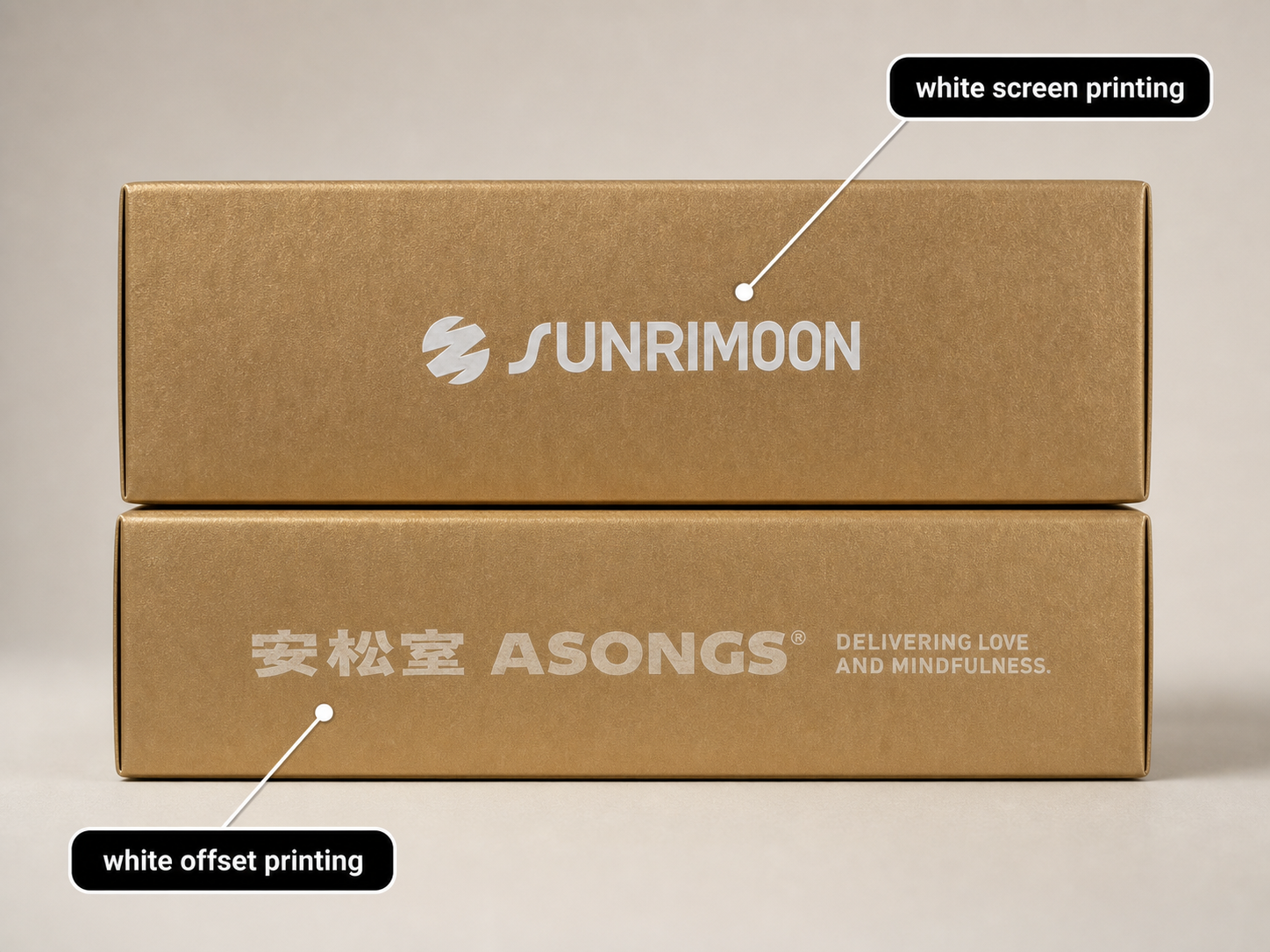
Screen printing can be particularly effective for simple, high-contrast graphics on natural kraft paper because its heavier ink deposit can provide greater opacity. White ink, bold spot colors and minimalist logos can therefore work especially well with the natural texture of kraft.
Offset printing can also be used on suitable kraft paper and paperboard, particularly when the material has a smoother or coated printable surface. When detailed CMYK artwork, photographs or fine graphics are required, the exact kraft grade and print surface should be evaluated before production.
Quick Material & Artwork Guide
| Requirement | Screen Printing | Offset Printing |
|---|---|---|
| Smooth coated paper / paperboard | Suitable | Excellent |
| Natural uncoated kraft | Well suited to bold, high-opacity graphics | Possible, but substrate characteristics affect color and detail |
| White ink on brown kraft | Strong application | Requires appropriate ink/process setup |
| Bold 1–2 color logo | Excellent | Suitable |
| Pantone / spot-color graphics | Excellent | Excellent |
| Photographs & detailed CMYK artwork | Less practical | Excellent |
| Smooth gradients | Less practical | Excellent |
| Heavier / tactile ink deposit | Excellent | Not its primary strength |
Practical rule: For detailed full-color graphics on smooth paperboard, offset printing is usually the stronger starting point. For bold spot-color graphics, high-opacity logos or a more tactile print on natural kraft, screen printing may offer a more distinctive result.
What Affects the Cost of Screen Printing?
There is no meaningful universal price per piece for screen printing because the production specification can change the cost substantially.
The main cost factors are:
| Cost Factor | How It Affects Price |
|---|---|
| Number of Colors | Each spot color normally requires another screen and printing stage |
| Screen Preparation | Creates an initial setup cost |
| Printing Area | Larger areas generally consume more ink and may affect production speed |
| Quantity | Fixed setup costs are distributed across more units as volume increases |
| Ink Type | Standard and specialty inks have different costs and production requirements |
| Substrate | Difficult surfaces may require special ink, pretreatment or testing |
| Registration | Tight multi-color registration increases production requirements |
| Ink Deposit / Effect | Heavy deposits or specialty effects may require different mesh, ink or additional passes |
| Packaging Structure | Flat sheets and assembled objects can require different equipment or fixtures |
| Combination Finishes | Foil, embossing, lamination and other processes add separate production stages |
For buyers, this explains why asking only:
“How much does screen printing cost?”
is usually insufficient.
A useful quotation requires the actual packaging specification.
What Information Should You Provide for a Screen Printing Quote?
To evaluate screen printing accurately, it is helpful to provide:
- packaging type and structure
- finished dimensions
- substrate or material
- printing area
- artwork file
- number of spot colors
- Pantone references where applicable
- required quantity
- desired visual or tactile effect
- other finishes used on the same packaging
- reference sample or image if available
If you do not know the appropriate mesh count, ink type or technical production parameters, these can normally be determined after the artwork, material and required result are evaluated.
Sustainability Considerations
The environmental impact of screen printing cannot be judged from the printing method alone.
Important factors include the ink chemistry, curing system, screen preparation and cleaning process, waste handling, substrate, number of production stages and recyclability of the finished package.
For paper-based packaging, decorative printing should also be considered as part of the complete packaging construction. Heavy coatings, plastic films, metallic layers or mixed materials can influence recyclability independently of the screen-printing process itself.
If recyclability or reduced material complexity is an important project objective, it is better to evaluate the entire packaging specification rather than labeling an individual printing method as inherently sustainable or unsustainable.
Frequently Asked Questions
Is screen printing better than digital UV printing?
Neither process is universally better. Screen printing is often better suited to solid spot colors, bold logos, heavier ink deposits and larger repeat runs with relatively few colors. Digital UV printing is generally more suitable for photographs, gradients, complex multi-color artwork, prototypes and short runs. The best choice depends on the artwork, substrate, quantity, desired surface effect and budget.
Is screen printing more economical for larger quantities?
It can be. Screen printing has upfront costs for screen preparation and setup, but those fixed costs can be distributed across a larger order. Digital UV printing avoids conventional screen-making, which can make it attractive for small quantities and complex artwork. As volume increases, however, screen printing may become more economical for designs using only one or a few spot colors. There is no universal break-even quantity because print area, number of colors, ink coverage, substrate and equipment all affect cost.
Does each screen-printing color require a separate screen?
For conventional spot-color screen printing, generally yes. Each color normally requires its own screen and printing stage. A three-color design therefore typically requires three corresponding screens and accurate registration between them. This is one reason why the number of colors has a greater impact on screen-printing setup cost than it does in a typical CMYK digital UV workflow. Source: Chamevo Support Center.
Can screen printing reproduce gradients and photographs?
Yes, screen printing can reproduce tonal images using halftones, but complex gradients and photographic images are generally more demanding than solid-color graphics. If packaging artwork contains photographs, subtle shadows or many smooth color transitions, digital UV or offset printing will often be a more practical option. Screen printing is particularly strong for solid colors, line artwork and bold graphic elements.
Why can screen printing create a more tactile appearance?
Screen printing can deposit a relatively large amount of ink through the mesh, giving selected graphics greater opacity and a more noticeable physical presence. The amount of ink deposited depends partly on mesh specification, ink formulation and production settings. Lower mesh counts generally allow more ink to pass through, while higher mesh counts are commonly used when finer detail is required. This characteristic is one reason screen printing is attractive for packaging designs that call for a bold, tactile or craft-inspired character. Source: ScreenPrinting.com Help Center.
What is the best mesh count for screen printing?
There is no single best mesh count for every project. In general, higher mesh counts are better suited to fine details and thinner ink deposits, while lower mesh counts allow more ink to pass through and are better suited to heavier coverage or certain specialty inks. Artwork detail and ink type are two of the main factors in mesh selection. Packaging buyers usually do not need to specify the mesh themselves. Providing the artwork, substrate and desired effect allows the printer to select an appropriate screen specification. Source: ScreenPrinting.com Help Center.
Can screen printing match Pantone colors?
Screen printing is particularly well suited to spot-color work, so Pantone references can be used as color targets when preparing custom inks. However, the appearance of the finished color can still be influenced by the substrate color, ink opacity, surface finish and production conditions. For brand-critical colors, physical sampling and color approval are recommended.
Can screen printing be applied to laminated, coated or plastic surfaces?
Often yes, but the ink must be compatible with the surface. Films, coatings and some plastics can have different surface-energy and adhesion characteristics. Pretreatment or a different ink system may therefore be required. For this reason, adhesion testing is recommended before mass production when screen printing onto an unfamiliar laminated, coated or non-porous surface.
Is screen printing durable?
Screen printing can provide good durability when the ink system, substrate, surface preparation and curing conditions are properly matched. However, durability is not determined by the printing method alone. If abrasion or scratch resistance is important—for example, on frequently handled premium packaging—it should be included in the project requirements so that the appropriate ink and testing method can be evaluated.
What artwork files are best for screen printing?
Vector artwork is generally preferred for logos, text, line graphics and spot-color designs because individual colors can be separated cleanly. Files such as AI, EPS or vector PDF are useful when available. If Pantone colors are required, include the relevant color references. For more complex artwork, the printer should review the file before production to determine whether screen printing, halftone screen printing or another printing process would produce a better result.
Is Screen Printing Right for Your Packaging?
Screen printing is particularly worth considering when your packaging requires strong spot colors, bold logos, substantial ink coverage, specialty effects or a more tactile graphic presence.
Choose screen printing when the design is relatively simple, the number of colors is limited and the printed element itself should contribute to the physical character of the package.
Choose digital UV printing when the artwork relies heavily on photographs, gradients, numerous colors, short production runs or frequently changing graphics.
Choose UV coating when the objective is primarily to highlight or protect an already printed surface, rather than reproduce the main artwork.
The final decision should take the artwork, material, packaging structure, quantity, desired effect and budget into account.
If you already have packaging artwork but are unsure whether screen printing, digital UV printing or another process is more suitable, send us your design, dimensions, material, quantity and desired finish.
Contact Vigor Packaging to discuss your project and determine a suitable production approach.