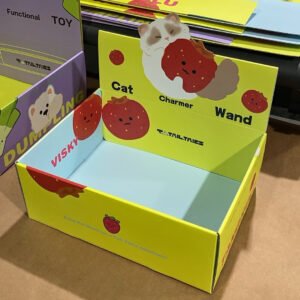
Choosing a printing method for custom packaging is not simply a question of which process produces the “best” print quality.
The right choice depends on several factors working together: packaging material, order quantity, number of artwork versions, color requirements, image complexity, surface characteristics, and production scale.
Offset printing may be ideal for a premium folding carton produced in thousands of pieces. Digital printing may make more sense for 200 launch boxes across several SKUs. Flexographic printing is widely used for corrugated board, kraft paper, tissue paper, labels, and flexible materials. Screen printing offers heavier ink deposits and strong spot colors, while printing on metallic paper introduces another design variable—the substrate itself becomes part of the printed image.
Understanding these differences helps packaging buyers avoid selecting a process based only on price, familiarity, or a visual reference.
Quick Answer: The main packaging printing methods include offset, digital, flexographic, and screen printing. Offset is widely used for high-quality paper and paperboard packaging; digital is particularly useful for short runs, prototypes, multiple SKUs, and variable data; flexographic printing is highly efficient for corrugated, kraft, tissue, labels, and many roll-fed materials; and screen printing is useful for strong opaque colors, heavier ink deposits, and selected specialty applications. The best method depends on the substrate, artwork, quantity, color requirements, and final packaging construction.
Packaging Printing Methods at a Glance
| Printing Method | Best Suited For | Typical Quantity | Common Materials | Key Strength |
|---|---|---|---|---|
| Offset Printing | Folding cartons, rigid-box wraps, paper bags, premium paper packaging | Medium to large | Coated/uncoated paper and paperboard | High-quality graphics and strong color control |
| Digital Printing | Prototypes, short runs, multiple SKUs, personalized packaging | Small to medium | Paper, paperboard, labels, corrugated and selected specialty materials | No conventional printing plates and easy artwork changes |
| Flexographic Printing | Corrugated, kraft paper, tissue, labels, flexible packaging | Medium to very large | Paper, corrugated, films and roll-fed materials | High-speed continuous production and broad substrate range |
| Screen Printing | Bold spot colors, opaque inks, specialty substrates and tactile graphics | Small to large depending on application | Paper, plastic, glass, metal and other compatible surfaces | Heavy ink deposit and strong opacity |
| Metallic Paper Printing | Premium gold/silver cartons and reflective packaging | Project-dependent | Gold, silver and other metallic paperboard | Uses the metallic substrate as part of the graphic effect |
The Four Main Printing Methods Used in Custom Packaging
Although many printing technologies exist, four processes cover a large proportion of custom packaging applications:
Offset printing
Digital printing
Flexographic printing
Screen printing
These processes do not compete on exactly the same terms.
Each was developed around a different method of transferring an image to a substrate, which affects:
- setup requirements,
- production speed,
- suitable materials,
- ink deposit,
- artwork flexibility,
- and production economics.
A useful way to understand them is not to ask:
Which printing process is best?
Instead ask:
Which printing process best matches this packaging material, artwork and production quantity?
Offset Printing
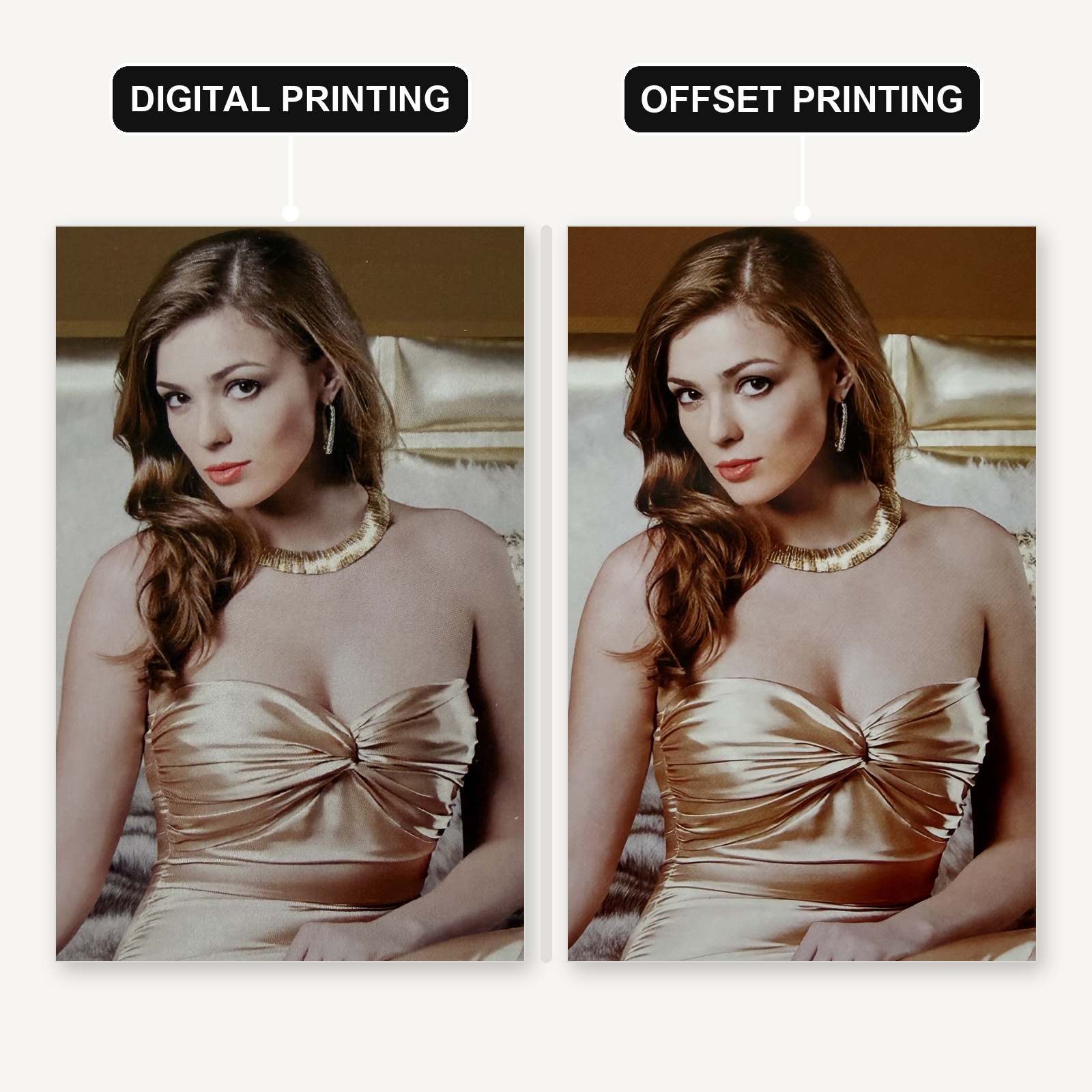
Offset printing is one of the most widely used printing methods for high-quality paper and paperboard packaging.
It is an indirect printing process.
The image is transferred from a printing plate to a rubber blanket and then from the blanket onto the paper or paperboard.
A simplified process is:
Printing plate → rubber blanket → substrate
This indirect transfer helps offset printing reproduce:
- fine text,
- detailed illustrations,
- photographs,
- gradients,
- CMYK graphics,
- and spot colors.
Where Offset Printing Is Commonly Used
Offset printing is particularly common for:
- folding cartons,
- rigid-box wrapping paper,
- premium paper bags,
- sleeves,
- paperboard inserts,
- printed cards,
- brochures and packaging accessories.
It is especially attractive when a project combines high-quality graphics with a medium or larger production quantity.
Because printing plates and press setup are required, very small quantities may not use the process efficiently.
Once the press is set up, however, larger repeat runs can distribute those initial costs across many units.
When Offset Printing Makes Sense
Consider offset printing when:
- the packaging uses suitable sheet-fed paper or paperboard;
- detailed graphics or photography are important;
- the same artwork will be produced in meaningful quantities;
- precise spot colors are required;
- the package will receive premium finishing after printing.
Offset printing also integrates naturally with processes such as lamination, UV coating, foil stamping, embossing, and debossing.
Digital Printing
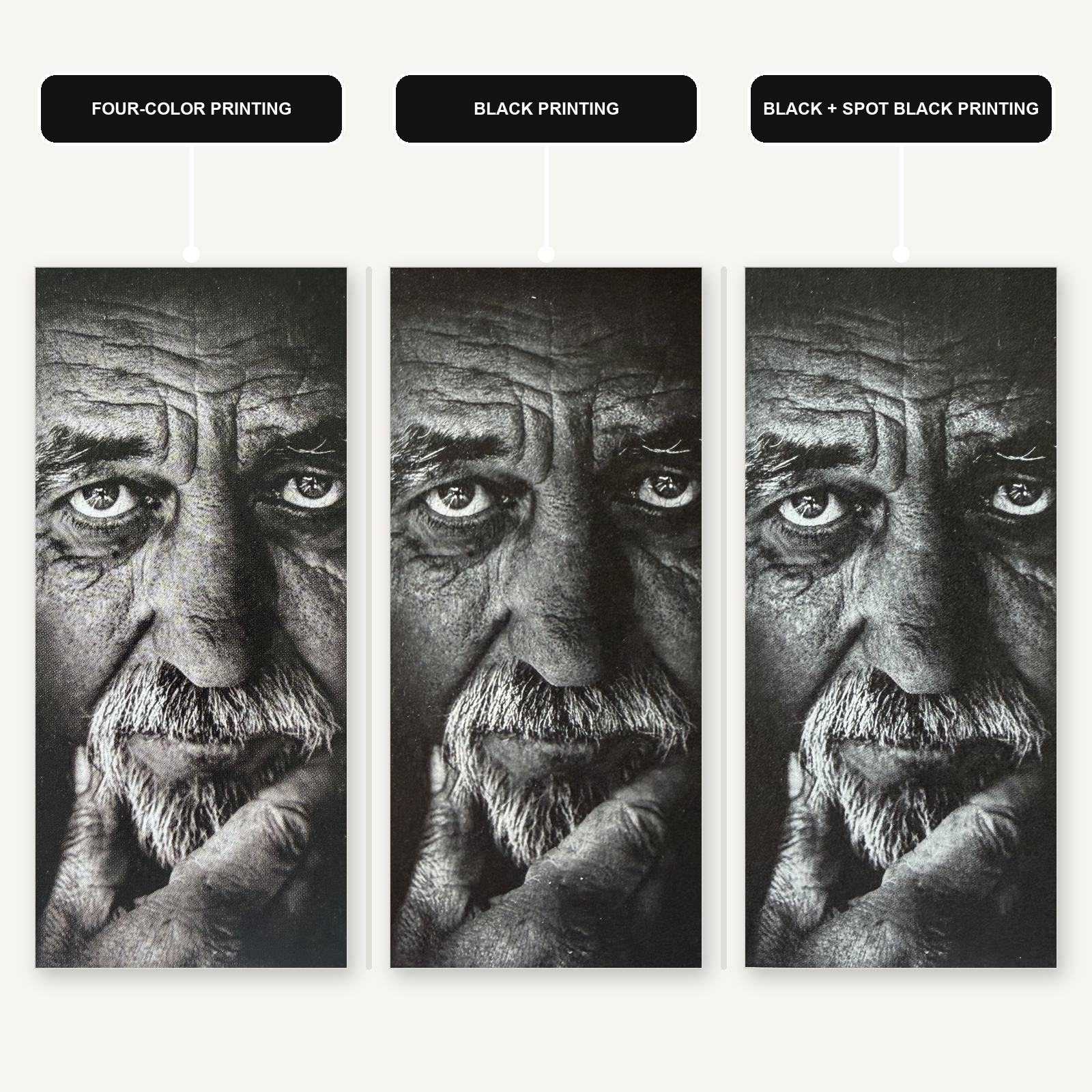
Digital printing removes one of the major setup requirements of conventional printing: the physical printing plate.
Artwork is processed digitally and transferred to the substrate using the digital press.
This changes the economics of short-run packaging.
If a brand needs:
100 boxes × 5 different designs
the production problem is very different from:
500 identical boxes
even though the total quantity is the same.
With conventional plate-based printing, multiple designs may require additional plates and setup.
Digital printing can change the artwork electronically.
Where Digital Printing Is Particularly Useful
Digital printing is commonly considered for:
- packaging prototypes,
- startup packaging,
- small product launches,
- seasonal packaging,
- test-market production,
- multiple SKUs,
- personalized packaging,
- variable QR codes,
- serial numbers,
- and frequently changing artwork.
Its key advantage is therefore not simply “small MOQ.”
It is production flexibility.
Variable Data Printing
Digital printing can also change selected information between individual impressions.
This makes possible:
- unique QR codes,
- serialized packaging,
- customer names,
- changing images,
- regional information,
- promotional codes,
- and personalized graphics.
This is something conventional plate-based printing cannot do efficiently in the same way.
When Digital Printing Makes Sense
Digital printing deserves serious consideration when:
quantity per artwork is low + artwork changes frequently + conventional plate setup would represent too much of the project cost.
As volume increases and artwork becomes stable, conventional processes may become more economical.
There is no universal quantity at which this crossover occurs.
Flexographic Printing
Flexographic printing, commonly called flexo, uses flexible relief plates and an anilox roller to transfer controlled amounts of ink onto the substrate.
A simplified flexographic system is:
Ink → anilox roller → flexible printing plate → substrate
Flexography is particularly important because of its broad material range and continuous production capability.
Common Flexographic Packaging Applications
Flexography is widely used for:
- corrugated boxes,
- kraft paper,
- paper bags,
- tissue paper,
- labels,
- wrapping paper,
- flexible packaging,
- and selected plastic films.
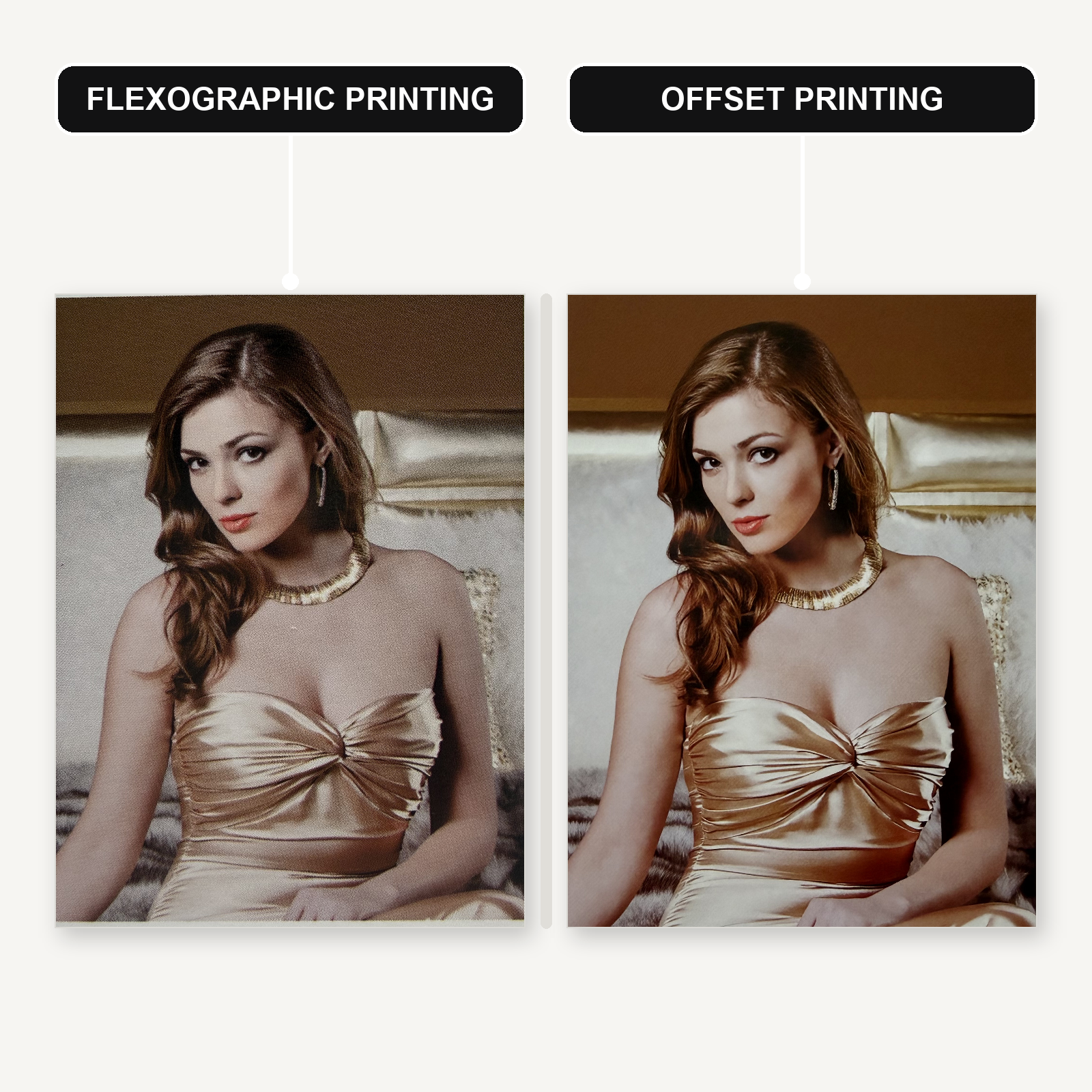
Unlike offset printing, which is strongly associated with high-quality sheet-fed paper and paperboard production, flexography is particularly well suited to continuous web-fed packaging materials and direct corrugated printing.
Flexo Is Not Just “Simple Carton Printing”
Older perceptions sometimes describe flexography as a relatively basic printing method suited mainly to simple logos and solid colors.
Modern flexographic printing can also reproduce:
- CMYK graphics,
- photographs,
- gradients,
- fine text,
- spot colors,
- and detailed packaging artwork.
The actual quality depends on the complete production system:
artwork + plate + anilox + ink + substrate + press control
This relationship becomes particularly important on absorbent or uneven materials such as kraft paper and corrugated board.
A Real Example of Substrate + Printing Process Selection
In one Vigor Packaging project, a customer wanted a relatively thick tissue paper with a metallic silver printed pattern.
The original specification used 80 gsm white kraft paper.
Because the kraft paper absorbed ink strongly, we evaluated different printing approaches and ultimately used an unconventional 80 gsm machine-glazed paper with flexographic silver printing.
This achieved both the required paper thickness and the brighter metallic appearance.
The full production reasoning is explained in our Metallic Silver Printing on Tissue Paper case study.
The broader lesson is important:
A printing process should not be selected independently from the substrate.
Screen Printing
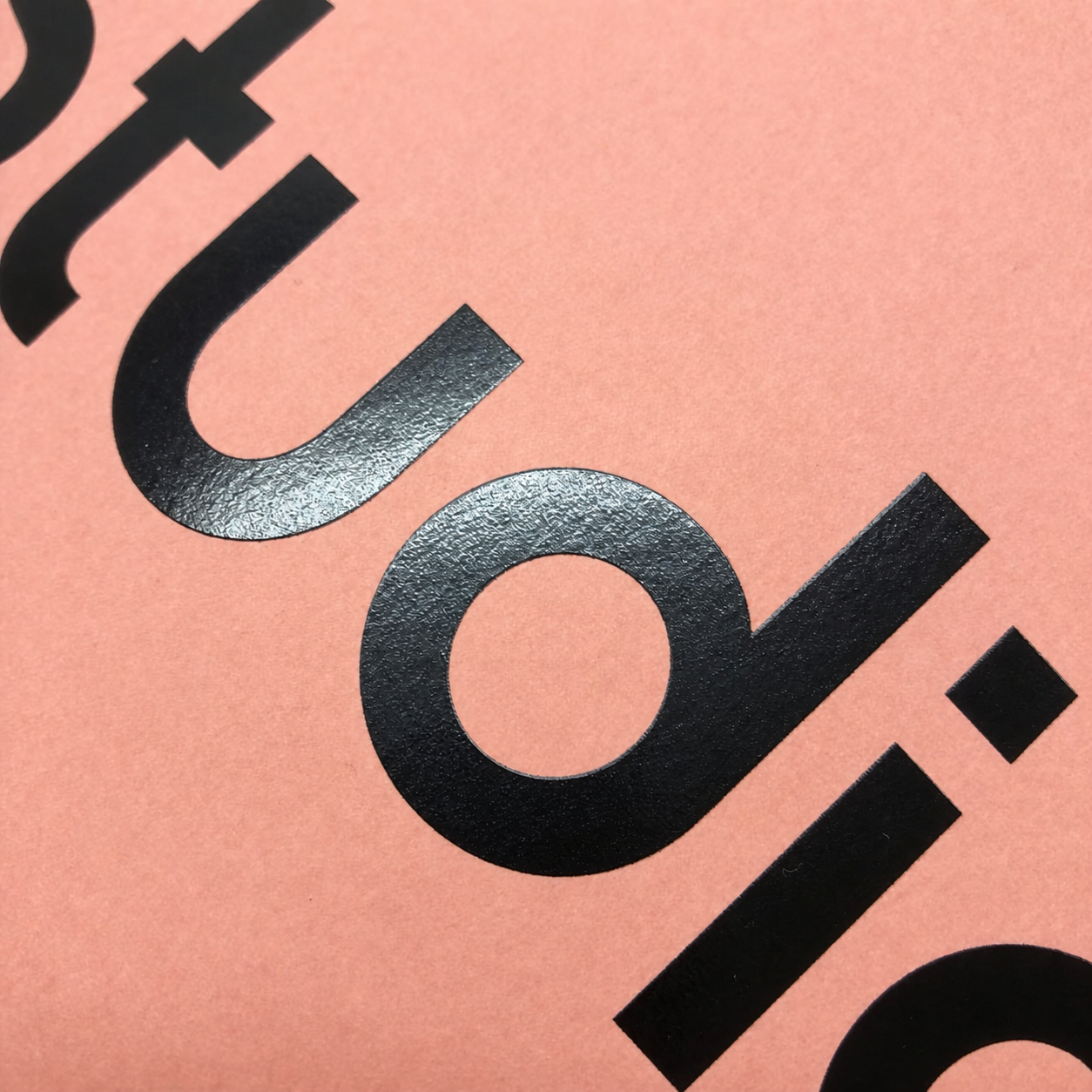
Screen printing transfers ink through a mesh stencil onto the substrate.
Each independently printed color normally requires its own screen.
This gives screen printing a very different production logic from digital printing.
Digital printing can reproduce complex multicolor artwork directly from a digital file.
Screen printing typically builds the artwork one color at a time.
That can make it less efficient for complex photographic designs, but it also creates some important advantages.
Heavier Ink Deposit
Screen printing can deposit a relatively thick ink layer.
This can produce:
- strong solid colors,
- high opacity,
- more pronounced printed texture,
- and a more substantial tactile character.
For designs that rely on a small number of bold colors and a noticeable printed surface, this can be more important than reproducing a complex photograph.
Specialty Substrates
Screen printing can also be adapted to many surfaces depending on the ink and equipment, including selected:
- papers,
- plastics,
- metals,
- glass,
- wood,
- and other materials.
This makes it useful for packaging components and specialty applications that may not fit conventional sheet-fed printing workflows.
Screen Printing vs Digital Printing
A useful rule is:
Complex multicolor artwork + short run → consider digital
Bold spot colors + heavier ink deposit → consider screen printing
This is not an absolute rule, but it reflects the fundamental strengths of the two technologies.
Metallic Paper Printing: When the Substrate Becomes Part of the Image
Metallic paper printing is slightly different from the four printing methods above.
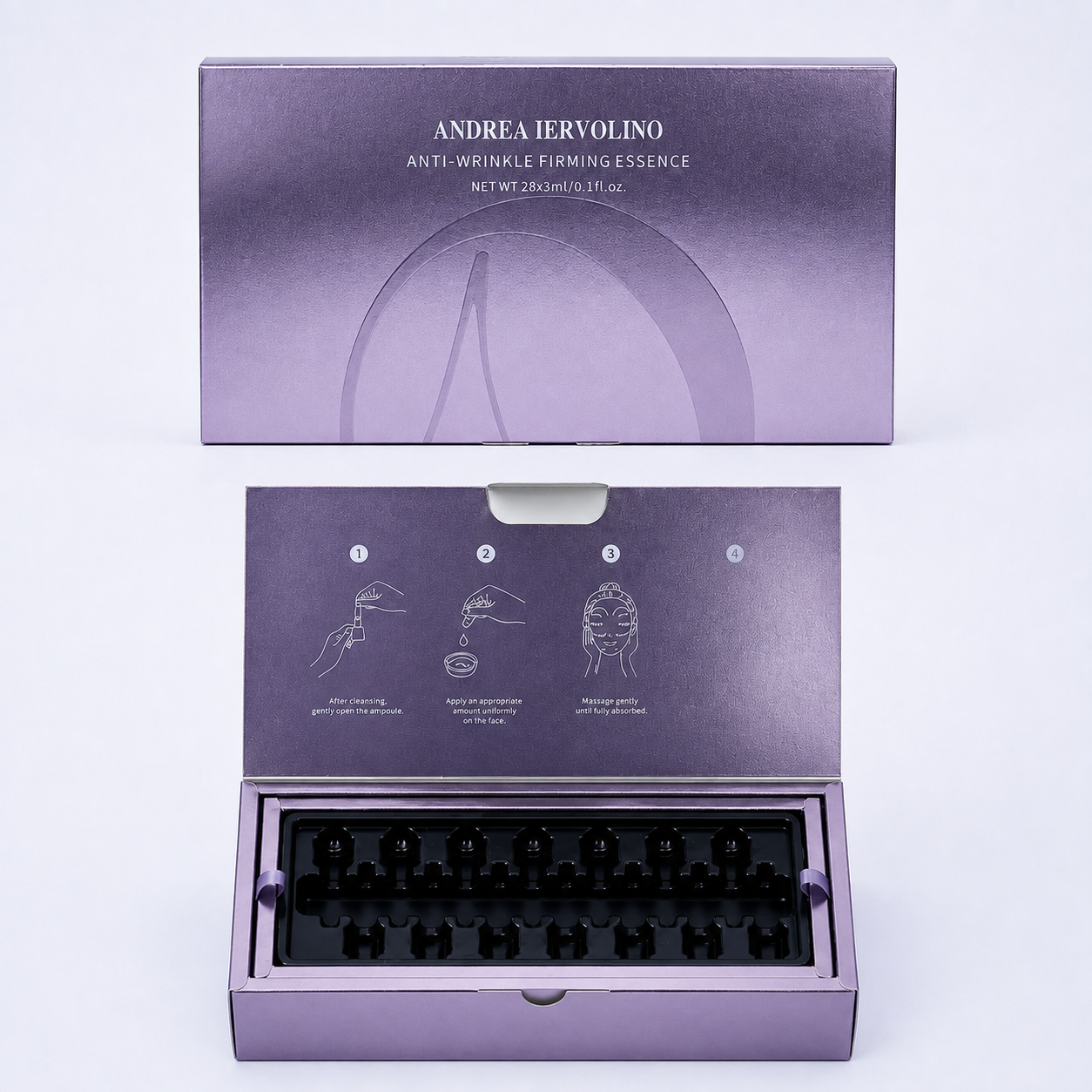
Gold and silver card are substrates, not printing processes.
However, printing on metallic paper deserves its own place in packaging print planning because the substrate changes how the printed image behaves.
With conventional white paper:
White substrate + CMYK → conventional printed color
With silver card:
Silver substrate + CMYK → potentially colored metallic appearance
If an opaque white layer is printed first:
Silver substrate + white ink + CMYK → more conventional opaque color
This means white ink can determine where the metallic substrate remains optically visible.
Designers can therefore combine:
- exposed silver,
- colored metallic graphics,
- opaque photography,
- white graphics,
- and conventional CMYK
on the same package.
Metallic Paper Printing vs Metallic Ink
These should not be confused.
Metallic paper: the metallic character comes primarily from the substrate.
Metallic ink: the metallic effect comes from pigments in the printed ink.
Metallic Paper Printing vs Foil Stamping
Foil stamping transfers metallic foil onto selected areas.
Metallic paper starts with a reflective substrate across the sheet.
A useful design distinction is:
Large integrated metallic background → consider metallic paper
Localized metallic logo or detail → consider foil stamping
Neither is universally better.
The correct choice depends on where and how much metallic effect the design requires.
Offset vs Digital vs Flexographic vs Screen Printing
This is the most useful comparison when selecting a packaging printing process.
| Factor | Offset | Digital | Flexographic | Screen |
|---|---|---|---|---|
| Printing Plates/Screens | Yes | Normally no | Yes | Yes |
| Setup Cost | Medium–high | Low | Medium–high | Increases with colors |
| Very Short Runs | Usually less economical | Excellent | Usually less economical | Possible for suitable designs |
| Large Repeat Runs | Excellent | Equipment-dependent | Excellent | Good for suitable applications |
| Multiple Small SKUs | More setup | Excellent | More setup | More setup |
| Variable Data | No | Excellent | No | No |
| Photographic CMYK | Excellent | Excellent | High quality possible | Less efficient for complex images |
| Spot Colors | Excellent | Equipment-dependent | Excellent | Excellent |
| Heavy Ink Deposit | Moderate | Generally thinner | Controlled by flexo system | Strong |
| Paperboard Cartons | Excellent | Good for suitable short runs | Possible | Specialty use |
| Corrugated Direct Print | Not typical | Possible on suitable equipment | Excellent | Specialty use |
| Kraft Paper | Possible | Equipment-dependent | Excellent | Good |
| Tissue/Wrapping Paper | Not usually first choice | Limited/application-dependent | Excellent | Specialty use |
| Flexible Films | Limited | Equipment-dependent | Excellent | Possible |
| Artwork Changes | Requires new plates | Easy | May require new plates | Requires new screens |
| Best Overall Strength | Premium repeat paper packaging | Flexibility | Continuous packaging production | Opacity and ink character |
The table demonstrates why quantity alone should not determine the printing method.
A project should be evaluated across quantity + material + artwork + SKU count + color + finishing.
How Quantity Changes the Printing Decision
Printing economics contain two broad types of cost:
fixed setup cost
and
running cost
Plate-based processes require more preparation before production begins.
Digital printing reduces much of that fixed setup.
This means the cost curves behave differently.
Small Quantity
At very low quantities, avoiding conventional plate setup can make digital printing attractive.
Medium Quantity
At intermediate quantities, the correct choice becomes more project-specific.
Box size, sheet utilization, number of SKUs, ink coverage and finishing can all influence the result.
Large Quantity
As quantities increase, conventional printing setup costs can be distributed across more units.
Offset or flexographic printing may then become more economical.
But there is no universal MOQ crossover.
For example:
10,000 boxes × one design
and
10,000 boxes × 100 designs
are completely different printing projects.
Always evaluate quantity per artwork, not just total quantity.
How Packaging Material Changes the Printing Method
The substrate is one of the first questions that should be answered.
| Packaging Material | Printing Methods Commonly Considered |
|---|---|
| Coated Paperboard | Offset, digital, screen |
| Uncoated Paper | Offset, flexo, digital, screen |
| Kraft Paper | Flexo, screen, offset/digital depending on application |
| Corrugated Board | Flexo, digital; litho printing + mounting for premium graphics |
| Tissue Paper | Flexo and selected screen/other printing applications |
| Labels | Flexo, digital, offset depending on construction |
| Flexible Film | Flexo, digital and other specialized processes |
| Gold/Silver Card | Offset or other compatible printing systems with white/CMYK planning |
| Rigid Packaging Components | Screen, UV digital and other substrate-specific processes |
These are not rigid rules.
They are starting points.
Press configuration, substrate treatment, sheet/roll format, thickness and final packaging structure can change the recommendation.
Why Artwork Complexity Matters
Consider three designs.
Design A
One-color black logo on brown kraft.
This does not require a process optimized for photographic reproduction.
Design B
Full-color skincare carton with product photography, gradients and fine typography.
High-quality CMYK reproduction becomes much more important.
Design C
White logo with a thick tactile ink layer on a colored rigid surface.
Screen printing may offer characteristics that conventional CMYK printing does not.
The artwork should therefore be analyzed in terms of:
- number of colors,
- photographs,
- gradients,
- solid areas,
- opacity,
- line detail,
- ink thickness,
- and required tactile effect.
Choosing the press first and forcing the artwork into it reverses the correct production logic.
Why Pantone Does Not Guarantee Identical Color on Every Material
A Pantone reference is a color target.
It does not eliminate the physical influence of the substrate.
The same target printed on:
white coated paper
brown kraft
uncoated paper
silver metallic card
can appear different.
The final result is affected by:
- substrate color,
- absorbency,
- smoothness,
- ink film,
- printing process,
- surface coating,
- and lighting.
For color-critical packaging, approve color on the actual production substrate whenever practical.
Printing Is Only One Stage of Packaging Production
A printed sheet is not yet a finished package.
After printing, packaging may require:
- coating,
- lamination,
- foil stamping,
- embossing,
- debossing,
- die cutting,
- creasing,
- folding,
- gluing,
- and assembly.
This is why printing decisions should not be made independently from finishing.
For example, the surface characteristics of an ink or toner can affect subsequent:
- lamination adhesion,
- coating,
- foil transfer,
- gluing,
- or other processes.
You can compare the major decorative and protective options in our Packaging Finishes guide.
For structural conversion, see our Die Cutting for Packaging guide.
Printing Method vs Packaging Finish: What Is the Difference?
This distinction is frequently misunderstood.
Printing creates the graphic image.
Examples:
- offset printing,
- digital printing,
- flexographic printing,
- screen printing.
Finishing modifies or enhances the printed surface.
Examples:
- lamination,
- varnishing,
- UV coating,
- foil stamping,
- embossing,
- debossing.
A luxury carton might therefore use:
Offset printing → matte lamination → foil stamping → embossing → die cutting
These are not competing alternatives.
They are different stages of one manufacturing workflow.
This distinction is also why specialized structural and optical techniques are better treated separately from conventional printing methods.
Which Packaging Printing Method Should You Choose?
A practical decision can be made by asking these questions in order.
1. What Is the Packaging Material?
Start with the substrate.
Paperboard, kraft, corrugated, tissue, film and metallic card require different production strategies.
2. What Is the Quantity Per Artwork?
Do not provide only the total order quantity.
Specify:
5,000 pcs × 1 design
or:
5 designs × 1,000 pcs
This can materially change the printing recommendation.
3. How Complex Is the Artwork?
Is it:
- one-color line art,
- several spot colors,
- CMYK photography,
- gradients,
- or highly detailed illustration?
4. How Important Is Exact Brand Color?
Provide Pantone targets where applicable and define acceptable tolerances for critical colors.
5. Does the Artwork Change Between Units?
If every piece needs a different QR code, serial number or name, digital printing becomes particularly relevant.
6. Is a Heavy or Opaque Ink Layer Required?
If the printed ink itself needs a strong physical or opaque character, screen printing may deserve consideration.
7. Is the Substrate Part of the Visual Effect?
Metallic, kraft, colored and transparent substrates influence printed color.
They should be incorporated into the design strategy.
8. What Happens After Printing?
Finishing and converting requirements should be considered before the printing process is finalized.
Quick Selection Guide
| If Your Project Needs... | Start by Considering... |
|---|---|
| Premium Folding Cartons in Repeat Quantities | Offset Printing |
| 100–500 Launch Boxes | Digital Printing |
| Many Low-Volume SKUs | Digital Printing |
| Unique QR Codes or Personalization | Digital Printing |
| Corrugated Direct Printing at Scale | Flexographic Printing |
| Kraft Paper Bags at Volume | Flexographic Printing |
| Printed Tissue Paper at Volume | Flexographic Printing |
| Flexible Roll-Fed Packaging | Flexographic Printing |
| Bold Opaque Spot Colors | Screen Printing |
| Noticeable Ink Texture | Screen Printing |
| Large Silver/Gold Metallic Backgrounds | Metallic Paper Printing |
| Small Localized Metallic Logo | Foil Stamping |
| Detailed CMYK Paper Packaging | Offset or Digital depending on quantity |
| Large Repeat Roll-Fed Production | Flexographic Printing |
This table should be treated as a starting point rather than a fixed rule.
The final decision depends on the actual production specification.
What Information Should You Provide for a Printing Quote?
| Information | Example |
|---|---|
| Packaging Type | Folding carton |
| Finished Dimensions | 120 × 80 × 40 mm |
| Quantity | 5,000 pcs |
| Number of Designs | 2 × 2,500 pcs |
| Material | 350 gsm SBS paperboard |
| Artwork | CMYK + Pantone spot color |
| Printing Sides | Exterior only |
| Finish | Matte lamination + gold foil |
| Special Requirements | Critical Pantone brand color |
| Artwork File | AI / print-ready PDF |
| Delivery Destination | Country + postal code |
The more complete the specification, the more accurately the printing method and cost can be evaluated.
Frequently Asked Questions About Packaging Printing Methods
What is the best printing method for custom packaging?
There is no single best printing method. Offset is particularly strong for high-quality paperboard packaging at repeat quantities; digital for short runs and multiple SKUs; flexographic for corrugated, kraft and many roll-fed packaging materials; and screen printing for strong opaque colors and heavier ink deposits.
The best choice depends on the material, artwork and production quantity.
What is the cheapest printing method for packaging?
It depends heavily on quantity and substrate.
Digital printing can avoid plate costs for short runs, while offset and flexographic printing can become more economical per unit at larger quantities because their setup costs are distributed across more pieces.
Which printing method is best for small quantities?
Digital printing is often the first process to evaluate because it normally does not require conventional printing plates.
However, packaging structure, material and finishing can still create minimum production requirements even when printing itself is digital.
What is the difference between offset and digital printing for packaging?
Offset printing uses physical printing plates and an intermediate rubber blanket. It is highly efficient for repeat paper/paperboard production once set up.
Digital printing prints from digital files without conventional plates, making artwork changes and small quantities easier.
What is the difference between flexographic and offset printing?
Flexographic printing uses flexible relief plates and is particularly well suited to corrugated, kraft, labels, tissue and roll-fed materials.
Offset printing uses an indirect plate-to-blanket-to-paper process and is especially common for detailed sheet-fed paper and paperboard packaging.
Can digital printing match Pantone colors?
Digital presses can reproduce many Pantone targets within their available color gamut, but they do not necessarily print every Pantone as a dedicated spot ink.
For highly critical brand colors, the actual press, substrate and color tolerance should be evaluated.
Which printing process is best for kraft paper?
Flexographic printing is widely used for kraft packaging, particularly bags, wrapping papers and corrugated applications.
Offset, digital and screen printing can also be used in suitable constructions. The decision depends on format, quantity and required graphics.
Which printing method is best for corrugated boxes?
Direct flexographic printing is one of the most common methods for corrugated packaging.
Digital printing can be useful for shorter runs and variable graphics, while premium corrugated packaging can also use a separately printed lithographic sheet mounted to corrugated board.
Can you print photographs on packaging?
Yes. Offset and digital printing are particularly strong for detailed photographic reproduction. Modern flexography can also reproduce high-quality CMYK images when the plate, anilox, substrate and press are appropriately configured.
Is screen printing better than digital printing?
Neither is universally better.
Digital printing is generally more efficient for complex multicolor graphics and short runs, while screen printing is particularly useful for bold spot colors, heavier ink deposits, opacity and selected specialty materials.
Why does the same color look different on different packaging materials?
Printed color is influenced by the substrate's whiteness, color, absorbency, smoothness and reflectivity.
For example, the same ink can look different on white coated paper, kraft paper and silver metallic card.
Can different printing methods be combined on one package?
Yes, in some packaging projects.
For example, the main graphics might be offset printed while selected elements use screen printing or another specialty process. Printing can also be combined with foil stamping, UV coating, embossing and other finishes.
The feasibility depends on the material and production sequence.
Choosing the Right Printing Process for Your Packaging
Packaging printing should be selected as part of a complete manufacturing system rather than as an isolated production step.
The most useful decision framework is:
Material → quantity per artwork → graphic complexity → color requirements → printing method → finishing → converting
A premium paperboard carton may naturally lead to offset printing.
A startup producing several hundred boxes across multiple SKUs may benefit from digital printing.
A large kraft-paper, corrugated, tissue or flexible-packaging project may point toward flexography.
A design requiring strong opaque colors or a more substantial printed ink character may benefit from screen printing.
And when gold or silver paper becomes part of the visual design itself, metallic paper printing requires a different approach to color and white ink.
The goal is not to choose the most advanced printing technology. It is to choose the process that can reproduce the required design reliably, consistently and economically on the intended packaging material.
Vigor Packaging evaluates the printing process together with your packaging structure, substrate, artwork, quantity and finishing requirements.
Contact us with your packaging dimensions, quantity, artwork and destination to discuss the appropriate printing method for your project.