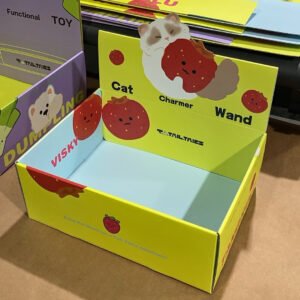
Gold and silver packaging does not always get its metallic appearance from metallic ink or foil stamping.
In many premium packaging projects, the reflective effect comes from the paper or paperboard itself.
Gold card, silver card and other metallic paperboards provide a reflective base onto which graphics can be printed. By controlling where the metallic substrate remains visible—and where it is covered with white or colored inks—designers can create packaging that ranges from subtle metallic highlights to large areas of colored metallic graphics.
This creates possibilities that are difficult to achieve with ordinary white paperboard.
But metallic substrates also introduce new production considerations. The same CMYK artwork that looks correct on white coated paper may look dramatically different when printed directly onto silver card. White ink becomes an important design tool, registration can become more critical, and the final appearance needs to be evaluated under real lighting rather than from a computer screen alone.
Quick Answer: Metallic paper printing uses gold, silver or other reflective paper/card as the printing substrate. When CMYK colors are printed directly onto the metallic surface, the reflective base can show through and create colored metallic effects. When opaque white ink is printed underneath selected areas before CMYK, the metallic influence can be reduced, producing a more conventional opaque printed appearance. This makes white ink one of the most important tools for controlling metallic packaging design.
Metallic Paper Printing at a Glance
| Factor | Metallic Paper Printing |
|---|---|
| Where the Metallic Effect Comes From | Primarily the metallic substrate |
| Common Substrates | Silver card, gold card, metallic paperboard and selected holographic/reflective stocks |
| Printing | CMYK, white ink and selected spot colors depending on equipment |
| White Ink | Used to block or reduce the metallic substrate effect |
| CMYK Directly on Metallic Surface | Can create colored metallic effects |
| White + CMYK | Produces a more opaque, conventional color appearance |
| Best Suited For | Premium folding cartons, sleeves, gift packaging and decorative paper packaging |
| Major Design Advantage | Large metallic areas can be integrated into printed graphics |
| Main Challenge | Color appearance changes because the substrate is reflective rather than white |
| Registration | Particularly important when white underprint and CMYK must align |
| Physical Proof | Strongly recommended for color-critical designs |
| Compatible Finishes | Varnish, lamination, embossing, debossing, foil and other processes depending on construction |
What Is Metallic Paper Printing?
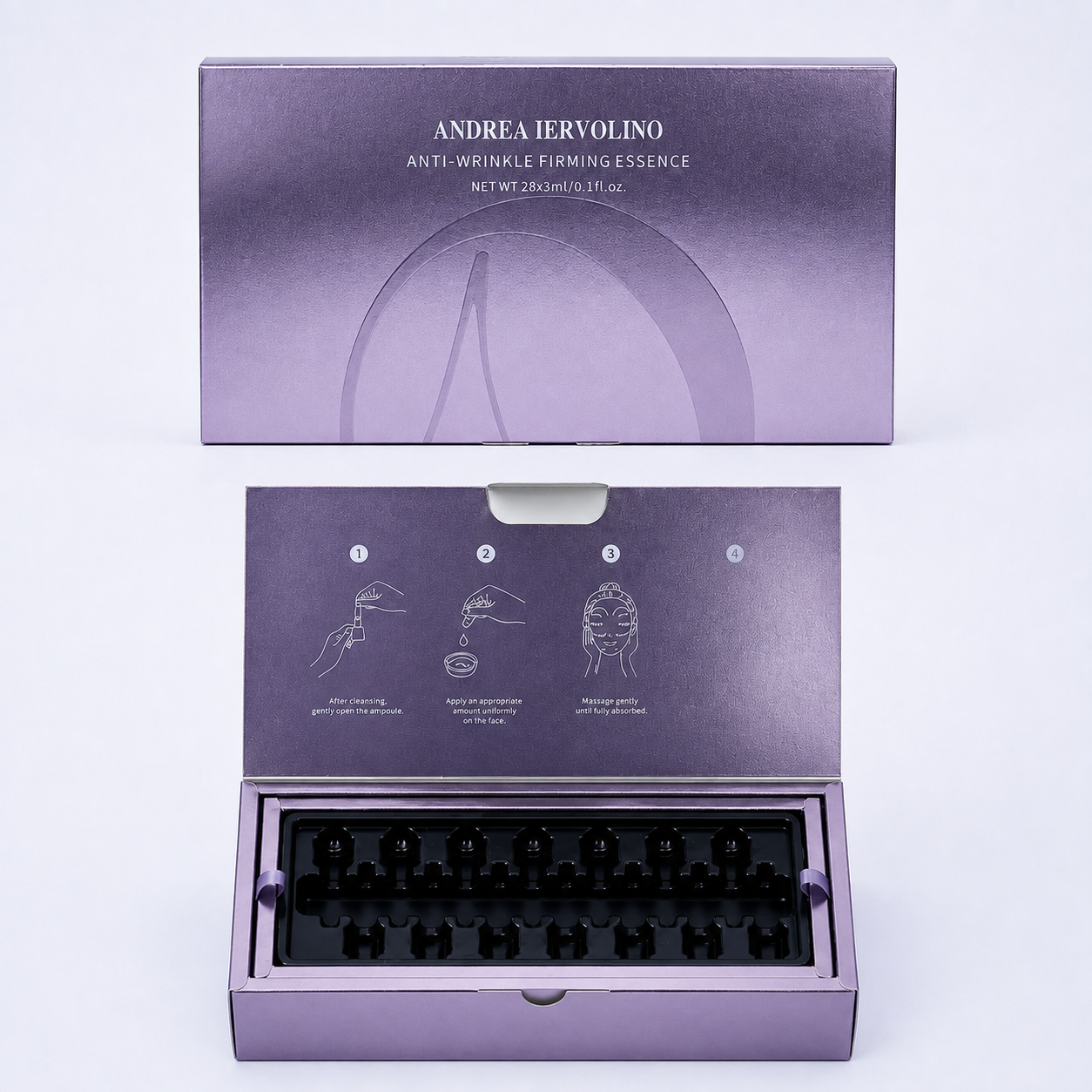
Metallic paper printing means printing graphics onto a paper or paperboard that already has a metallic surface.
Common examples include:
- silver card,
- gold card,
- pearl metallic paper,
- metallized paper,
- and selected holographic or reflective paperboards.
The important concept is:
The metallic appearance may come from the substrate—not from the printing ink.
This distinction is essential.
If ordinary CMYK ink is printed onto white coated paperboard, the white paper acts as the optical base.
If the same ink is printed onto reflective silver paperboard, the underlying metallic surface can influence the way the printed color appears.
The printing process and substrate therefore work together to create the final visual result.
How Does Printing on Silver or Gold Card Work?
A simplified metallic-paper printing construction might look like:
Metallic substrate → CMYK
or:
Metallic substrate → white ink → CMYK
These two constructions can produce very different results.
That difference is one of the most useful design tools in metallic packaging.
CMYK Printed Directly on Metallic Paper
When transparent or semi-transparent process colors are printed directly over a reflective metallic substrate, some of the underlying metallic character can remain visible through the printed image.
The result can appear as a colored metallic effect.
For example, printing color over silver card can create metallic-looking:
- blue,
- green,
- red,
- purple,
- or other process-color areas.
The metallic appearance is not necessarily created by a special blue or red metallic ink.
Instead:
Silver substrate + printed color = colored metallic appearance
This allows designers to use one metallic base material to create multiple metallic-looking colors.
White Ink + CMYK on Metallic Paper
Sometimes the metallic appearance is desirable only in selected areas.
Other parts of the design may need:
- normal skin tones,
- accurate product photography,
- clean typography,
- opaque brand colors,
- or a conventional printed appearance.
In those areas, an opaque white layer can be printed before CMYK.
The construction becomes:
Metallic substrate → white ink → CMYK
The white layer reduces the optical influence of the metallic substrate.
The result appears closer to printing on conventional white paper.
This creates one of the most powerful design principles for metallic paper:
White ink controls where the metallic effect appears and where it does not.
White Ink Is More Than Just Another Printing Color
On conventional white paper, designers rarely need to think about printing white because the substrate itself provides the white background.
Metallic paper changes this.
White ink can perform several different functions.
Creating White Graphics
The most obvious use is printing actual white text, logos or graphics.
Creating an Underbase
White can be printed underneath CMYK to reduce metallic reflection.
Controlling Metallic Areas
Selective white ink allows designers to determine which areas retain the reflective substrate and which become opaque.
Improving Image Reproduction
Photographs and certain brand colors may require a more neutral base than the metallic substrate provides.
This means the white layer should be planned during artwork preparation—not added as an afterthought during production.
Selective White Ink Creates Two Visual Systems on One Sheet
One of the most interesting characteristics of metallic card is that a single printed sheet can contain two very different visual systems.
Imagine a silver-card cosmetic box.
The background remains exposed silver.
A floral pattern is printed directly with transparent CMYK, producing colored metallic flowers.
The product photograph receives white underprint followed by CMYK, producing a more conventional photographic appearance.
The logo remains unprinted silver.
The result combines:
exposed metallic substrate + colored metallic printing + opaque conventional printing
on the same package.
This is one reason metallic paper can be particularly effective for premium packaging.
It allows the substrate itself to become part of the artwork.
Why Does Metallic Paper Change Printed Colors?
Ordinary print color is normally evaluated on a relatively neutral white substrate.
Metallic paper is neither neutral nor optically flat.
It reflects light.
As a result, printed colors can be influenced by:
- substrate reflectivity,
- metallic tone,
- ink transparency,
- ink density,
- white underprint,
- surface coating,
- viewing angle,
- and lighting conditions.
A silver-card package viewed under strong directional retail lighting may therefore look different from the same package under diffuse office lighting.
This is not necessarily a printing defect.
It is part of the optical behavior of the material.
Why Screen Color Is Especially Unreliable for Metallic Packaging
A computer monitor creates color using emitted RGB light.
Metallic packaging creates its appearance through a combination of:
printed ink + reflective substrate + ambient light
A screen therefore cannot accurately reproduce the changing reflections of a real metallic surface.
A PDF mockup may show roughly where the metallic areas will appear, but it cannot fully demonstrate:
- reflectivity,
- viewing-angle changes,
- metallic intensity,
- interaction between CMYK and silver,
- or matte/gloss contrast.
For this reason, metallic packaging benefits particularly strongly from physical sampling.
Gold Card vs Silver Card Printing
Gold and silver substrates behave differently because the underlying metallic color changes the optical foundation of the printed artwork.
Silver Card
Silver is relatively neutral compared with gold.
This makes it particularly useful when designers want to create multiple colored metallic effects.
For example:
Silver + blue ink → metallic blue appearance
Silver + red ink → metallic red appearance
Silver + green ink → metallic green appearance
The exact result depends on ink and printing conditions, but the silver base provides a flexible reflective foundation.
Gold Card
Gold already introduces a warm yellow metallic tone.
Colors printed directly over gold therefore interact with that underlying color.
This can work beautifully for warm luxury palettes, but it can also shift colors more noticeably.
If accurate conventional colors are required, white underprinting may become more important.
Direct CMYK vs White + CMYK on Metallic Paper
| Printing Construction | Metallic Influence | Typical Appearance | Suitable For |
|---|---|---|---|
| Metallic Substrate Only | Maximum | Raw gold/silver surface | Logos, backgrounds, decorative areas |
| CMYK Directly on Metallic Substrate | High | Colored metallic appearance | Metallic graphics, patterns, decorative imagery |
| White Ink Only | Low in printed area | Opaque white | White logos/text |
| White + CMYK | Reduced | More conventional opaque color | Photography, brand colors, detailed graphics |
| Selective White + CMYK | Controlled | Mix of metallic and opaque effects | Premium packaging with multiple visual zones |
This table illustrates why metallic paper artwork cannot simply be prepared exactly like artwork for ordinary white card.
The designer needs to decide where the metallic substrate should participate in the image.
Is Metallic Paper the Same as Metallic Ink?
No.
This distinction is frequently misunderstood.
Metallic paper gets its reflective character primarily from the substrate.
Metallic ink contains metallic-effect pigments or flakes designed to create a metallic appearance when printed.
The two can produce very different results.
| Factor | Metallic Paper | Metallic Ink |
|---|---|---|
| Source of Metallic Effect | Substrate | Ink |
| Metallic Area | Potentially entire sheet | Only printed areas |
| Reflectivity | Often strong and uniform | Depends heavily on ink, substrate and printing process |
| Colored Metallic Effects | Can be created by printing over metallic base | Requires suitable metallic ink formulation |
| White Underbase | Useful for controlling substrate effect | Usually not the same design function |
| Design Approach | Substrate becomes part of artwork | Metallic effect added through printing |
Our real production experience with silver printing on tissue paper demonstrates why this distinction matters.
In our Metallic Silver Printing on Tissue Paper case study, the customer’s target was a metallic silver printed pattern rather than a fully metallic substrate.
During trial production, different printing processes produced different levels of brightness and reflection.
The project reinforced an important principle:
Brightness and gloss are not automatically the same as a convincing metallic appearance.
The substrate, ink and printing process have to be evaluated together.
Printing on metallic paper requires both the printing process and the substrate to be considered together. Depending on the artwork, quantity, and required effect, offset, digital, screen, or another compatible process may be used. Our guide to choosing the right printing method explains how the major packaging printing processes differ before you decide how the metallic substrate should be incorporated into the design.
Metallic Paper Printing vs Foil Stamping
This is one of the most important distinctions for packaging buyers.
Both processes can create metallic packaging, but they create the effect in fundamentally different ways.
Foil stamping transfers a metallic foil onto selected areas of the package using dedicated tooling and a stamping process.
Metallic paper starts with a reflective substrate and then prints graphics over or around it.
| Factor | Metallic Paper Printing | Foil Stamping |
|---|---|---|
| Source of Metallic Effect | Metallic substrate | Transferred foil |
| Metallic Coverage | Can cover most or all of the sheet | Usually selected areas |
| Tooling | Printing plates/process may be required; no foil die solely for substrate effect | Foil stamping die required |
| Large Metallic Backgrounds | Very efficient design approach | Possible but can become less practical |
| Small Metallic Logo | Possible by leaving substrate exposed | Excellent application |
| Colored Metallic Graphics | Strong design flexibility by printing over metallic base | Requires appropriate colored foil or other process |
| Photographic Metallic Effects | Possible through process printing over metallic substrate | Not the primary use |
| Sharp Metallic Text/Logo | Possible, depending on printing/design | One of foil stamping's strengths |
| Surface Character | Metallic effect integrated across substrate | Foil sits/transfers onto selected surface areas |
| Embossed Foil | Separate embossing combination needed | Can be combined with embossing |
| Artwork Complexity | White separation + print separations may be needed | Separate foil artwork required |
| Visual Effect | Integrated metallic surface | Localized decorative metallic accent |
Choose Metallic Paper When…
Metallic paper is particularly useful when the design requires:
- large metallic backgrounds,
- extensive silver or gold areas,
- colored metallic graphics,
- gradients interacting with a metallic surface,
- multiple metallic-looking colors,
- or metallic effects integrated throughout the artwork.
For example, if 70% of a cosmetic carton is intended to appear metallic silver with printed colored graphics across the surface, starting with silver card may be more logical than applying foil across most of the carton.
Choose Foil Stamping When…
Foil stamping is particularly effective when metallic decoration is limited to selected elements such as:
- logos,
- borders,
- typography,
- icons,
- luxury accents,
- or small decorative patterns.
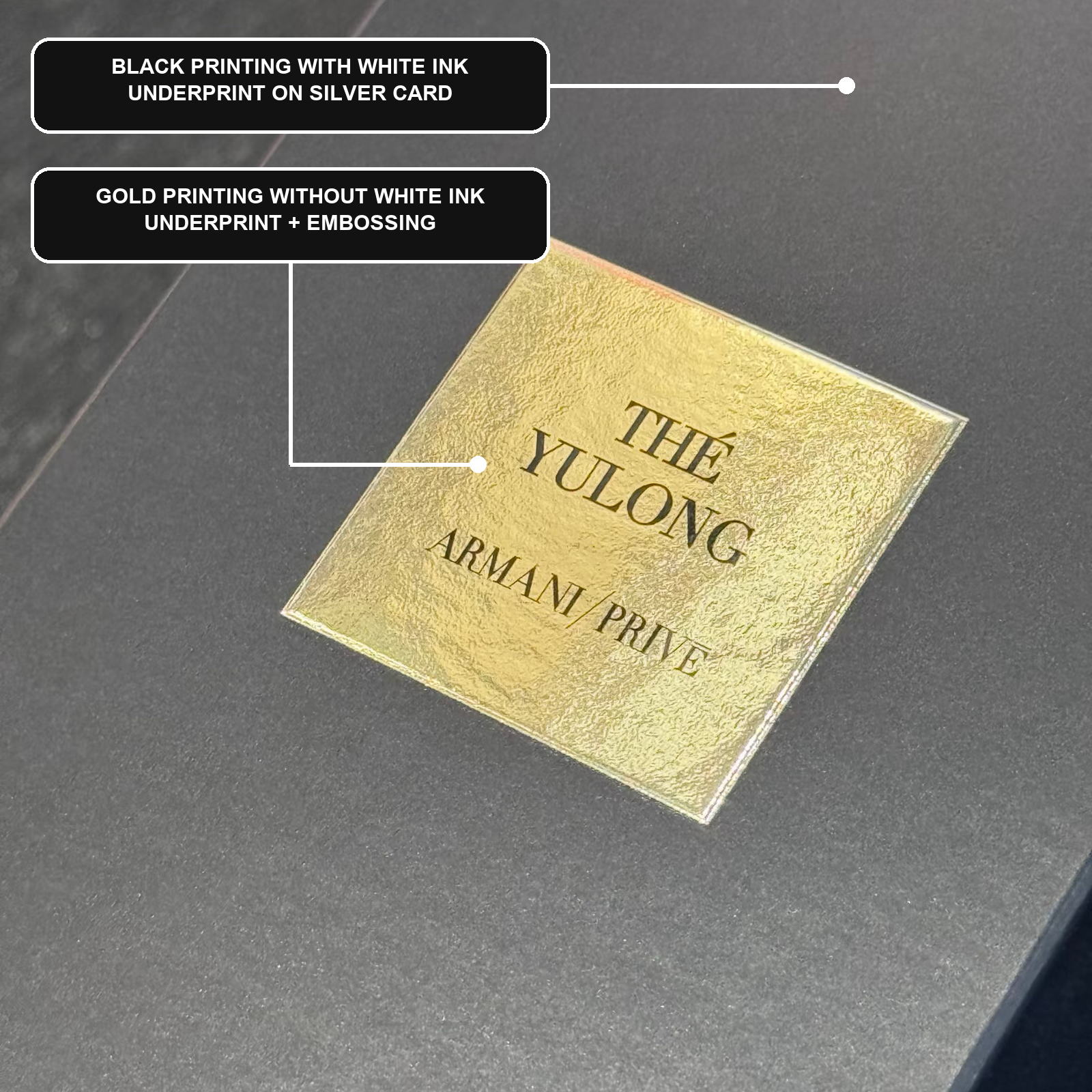
A matte black box with a small mirror-gold logo is a classic example.
There may be little reason to use gold metallic paper across the entire package if only the logo needs to be metallic.
Can Metallic Paper and Foil Stamping Be Combined?
Yes.
They are not mutually exclusive.
A silver-card package could include:
silver metallic substrate + CMYK printing + white ink + gold foil stamping
This can create multiple levels of metallic contrast.
For example, the silver substrate might form the background while a warm gold foil logo creates a clearly different metallic focal point.
The combination should be physically sampled because different reflective surfaces can compete visually if the design contains too many effects.
Metallic Paper Printing vs Foil Stamping: Which Is More Cost-Effective?
There is no universal answer.
The economics depend on how much of the package needs to be metallic.
If the design requires a small gold logo, foil stamping may be an efficient way to create the required localized effect.
If almost the entire carton needs a silver metallic appearance, starting with silver card may eliminate the need to transfer foil across a very large area.
However, metallic paper itself costs more than ordinary paperboard, and printing may require:
- white ink,
- additional print stations,
- specialized curing,
- more demanding registration,
- and physical proofing.
The correct comparison should therefore be:
total finished packaging cost, not simply “paper price vs foil price.”
Metallic Paper vs Holographic Paper
Metallic and holographic substrates should also be distinguished.
Standard silver or gold card mainly provides a reflective metallic surface.
Holographic substrates contain optical structures that create changing spectral, rainbow or dimensional effects as the viewing angle changes.
Printing can be applied to both, but the underlying optical behavior is different.
If the objective is a rainbow, diffraction or dimensional optical effect rather than a conventional metallic surface, see our Holographic Effects for Packaging guide.
The optical effect comes from the holographic structure—not from CMYK printing itself.
Why Registration Matters More With White Underprinting
Suppose a silver-card package contains a red logo that should appear opaque rather than metallic.
The production sequence may require:
white logo underbase → red printed logo
If the white layer and red layer are not correctly registered, a white edge may appear around the color.
Conversely, if the white layer is intentionally made slightly smaller than the color layer, the artwork and prepress workflow need to account for that relationship.
This becomes particularly important with:
- fine text,
- thin lines,
- small logos,
- complex illustrations,
- and multiple overlapping layers.
The more complicated the white separation, the more important prepress planning becomes.
Matte and Gloss Contrast on Metallic Paper
Metallic paper does not always need to remain highly glossy.
Surface treatments can modify how strongly the substrate reflects light.
For example, selected varnish strategies can create contrasts between:
matte metallic areas ↔ glossy metallic areas
or:
opaque printed areas ↔ exposed metallic areas
Your supplied metallic-card sample references also demonstrate how surface varnish strategies can alter the visual character of a metallic substrate.
Depending on the design, metallic paper may be combined with varnishing or selected UV coating effects.
The actual compatibility and final appearance should be tested on the intended substrate.
Can Metallic Paper Be Laminated?
Potentially, yes, depending on the material and required result.
But lamination can alter:
- reflectivity,
- gloss,
- tactile feel,
- color perception,
- and the apparent depth of the metallic surface.
For example, matte film may significantly soften the bright reflective character of a silver substrate.
Gloss film can create a very different appearance.
If lamination is required for protection or tactile reasons, the finish should therefore be evaluated as part of the design rather than added only as a technical afterthought.
See our Packaging Lamination guide for the broader differences between film types and applications.
Can Metallic Paper Be Embossed or Debossed?
Yes, many metallic paperboard constructions can be combined with embossing or debossing, provided the material structure is suitable.
This can be particularly effective because physical relief changes the way light interacts with the metallic surface.
A raised metallic logo, for example, may appear differently as the viewing angle changes.
However, metallic surface layers can respond differently to folding and deformation than ordinary paper.
Physical testing is therefore recommended when combining metallic substrates with deeper structural effects.
Folding Metallic Paper: Why Crease Testing Matters
Metallic card used for folding cartons must eventually be:
- die cut,
- creased,
- folded,
- and glued.
The metallic surface may be more visually sensitive to cracking or stress marks than an ordinary white board.
Several factors can influence fold performance:
- substrate construction,
- grain direction,
- paperboard thickness,
- crease width,
- crease depth,
- surface layer,
- lamination,
- and folding direction.
For structural packaging, metallic appearance is only useful if the finished carton can also be converted reliably.
Our Die Cutting for Packaging guide explains how cutting and creasing should be considered as part of the complete packaging structure.
Common Metallic Paper Printing Problems and How to Avoid Them
| Problem | Possible Cause | Practical Approach |
|---|---|---|
| CMYK Colors Look Different from Screen | Metallic substrate influences color | Use physical metallic-substrate proof |
| Photograph Looks Too Metallic | No white underbase | Add selective white beneath image |
| Metallic Effect Disappears | White printed beneath area intended to remain metallic | Review white separation |
| White Edge Around CMYK | White/CMYK registration mismatch | Optimize trapping and registration |
| Brand Color Changes | Reflective substrate influences process color | Use white underbase and physical color approval |
| Metallic Surface Looks Different Under Lighting | Directional reflection | Evaluate under multiple realistic lighting conditions |
| Fine Graphics Lose Clarity | Print/substrate/registration interaction | Test fine artwork before mass production |
| Fold Area Cracks or Marks | Material/crease construction unsuitable | Test actual converted carton |
| Finish Changes Metallic Appearance | Lamination/varnish alters reflection | Approve complete finished sample |
| Mockup Looks Different from Production | Screen cannot simulate real metallic reflection | Use physical samples |
How Should Artwork Be Prepared for Metallic Paper Printing?
Metallic packaging artwork requires more planning than conventional white-card artwork.
Define Exposed Metallic Areas
Decide which parts of the substrate should remain completely unprinted.
These areas will show the original silver or gold surface.
Define Direct CMYK-on-Metallic Areas
These areas intentionally allow the metallic substrate to influence the printed colors.
Create the White Ink Layer
Areas requiring conventional opaque colors should be identified for white underprinting.
The white layer should normally be treated as a separate production separation.
Separate Special Finishes
Foil, varnish, UV, embossing and other special effects should have clearly defined artwork layers.
Keep Structural Lines Separate
Cutting and creasing lines should not become part of the printable artwork.
A simplified file structure might therefore contain:
CMYK layer
White ink layer
Foil layer
Spot UV / varnish layer
Dieline
The exact file setup should follow the packaging manufacturer’s prepress requirements.
Why Physical Sampling Matters for Metallic Packaging
Metallic paper is one of the packaging materials where digital mockups have particularly limited predictive value.
A monitor cannot accurately reproduce a surface that changes with reflected light.
A physical sample allows you to evaluate:
| What to Check | Why It Matters |
|---|---|
| Metallic Intensity | Cannot be judged accurately from screen |
| CMYK over Metallic Base | Substrate changes color appearance |
| White Opacity | Determines how much metallic effect remains visible |
| White/CMYK Registration | Fine edges may reveal misalignment |
| Brand Colors | Need evaluation on actual substrate |
| Photography | Skin tones/product images may require white underbase |
| Matte/Gloss Contrast | Depends on real surface reflection |
| Folding | Metallic surface can reveal stress |
| Finishing | Lamination, varnish, foil and embossing alter appearance |
| Viewing Angle | Metallic effect changes as package moves |
For important retail packaging, the most meaningful sample is not merely a metallic paper swatch.
It is a sample using the actual material + printing construction + white ink strategy + finishing combination intended for production.
What Determines the Cost of Metallic Paper Printing?
| Cost Factor | Why It Matters |
|---|---|
| Metallic Substrate | Usually costs more than ordinary paperboard |
| Gold/Silver Material Type | Different constructions have different costs |
| Quantity | Influences material and printing economics |
| Printing Process | Offset or other systems have different setup requirements |
| Number of Colors | Additional separations increase production complexity |
| White Ink | Adds another printing layer/process requirement |
| White Coverage | Influences ink usage and production |
| Registration Requirements | Fine white + CMYK artwork requires greater control |
| Surface Finishing | Lamination, varnish, UV etc. add processes |
| Foil Stamping | Requires separate foil and tooling |
| Embossing/Debossing | Requires tooling and another operation |
| Structural Converting | Die cutting, creasing and gluing remain necessary |
Using metallic paper does not automatically make packaging cheaper than foil stamping, nor does foil automatically cost more.
The design itself determines which construction makes sense.
How to Specify Metallic Paper Printing When Requesting a Quote
| Information | Example |
|---|---|
| Packaging Type | Folding cosmetic carton |
| Finished Size | 60 × 40 × 120 mm |
| Quantity | 5,000 pcs |
| Substrate | Silver metallic paperboard |
| Printing | CMYK |
| White Ink | Selective white underprint |
| Exposed Metallic Areas | Background + logo pattern |
| Foil | Gold foil logo |
| Surface Finish | Selective varnish |
| Structural Finish | Embossed logo |
| Artwork | Print-ready AI/PDF with separate white/foil layers |
| Delivery Destination | Country / postal code |
A description such as:
“Silver box with color printing”
is usually insufficient.
A much more useful specification is:
“Silver metallic paperboard, CMYK directly on metallic background, selective white underprint beneath product photography, exposed silver logo pattern and gold foil-stamped brand name.”
That tells the manufacturer how the design is intended to work optically.
When Should You Choose Metallic Paper Printing?
Metallic paper is particularly worth considering when:
- metallic appearance covers a large part of the packaging;
- the substrate itself is intended to become part of the design;
- multiple colored metallic effects are required;
- CMYK graphics need to interact with a reflective background;
- exposed gold or silver areas form major design elements;
- the project requires a premium visual effect across a large surface;
- selective white ink can be used to combine metallic and conventional colors.
Foil stamping may be more appropriate when only a small logo or selected detail needs to be metallic.
Metallic ink may be more appropriate when the package should remain on ordinary paper but selected printed graphics require a metallic character.
Sometimes the best design uses more than one method.
The important question is therefore not:
“Which metallic process is best?”
It is:
“Where should the metallic effect come from, and how much of the packaging needs it?”
Frequently Asked Questions About Metallic Paper Printing
Can you print full-color CMYK on silver paper?
Yes. CMYK can be printed on suitable silver metallic paper or paperboard. Because process inks interact with the reflective substrate, colors can appear metallic or different from the same artwork printed on white paper. Physical proofing is recommended.
Why is white ink used when printing on silver or gold card?
White ink reduces the influence of the metallic substrate. It can be used underneath CMYK photography, text or brand colors when those elements need a more opaque and conventional appearance.
Can only part of the design remain metallic?
Yes. Selective white underprinting makes this possible. Areas without white can retain more of the metallic substrate effect, while areas with white beneath CMYK appear more opaque.
Can you create metallic colors without using metallic ink?
Yes. Printing suitable colors directly over a reflective silver substrate can create colored metallic appearances because the underlying metallic surface remains optically involved in the result.
Is metallic paper better than foil stamping?
Neither is universally better. Metallic paper is particularly useful for large metallic surfaces and integrated metallic graphics. Foil stamping is especially effective for localized metallic logos, typography and decorative accents.
Is silver card cheaper than silver foil stamping?
Not necessarily. Metallic card costs more than ordinary paperboard, while foil stamping adds foil, tooling and another production operation. The most economical solution depends on metallic coverage, quantity, printing, finishing and package construction.
Can metallic paper and foil stamping be used together?
Yes. For example, a silver-card carton can use CMYK and selective white printing while adding a gold foil-stamped logo. This creates contrast between two different metallic surfaces.
Will Pantone colors look the same on metallic paper?
Not necessarily. The metallic substrate can alter perceived color unless an appropriate opaque underbase is used. For brand-critical colors, evaluate a physical sample on the actual production substrate.
Why does metallic packaging look different under different lighting?
Metallic surfaces reflect surrounding light. The brightness, color and angle of the light source therefore influence how reflective areas appear. This is a normal characteristic of metallic substrates.
Can metallic paper be laminated?
Many metallic paperboard constructions can be laminated, but the film may change gloss, reflectivity, color and tactile appearance. The finished construction should be sampled before mass production.
Can metallic card be embossed?
Many metallic paperboards can be embossed, but material construction, surface layer, embossing depth and folding requirements should be evaluated. Physical testing is particularly useful for premium cartons.
Do I need a physical sample before ordering metallic packaging?
For color- or appearance-critical projects, it is strongly recommended. A screen cannot accurately reproduce the reflection, white-underprint effect, viewing-angle changes or finishing interaction of a real metallic substrate.
Designing Packaging With Gold & Silver Metallic Paper
Metallic paper is most powerful when it is treated as part of the artwork rather than simply as a premium replacement for ordinary paper.
The central design decision is:
Where should the metallic substrate remain optically visible?
Once that is established, printing can be planned around it.
Exposed metallic substrate creates raw gold or silver areas.
CMYK directly over metallic substrate creates colored metallic graphics.
White ink + CMYK creates more conventional opaque colors.
Foil stamping can introduce a separate localized metallic accent.
Varnishing, UV, embossing and debossing can further control surface contrast and dimensional appearance.
This creates a much broader design system than simply choosing “gold paper” or “silver paper.”
For packaging buyers, the best results come from evaluating the substrate + white ink + printed colors + metallic exposure + finishing + structure as one production system.
Vigor Packaging can help evaluate metallic paper, printing, white underprinting and finishing combinations based on your artwork and packaging requirements.
Contact us with your dimensions, quantity, artwork and required metallic effect to discuss your project.