Packaging lamination bonds a thin film to printed paper or paperboard, changing its appearance while improving surface protection and durability.
The most common choices are gloss, matte and soft-touch lamination. Specialty options such as pearlescent, textured and anti-scratch films add further visual or tactile character.
The right film depends on your printed colors, packaging structure, handling conditions, desired feel, budget and any finishing processes applied after lamination.
Packaging Lamination at a Glance
| Lamination Type | Main Appearance | Main Benefit | Best Suited To | Relative Cost |
|---|---|---|---|---|
| Gloss lamination | Bright, reflective and color-enhancing | Economical protection and visual impact | Retail cartons, colorful graphics and promotional packaging | $ |
| Matte lamination | Smooth, low-reflection and understated | Premium appearance and better readability | Cosmetics, skincare, electronics and luxury boxes | $–$$ |
| Soft-touch lamination | Ultra-matte with a velvety or skin-like feel | Premium tactile experience | Perfume, jewelry, cosmetics and high-end gift boxes | $$ |
| Pearlescent lamination | Shimmering, satin-like or pearl effect | Distinctive specialty appearance | Beauty, fragrance, seasonal and promotional packaging | $$–$$$ |
| Anti-scratch matte lamination | Matte with improved scuff resistance | Better durability during handling | Dark packaging and high-contact retail boxes | $$ |
| Textured lamination | Linen, leather, sand or other tactile texture | Strong visual and physical differentiation | Limited editions and luxury presentation packaging | $$$ |
Cost symbols are relative only. Actual pricing depends on film type, surface area, order quantity, printing method and other production requirements.
What Is Packaging Lamination?
Packaging lamination bonds a thin film to printed paper, cardstock or paperboard using heat, pressure, adhesive, or a combination of these methods.
The film forms a continuous surface across the printed sheet, which can then be die-cut, creased, folded, glued or wrapped around rigid board, depending on the box structure.
Lamination is commonly used for:
- Folding cartons
- Rigid boxes
- Printed sleeves
- Cosmetic and perfume boxes
- Shopping bags
- Book-style packaging
- Presentation boxes
- Product-launch and PR kits
Compared with varnishing, lamination generally offers stronger surface protection, since it adds a physical film rather than just a liquid coating — though it typically costs more and can affect the recyclability of paper packaging.
1. Gloss Lamination
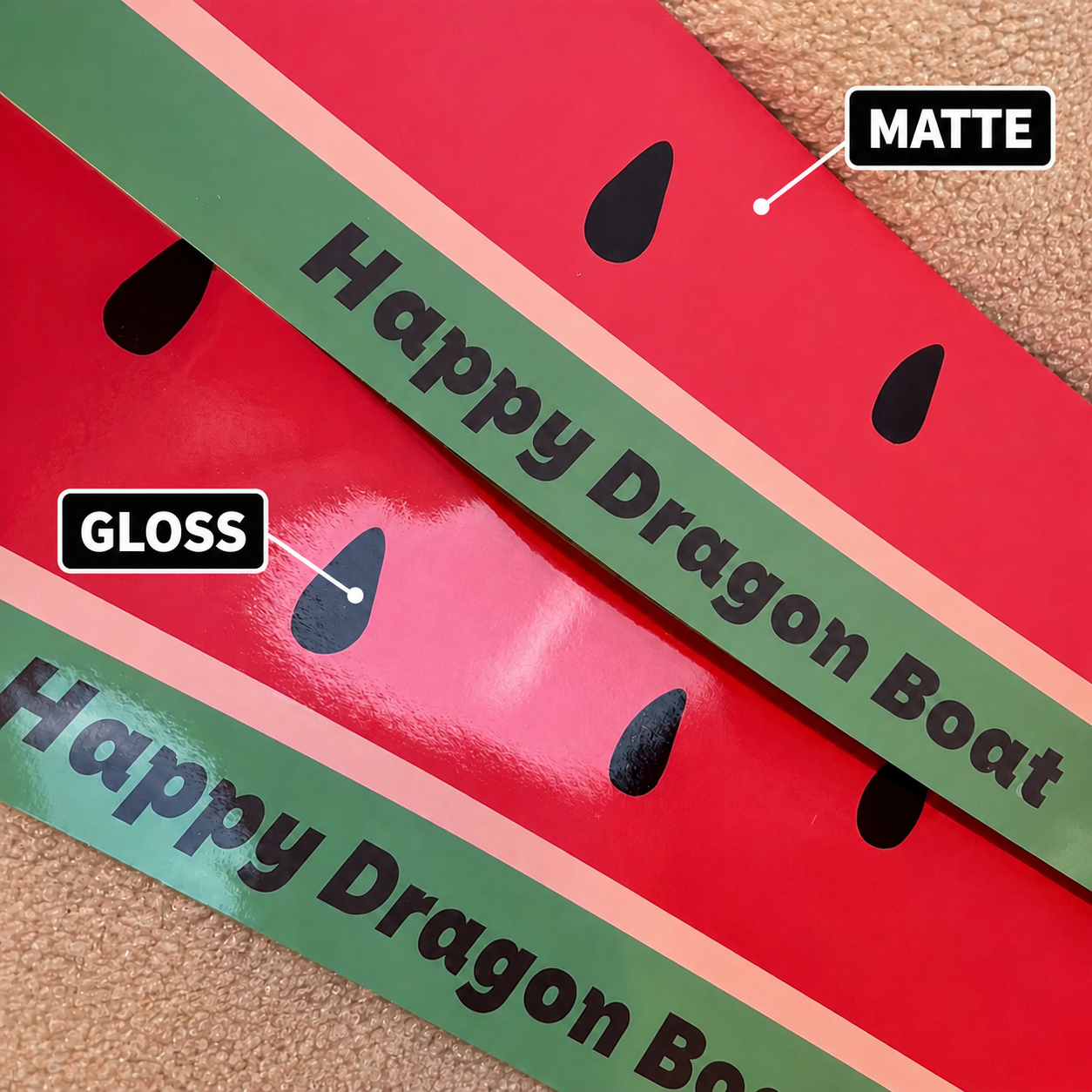
Gloss lamination creates a smooth, reflective surface that makes printed colors look brighter and more saturated. It pairs especially well with photography, gradients, vivid illustrations and packaging designed to catch the eye at retail.
Main effects: high surface shine, brighter printed colors, stronger contrast, an easy-to-wipe surface, and economical film protection.
Best applications: colorful retail cartons, toy and promotional packaging, food and beverage gift boxes, product photography, bright cosmetic graphics, and packaging that calls for an energetic look.
Advantages: Gloss film makes CMYK colors appear more vivid and delivers a clean, polished finish. It’s usually the most economical lamination option and holds up reasonably well against light moisture, fingerprints and everyday handling.
Limitations: The reflective surface can glare under strong lighting, making fine text harder to read at certain angles. Scratches also tend to catch the light and become more visible. On minimalist luxury packaging, gloss can look less understated than matte or soft-touch finishes.
2. Matte Lamination
Matte lamination reduces glare and produces a smooth, non-reflective surface. Colors typically appear more restrained than under gloss film, giving the packaging a calmer, more premium presentation.
Main effects: low-reflection surface, a subtle and sophisticated look, better readability under bright light, a smooth non-glossy texture, and strong contrast when paired with spot UV or foil stamping.
Best applications: cosmetic packaging, skincare boxes, perfume packaging, electronics, jewelry boxes, minimalist brand designs, and premium rigid boxes.
Advantages: Matte film suits elegant, understated branding and works especially well with black, white, neutral and muted palettes. It also provides an effective base for glossy contrast effects like spot UV.
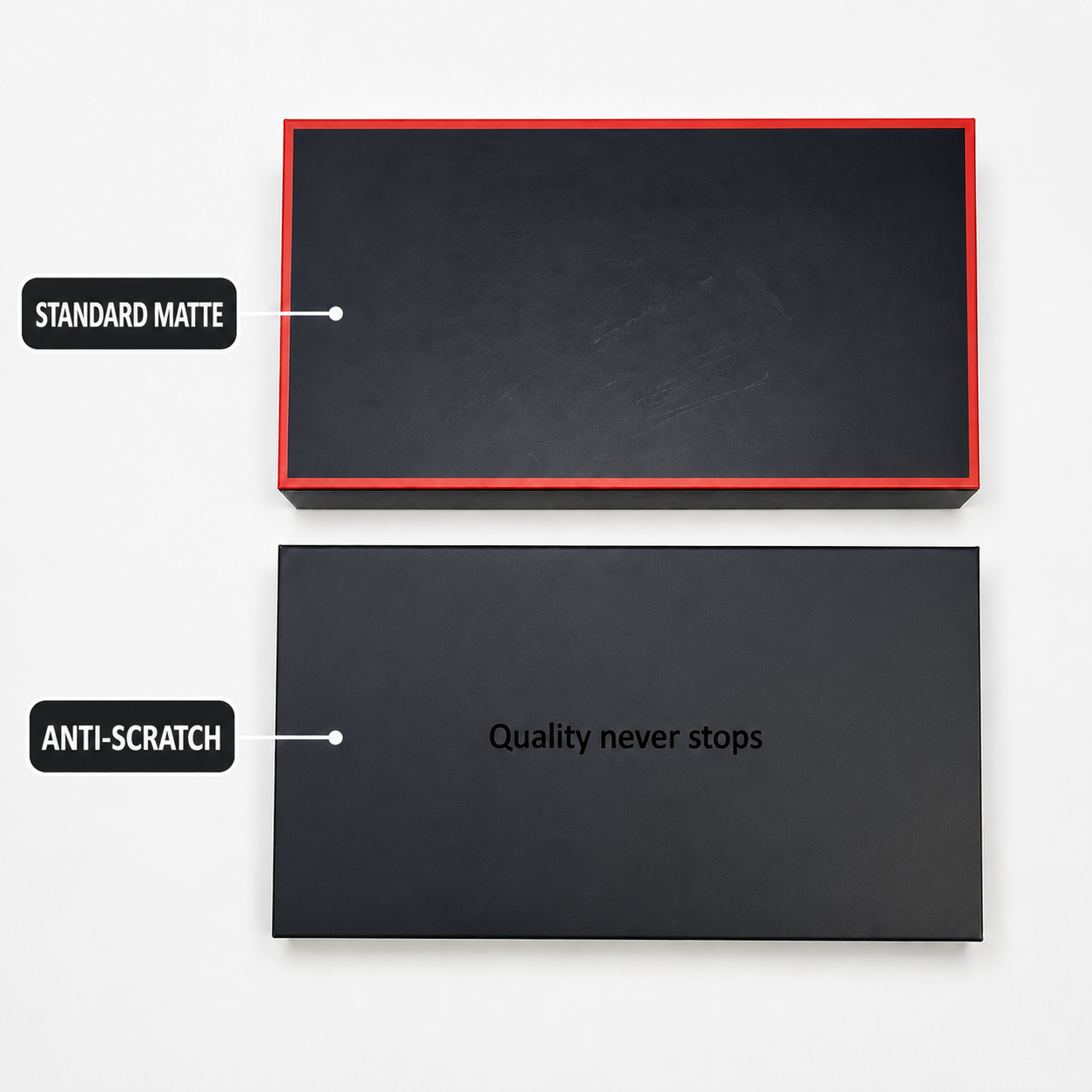
Limitations: Matte surfaces show rubbing and polishing marks more readily, particularly on large areas of dark color. In our experience, dark matte-laminated surfaces need more careful packing, since rubbing marks are more visible in transit — separating finished boxes with tissue, foam sheets or individual bags helps reduce surface-to-surface friction. Standard matte film also isn’t inherently scratch-proof; for packaging that will see frequent handling or long-distance shipping, an anti-scratch or scuff-resistant grade is worth considering.
3. Soft-Touch Lamination
Soft-touch lamination combines an ultra-matte look with a velvety, rubber-like or skin-like feel. It’s sometimes called velvet lamination, tactile lamination or skin-touch lamination — naming and exact texture vary by supplier.
Main effects: ultra-matte appearance, a smooth velvety feel, reduced glare, a premium tactile experience, and a strong sense of perceived value.
Best applications: luxury cosmetic boxes, perfume packaging, jewelry packaging, premium electronics, high-end confectionery boxes, VIP and influencer kits, and limited-edition gift packaging.
Advantages: Soft-touch film makes the unboxing experience more physical — the finish is noticeable the moment the box is picked up, which is valuable when tactile branding is part of the product’s positioning. It can also be combined with foil stamping, spot UV, embossing, debossing and screen-printed details, though compatibility depends on the specific film, ink, adhesive and finishing process, so production testing is essential.
Limitations: Soft-touch lamination costs more than standard gloss or matte film, and some grades show fingerprints, oil marks or scuffing more readily than others. Very thin lines, small reversed text and detailed foil areas may need adjustment — simplifying thin lines in foil-stamped logos before sampling usually produces cleaner, more consistent edges. If handling resistance matters, specify an anti-fingerprint or scuff-resistant soft-touch film rather than assuming every tactile film performs the same way.
4. Pearlescent Lamination
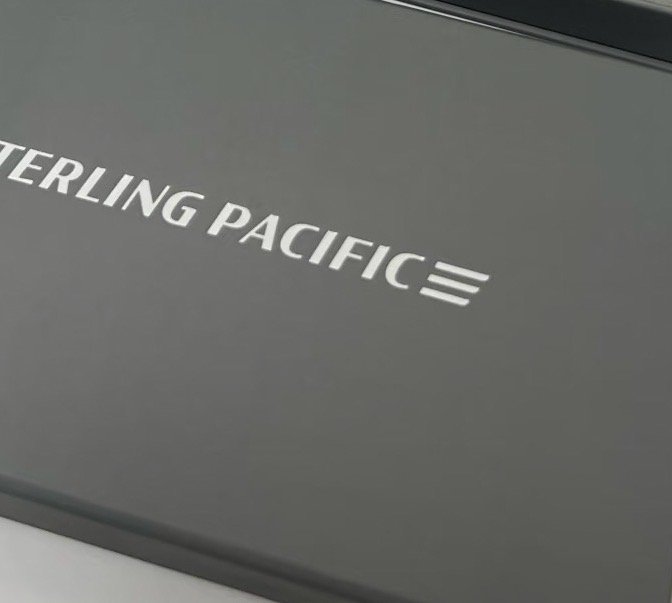
Pearlescent lamination creates a pearl-like shimmer that shifts subtly as light moves across the packaging. Depending on the film, the effect can read as white, silver, translucent, satin-like or softly iridescent.
Unlike standard transparent gloss and matte films, some pearlescent films are pigmented or partially opaque — meaning they can change the appearance of the printed colors underneath.
Main effects: pearl-like shimmer, soft light reflection, a satin or luminous appearance, increased opacity with some films, and distinctive specialty differentiation.
Best applications: cosmetic packaging, skincare gift sets, perfume boxes, bridal and jewelry packaging, holiday editions, feminine or ethereal brand concepts, and promotional packaging.
Advantages: The finish creates visual movement without the mirror-like look of metallic foil, can cover the full printed surface, and produces a softer effect than holographic or heavily metallized films. It works particularly well on pale colors, whites, pastels and designs where light itself is part of the concept.
Limitations: The final result depends heavily on film opacity, base color, printed ink and viewing angle — a white pearlescent film may reduce or shift underlying colors, while a translucent film gives a subtler effect. Digital artwork can’t accurately reproduce the final shimmer, so a physical laminated proof or production-grade sample should be approved before mass production. Note that pearlescent lamination film is distinct from pearlescent ink, metallic paper and holographic film; each achieves the effect through a different material and process.

5. Anti-Scratch Matte Lamination
Anti-scratch matte film keeps the matte appearance while improving resistance to scuffs, rubbing and visible handling marks — particularly useful for dark-colored packaging, where minor surface damage shows up more easily.
Best applications: black cosmetic boxes, dark perfume packaging, electronics boxes, reusable rigid boxes, e-commerce packaging, and packaging exposed to repeated retail handling.
Anti-scratch doesn’t mean scratch-proof — film performance varies, and sharp objects, excessive pressure or heavy rubbing can still leave marks. A physical test simulating packing, shipping, unpacking and normal customer handling is the best way to confirm performance.
6. Textured and Specialty Lamination Films
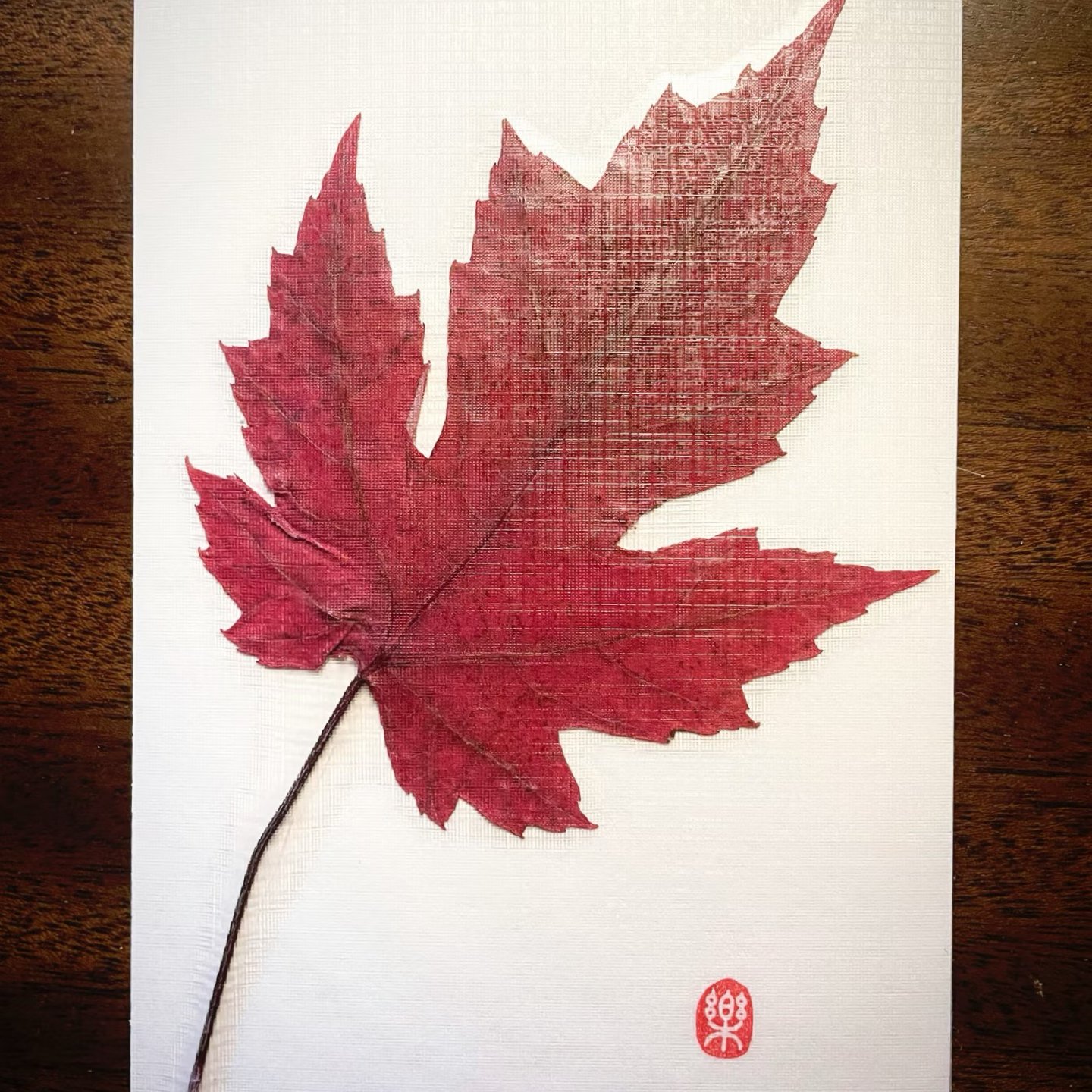
Specialty films can reproduce or suggest textures such as linen, leather, sand, fine grain, brushed surfaces, holographic patterns and metallized finishes. These are used when standard gloss, matte or soft-touch lamination doesn’t provide enough differentiation.
Textured films can strengthen a brand concept, but they also raise cost and may affect printing, foil adhesion, gluing, folding and fine graphic detail. Simpler artwork tends to perform better on a strongly textured surface.
Gloss vs Matte vs Soft-Touch Lamination
| Factor | Gloss | Matte | Soft-Touch |
|---|---|---|---|
| Reflection | High | Low | Very low |
| Color appearance | Bright and saturated | Subdued and refined | Refined with an ultra-matte look |
| Tactile effect | Smooth | Smooth and dry | Velvety or skin-like |
| Fingerprint visibility | Usually low to moderate | Varies by color and film | Varies significantly by film grade |
| Scuff visibility | Scratches may reflect light | More visible on dark colors | Can be visible without resistant film |
| Typical positioning | Commercial and colorful | Premium and minimalist | Luxury and sensory |
| Relative cost | Lower | Low to medium | Medium to high |
| Best contrast finish | Matte areas or uncoated details | Spot UV and foil | Spot UV, foil and embossing |
Choose gloss for brighter printed colors and economical protection. Choose matte for a restrained, premium appearance. Choose soft-touch when the feel of the box is part of the customer experience.
Lamination vs Varnish
Lamination and varnishing can both modify and protect printed packaging, but they work differently.
| Factor | Lamination | Varnish |
|---|---|---|
| Material applied | Thin film | Liquid coating |
| Surface protection | Generally stronger | Light to moderate |
| Tactile options | Extensive | More limited |
| Cost | Usually higher | Usually lower |
| Folding durability | Depends on film and creasing | Depends on coating and board |
| Plastic content | Adds a film layer | Usually does not add a plastic film layer |
| Best use | Premium finish and stronger protection | Economical surface enhancement |
Choose varnish when cost and basic print protection are the priorities. Choose lamination when the package needs stronger protection, a specific tactile feel, or a more uniform premium surface.
For a broader comparison, see our guide to custom packaging finishes.
Which Packaging Materials Can Be Laminated?
Lamination is commonly applied to coated art paper, printed paperboard, white cardstock, kraft-backed printed sheets, and paper wraps used on rigid boxes. Results depend on the surface, ink coverage, moisture, board construction and lamination process.
Highly textured, porous or uncoated papers may not bond as uniformly as smooth coated stock — and some specialty papers are chosen specifically for their natural texture, which can be lost under a film. Metallic cardstock and plastic-based substrates require separate testing, since adhesion and appearance can differ from ordinary printed paper.
Does Lamination Prevent Cracking on Folded Cartons?
Lamination can help protect printed ink along folds, but it doesn’t automatically prevent cracking. Cracking risk is influenced by paperboard grain direction, board thickness, ink coverage, lamination film, creasing depth, fold direction and environmental conditions.
Dark solid colors placed directly across a fold are especially sensitive to this. Correct grain direction, creasing rules and production testing are essential to minimizing the risk.
Can Foil, Spot UV or Embossing Be Added over Lamination?
Yes — many laminated surfaces support additional finishing, including foil stamping, spot UV, embossing, debossing, screen printing and die cutting. That said, not every film accepts every adhesive, ink or foil equally well.
Before bulk production, confirm foil adhesion, UV-coating adhesion, gluing performance, creasing and folding behavior, surface tension, registration tolerance, and resistance to tape or rubbing tests.
A film chosen for appearance alone can create problems later in production, so it’s worth telling your packaging supplier about every planned finish before the film is ordered.
What Determines Packaging Lamination Cost?
| Cost Factor | Why It Matters |
|---|---|
| Film type | Standard gloss and matte usually cost less than tactile or specialty films |
| Laminated area | Larger sheets and full-coverage designs consume more film |
| Order quantity | Setup costs are distributed across the production run |
| Film thickness | Thicker or higher-performance films may cost more |
| Printing method | Digital prints may require films or adhesives designed for digital toner or ink |
| Scratch resistance | Anti-scuff and anti-fingerprint grades usually carry a premium |
| Post-lamination finishes | Foil, spot UV and embossing add separate setup and production costs |
| Sampling | Special films may require additional testing or supplier samples |
| Packing method | Delicate matte surfaces may require more protective packing |
When requesting a quotation, specify the exact finish rather than writing only “matte film” — standard matte, anti-scratch matte and soft-touch matte can differ significantly in both price and performance.
How to Choose the Right Lamination Film
Choose gloss lamination when: printed color vibrancy is the priority, the design contains photography or bright graphics, you need economical film protection, or a reflective finish suits the brand.
Choose matte lamination when: the design should feel understated, readability under retail lighting matters, the packaging uses neutral or minimalist graphics, or you plan to add glossy spot UV.
Choose soft-touch lamination when: tactile experience supports the price positioning, the package is held during the unboxing experience, you’re producing luxury cosmetics, fragrance or jewelry packaging, or the added cost creates meaningful brand value.
Choose pearlescent lamination when: you want a luminous or satin-like specialty effect, light movement is part of the visual concept, the design uses pale, pastel or beauty-oriented colors, or you can approve the result with a physical sample.
Choose anti-scratch matte when: the packaging uses large dark areas, boxes will be handled frequently, surface rubbing is a known shipping risk, or the package needs to retain a matte appearance under wear.
Sustainability Considerations
Lamination can extend the usable life of packaging and protect the printed surface, but conventional plastic film also introduces a paper-and-plastic construction.
Before making environmental claims, confirm the film material, film thickness, recycled or bio-based content, local collection and recycling conditions, whether the laminated board is accepted by the intended recycling system, and whether an unlaminated coating could provide sufficient performance on its own.
Some film manufacturers offer recycled-content, bio-based or alternative lamination products, but these don’t automatically make the finished package recyclable or compostable. Sustainability claims should always refer to the complete package and the relevant market — not just the film name.
Why Physical Sampling Matters
A screen can’t accurately show gloss level, matte depth, tactile feel, pearlescent shimmer, or the visibility of rubbing marks.
A production-representative sample lets you evaluate printed color after lamination, surface reflection, tactile feel, film adhesion, foil and spot UV compatibility, folding and creasing, fingerprints and scuffing, insert and product fit, appearance under retail lighting, and performance after packing and transport.
For specialty films, approve a physical sample made with the intended paper, printing process, ink coverage and post-lamination finishes whenever possible.
Frequently Asked Questions
Is matte lamination the same as soft-touch lamination?
No. Both have a low-reflection appearance, but standard matte film feels smooth and relatively dry, while soft-touch film has a more pronounced velvety, rubber-like or skin-like feel.
Which lamination makes colors brighter?
Gloss lamination usually makes printed colors appear brighter and more saturated. Matte and soft-touch films create a more restrained appearance.
Which lamination is best for luxury packaging?
Matte, soft-touch and specialty textured films are all common choices for luxury packaging. The best option depends on brand identity, handling requirements and any other finishes involved.
Does soft-touch lamination show fingerprints?
Some soft-touch films show fingerprints, oil or scuff marks more easily than others. Anti-fingerprint and more resistant grades are available but should be physically tested before committing.
Is matte lamination scratch-resistant?
Not automatically—specify an anti-scratch or scuff-resistant grade if surface durability is a priority.
Can pearlescent lamination change printed colors?
Yes. Pigmented, white or partially opaque pearlescent films can shift color appearance and contrast, so always approve a physical sample first.
Can lamination be applied to kraft paper?
It can be applied to some printed kraft papers, but natural texture and porosity may affect adhesion and appearance—testing is recommended.
Can laminated packaging be recycled?
Acceptance varies by film, board construction and local recycling system. Avoid making a general recyclability claim without checking the complete material structure and target market.
Get a Lamination Recommendation for Your Packaging
Send us your packaging design, box dimensions, preferred paper or board, order quantity and destination country. Let us know whether you are considering gloss, matte, soft-touch, pearlescent or anti-scratch lamination, as well as any additional finishes you plan to use.
Vigor Packaging can evaluate your artwork and packaging structure, recommend a suitable lamination option, and prepare a custom quotation or physical sample before bulk production. To discuss your project, contact our packaging team with your specifications and production requirements.