Packaging varnishing applies a thin liquid coating over printed paper or paperboard. It can add gloss, reduce surface glare, improve rub resistance and provide economical protection without covering the packaging with a separate plastic film.
Gloss, matte and satin varnishes describe the final appearance. Overall and spot varnishing describe where the coating is applied. The right option depends on the printed design, packaging material, desired protection, production quantity and any additional finishing processes.
Varnishing is generally more economical and less visually dominant than lamination, but it provides lighter protection. It is commonly used for folding cartons, paper sleeves, labels, inserts and other printed packaging that does not require the stronger moisture and scuff resistance of a laminated surface.
Packaging Varnishing at a Glance
| Varnish Option | Main Appearance | Main Benefit | Best Suited To | Relative Cost |
|---|---|---|---|---|
| Gloss varnish | Bright and reflective | Enhances color and adds economical protection | Colorful folding cartons and retail packaging | $ |
| Matte varnish | Low-glare and restrained | Creates a softer premium appearance | Minimalist cartons and understated designs | $ |
| Satin varnish | Between gloss and matte | Balances color clarity with reduced glare | General retail and premium packaging | $ |
| Overall varnish | Uniform coating across the printed surface | Consistent appearance and surface protection | Folding cartons, sleeves and printed paper packaging | $ |
| Spot varnish | Coating applied to selected areas | Adds contrast and visual emphasis | Logos, images, patterns and product names | $–$$ |
| Water-based coating | Clear, fast-drying protective layer | Suitable for many efficient production runs | Folding cartons and commercial paper packaging | $ |
The terms in this table describe different aspects of the process. Gloss, matte and satin describe sheen; overall and spot describe coverage; water-based describes the coating system.
What Is Packaging Varnishing?
Packaging varnishing is a post-printing process in which a transparent liquid coating is applied to printed paper or paperboard and then dried or cured.
Unlike lamination, varnishing does not bond a separate film across the packaging surface. The coating is usually thinner and follows the texture of the underlying paper more closely.
Varnish can be applied:
-
Across the entire printed surface
-
Only to selected graphic areas
-
In gloss, matte or satin appearances
-
Before cutting, creasing and box conversion
-
As a base finish or in combination with other decorative processes
Packaging varnishing is commonly used for:
-
Folding cartons
-
Printed paper sleeves
-
Cosmetic and skincare cartons
-
Food and confectionery boxes
-
Pharmaceutical cartons
-
Product inserts
-
Labels and tags
-
Shopping bags
-
Printed paper wraps
Varnish should not be treated as a structural barrier. It provides surface-level protection, but the paperboard, ink system, box structure and transportation conditions still determine the final durability of the package.
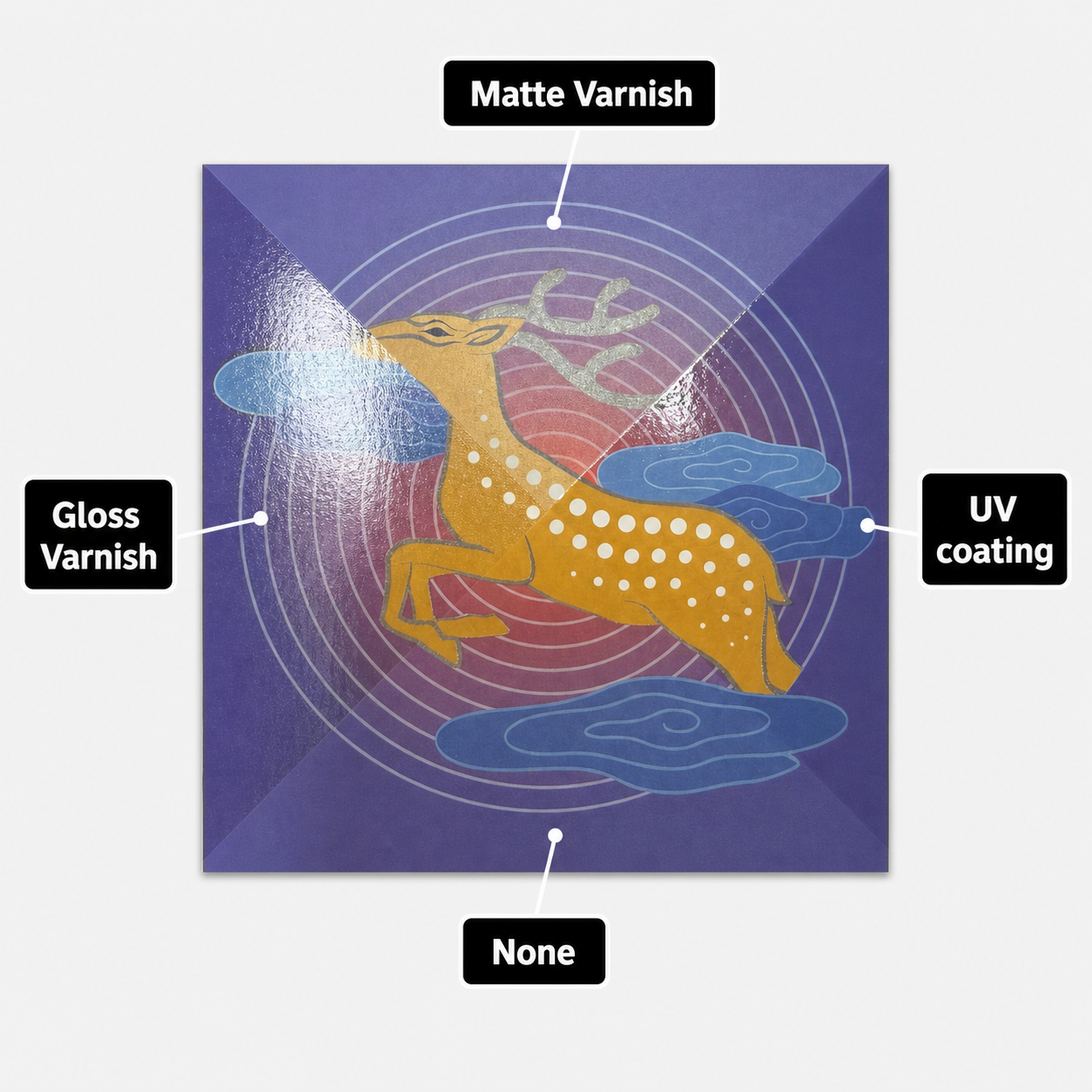
Gloss Varnish
Gloss varnish creates a brighter, more reflective surface. It can make printed colors look more saturated and increase contrast in photographs, illustrations and dark graphic areas.
It is commonly selected for packaging that needs:
Strong shelf visibility
Brighter CMYK colors
High-impact product photography
An energetic retail appearance
Economical surface protection
A cleaner-looking printed surface
Gloss varnish is often suitable for colorful folding cartons, food packaging, promotional sleeves, toys and other retail products where visual brightness is more important than a soft-touch or understated appearance.
However, gloss surfaces can reflect overhead lighting. This may make fine text or pale graphics more difficult to read from certain angles. Fingerprints and rubbing marks may also become visible on very dark or highly reflective surfaces.
A printed proof cannot fully reproduce the final gloss level, so a physical coated sample is recommended when reflectivity is important to the design.
Matte Varnish
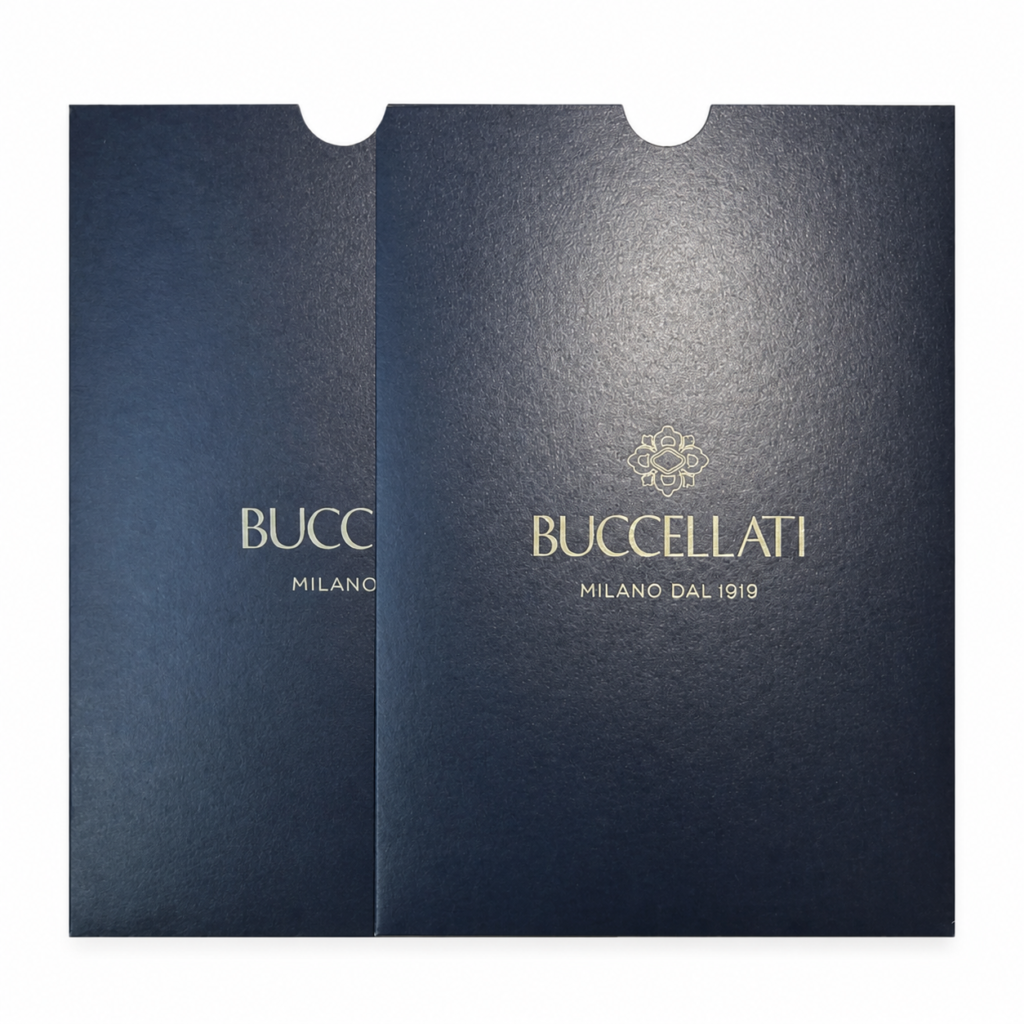
Matte varnish reduces surface reflection and creates a quieter, more restrained appearance. It is often chosen for minimalist packaging, premium skincare, natural products and designs that use muted colors.
Matte varnish may be appropriate when a brand wants:
Reduced glare
A softer printed appearance
More comfortable text readability
An understated premium effect
Less reflectivity than gloss varnish
A paper-like appearance without heavy film lamination
Matte varnish is not the same as matte lamination. A matte varnish is a thin liquid coating, while matte lamination bonds a film to the printed sheet. Lamination normally provides stronger surface protection and a more uniform feel.
Dark matte surfaces should be evaluated carefully. Scratches, polishing marks and abrasion can become more visible when large areas of black, navy or other dark colors are used. For transport-sensitive packaging, request physical samples and confirm how finished cartons will be packed.
If scratch resistance is the main priority, an anti-scratch lamination or another tested protective coating may be more suitable than a standard matte varnish.
Satin Varnish
Satin varnish sits between gloss and matte. It retains some brightness and color clarity while reducing the stronger reflections associated with a full-gloss surface.
Satin varnish can be a practical option when:
Gloss appears too commercial or reflective
Matte makes colors look too restrained
Text and graphics need balanced visibility
The packaging must work under varied retail lighting
A versatile finish is needed across several products
Because suppliers may use terms such as satin, silk and semi-gloss differently, do not approve the finish based only on its name. Compare physical samples and agree on an acceptable sheen range before production.
Overall Varnish
Overall varnish covers most or all of the printed surface. Its main purpose is to create a consistent appearance and provide basic protection against light rubbing, handling and ink transfer.
It is commonly used on:
Folding cartons
Paper sleeves
Product inserts
Printed bags
Commercial retail packaging
Packaging with large printed areas
Overall varnish is usually more economical than applying a selective decorative coating. It can also help printed sheets move through cutting, folding and gluing processes with less surface marking.
Areas that require adhesive, code printing or other secondary operations may need to remain uncoated. The dieline should clearly identify glue flaps, sealing zones, barcode areas and any surfaces that will be printed after varnishing.
Spot Varnish
Spot varnish is applied only to selected parts of the design. It can emphasize a logo, image, pattern, product name or other graphic element while leaving the surrounding surface uncoated or less reflective.
Common spot-varnish applications include:
Brand logos
Product names
Photographic details
Decorative patterns
Borders and line art
Selected background elements
Spot varnish can create subtle contrast, especially when a gloss varnish is placed over a matte printed or coated surface. However, it normally produces a lighter effect than spot UV coating.
Fine lines, small text and closely registered graphic elements may require additional tolerances. Slight movement can occur between printing, coating and cutting, so artwork should not depend on perfect alignment at extremely small dimensions.
When a strong raised gloss effect is required, spot UV may be more appropriate. When the goal is economical, subtle emphasis, spot varnish may be sufficient.
Water-Based Coating and Conventional Varnish
Buyers may encounter several terms when discussing printed packaging coatings. The exact definitions can vary by supplier and printing system, but two broad categories are common.
Water-based coating
Water-based coating, often called aqueous coating, dries primarily as water evaporates. It is commonly used for efficient overall coating on folding cartons and commercial printed packaging.
Potential advantages include:
Fast drying
Efficient production
Clear surface protection
Gloss, matte or satin options
Suitability for many paperboard applications
Its performance depends on the coating formulation, ink, paper surface, application weight and drying conditions.
Conventional print varnish
A conventional print varnish may be applied through the printing press using a process similar to printing ink. It is often selected when a lighter coating or selective application is required.
It may offer:
Economical press application
Overall or selected coverage
Gloss or matte effects
Compatibility with many printed-paper projects
Drying time and the risk of set-off should be considered, particularly with heavy ink coverage, non-absorbent materials or tight production schedules.
Because suppliers may use “varnish,” “aqueous coating” and “print coating” differently, the purchase specification should identify the required appearance, application area and performance instead of relying only on a process name.
Varnish vs Lamination
Varnish and lamination can both change appearance and protect printing, but they are not interchangeable.
| Comparison | Varnish | Lamination |
|---|---|---|
| Material applied | Thin liquid coating | Separate film bonded to the sheet |
| Surface protection | Light to moderate | Moderate to strong |
| Moisture resistance | Limited | Generally stronger |
| Scuff resistance | Depends on formulation | Generally stronger |
| Paper feel | Preserves more of the original paper character | Creates a more uniform film surface |
| Cost | Usually lower | Usually higher |
| Best for | Economical cartons and printed-paper packaging | Premium, frequently handled or transport-sensitive packaging |
| Common effects | Gloss, matte, satin and spot coating | Gloss, matte, soft-touch, anti-scratch and specialty films |
Choose varnish when the project needs economical print enhancement and basic handling protection.
Choose lamination when the package requires stronger scuff resistance, a more consistent surface, a specific tactile effect or additional protection during transportation.
For a detailed comparison of film types, see our packaging lamination guide.
Varnish vs UV Coating
Varnish and UV coating are sometimes confused because both can create glossy or selective effects.
Standard varnish generally forms a thinner, more subtle coating. UV coating is cured using ultraviolet energy and can produce a stronger gloss contrast and, depending on the application, a heavier coating layer.
Choose varnish when you need:
Economical overall protection
Subtle gloss or matte effects
A lighter coating layer
General folding-carton production
Modest spot emphasis
Consider UV coating when you need:
Strong high-gloss contrast
More visually prominent spot effects
Selected graphic areas to stand out
A bolder decorative finish
Greater coating build, where technically suitable
Some suppliers use the term “UV varnish” for a UV-cured coating. To avoid confusion, specify whether the requirement is conventional varnish, water-based coating, overall UV coating or spot UV.
Varnishing is one option within a broader range of custom packaging finishes.
Which Packaging Materials Can Be Varnished?
Varnish is commonly applied to coated paper and paperboard, but not every material produces the same result.
Coated paper and art paper
Coated paper provides a relatively smooth and consistent surface. It is commonly suitable for gloss, matte, satin and spot varnishing.
White cardstock and folding boxboard
These materials are widely used for folding cartons and often accept print coatings well. The final result depends on the board coating, ink coverage and converting requirements.
Kraft paper
Natural kraft paper is more porous and textured. Varnish may absorb unevenly or produce a less dramatic gloss effect than it would on coated white paper.
Testing is recommended when the design relies on strong contrast or when the natural paper appearance must remain visible.
Metallic and specialty paper
Metallic, pearlescent, synthetic and other specialty papers can have low surface absorbency or unusual coating behavior. Adhesion, drying and appearance should be tested before production.
Uncoated paper
Uncoated paper can absorb liquid coating, reducing gloss and making the result less uniform. In some cases, the coating may darken the paper or change its natural feel.
If maintaining a completely natural uncoated appearance is important, varnishing may not be appropriate.
Does Varnish Prevent Ink Rubbing and Scratching?
Varnish can improve resistance to light rubbing and handling, but it does not make packaging scratch-proof.
Performance depends on:
Varnish formulation
Coating thickness
Paper or paperboard surface
Ink adhesion
Drying conditions
Printed color coverage
Box packing method
Transportation environment
Amount of surface-to-surface contact
Dark solid colors frequently reveal rubbing marks more easily than light backgrounds. Even when a coating performs well during normal handling, cartons can still become marked if they move against each other during transportation.
For demanding projects, request:
A finished physical sample
Rub-resistance testing
Adhesion testing where necessary
A representative packed transit test
Confirmation of interleaving or protective packing
Clear acceptance standards for scuffs and scratches
Do not rely only on the name of the coating. Two varnishes described as “matte” or “protective” may perform differently.
Can Foil Stamping, Embossing or Gluing Be Added After Varnishing?
Yes, but the production sequence and coating-free areas must be planned before artwork approval.
Foil stamping
Foil adhesion can vary depending on the varnish, foil type, paper and stamping conditions. If foil is applied over a coated surface, compatibility testing may be required.
For cleaner results, some designs reserve the foil-stamping area rather than coating the entire sheet beneath it.
Embossing and debossing
Embossing and debossing can usually be combined with varnished packaging. Deep relief, heavy ink coverage and brittle coatings should be evaluated for cracking or surface stress.
Gluing
Glue flaps normally need to remain unvarnished unless the selected adhesive has been tested for the coated surface. Applying varnish over a glue area can reduce bond strength.
Inkjet coding and variable data
Batch codes, expiry dates, barcodes or variable information may not adhere properly to every coated surface. Reserve an uncoated coding area or test the intended coding system before production.
Does Varnish Crack on Folding Cartons?
Varnish itself cannot prevent every fold from cracking. Cracking is influenced by:
Paperboard fiber direction
Board quality and moisture level
Ink coverage
Coating formulation
Creasing depth and width
Fold direction
Environmental conditions
Time allowed for drying
Dark colors printed across a fold are more likely to make cracking visible. Proper grain direction, creasing and production testing are essential.
For critical packaging, inspect a fully printed, varnished, die-cut and folded sample rather than approving only a flat press sheet.
What Determines Packaging Varnishing Cost?
Varnishing cost depends on both setup requirements and the amount of coating used.
Important cost factors include:
Overall or spot application
Coated surface area
Varnish formulation
Gloss, matte or satin appearance
Number of coating passes
Printing method
Paper or paperboard type
Drying requirements
Order quantity
Registration tolerance
Sampling and testing requirements
Additional finishes applied before or after varnishing
Overall varnish is usually more economical than selective varnish because it requires less detailed registration.
Spot varnish may require additional plate or application setup, depending on the printing process. Very small quantities can carry a higher cost per unit because setup is distributed across fewer boxes.
When comparing quotations, confirm whether the price includes:
Coating setup
Printing
Special plates
Physical samples
Additional drying time
Rub or adhesion testing
Protective packing
Waste allowance
A lower unit price may not represent the lowest total cost if the finish produces higher waste, longer drying time or more transit damage.
How to Choose the Right Packaging Varnish
Use the following sequence when making a decision.
1. Define the main objective
Decide whether the varnish is primarily intended to:
Improve appearance
Brighten printed colors
Reduce glare
Protect ink from light rubbing
Emphasize selected graphics
Support efficient converting
Maintain more of the original paper feel
2. Evaluate the packaging structure
Folding cartons, sleeves, bags and rigid-box wrapping paper experience different amounts of bending, rubbing and handling.
A finish that performs well on a flat sleeve may not behave the same way across deep creases or handmade rigid-box edges.
3. Review the printed design
Large dark areas, fine spot-varnish details, metallic inks and graphics crossing folds require additional attention.
If the artwork depends on precise contrast, provide a clearly marked coating layer in the production file.
4. Consider transportation
Assess whether finished pieces will be:
Packed tightly together
Shipped flat
Assembled before shipping
Exposed to vibration
Handled repeatedly in retail
Stored in hot or humid conditions
Varnish may be sufficient for light handling, while frequently handled or transport-sensitive packaging may benefit from lamination.
5. Compare physical samples
Approve the finish under realistic lighting and handling conditions. Examine:
Gloss level
Color change
Surface smoothness
Rub resistance
Fold performance
Foil or glue compatibility
Registration of spot areas
A digital mockup cannot accurately reproduce sheen, surface feel or coating thickness.
Recommended Varnish by Objective
| Your Objective | Recommended Option |
|---|---|
| Economical overall protection | Overall gloss or satin varnish |
| Brighter printed colors | Gloss varnish |
| Reduced glare | Matte varnish |
| Balanced color and reflection | Satin varnish |
| Subtle logo emphasis | Spot gloss varnish |
| Preserve more paper character | Light matte or satin varnish |
| Stronger transport protection | Consider lamination |
| Bold high-gloss contrast | Consider spot UV |
| Dark surface requiring high scuff resistance | Test anti-scratch lamination or a specialized protective coating |
Sustainability Considerations
A thin varnish generally uses less added material than a separate lamination film, but that does not automatically make every varnished package recyclable or environmentally preferable.
The complete packaging structure should be evaluated, including:
Paperboard
Printing inks
Varnish formulation
Foil or metallic layers
Adhesives
Windows
Inserts
Local collection and recycling systems
Water-based does not automatically mean harmless, plastic-free or universally recyclable. Likewise, a coated paper package should not carry a recyclability claim without evaluating the complete structure and the requirements of its target market.
If recyclability is an important project objective, discuss material and coating choices before design approval rather than after production.
Why Physical Sampling Matters
Varnishing changes color, sheen, texture and surface performance in ways that cannot be judged accurately from a screen.
A physical sample helps confirm:
Whether gloss is too reflective
Whether matte reduces color intensity
Whether satin provides the intended balance
Whether spot varnish is visible enough
Whether the coating cracks at folds
Whether foil and glue adhere correctly
Whether dark surfaces show rubbing marks
Whether the finish survives representative packing and transport
For spot varnishing, the sample should use production-ready artwork with a clearly defined coating layer.
If a finish is critical to brand approval, use a fully printed and coated sample rather than an unprinted material swatch.
Frequently Asked Questions
Is varnish the same as lamination?
No. Varnish is a thin liquid coating applied over printing. Lamination bonds a separate film to the printed sheet and generally provides stronger protection and a more uniform surface.
Is varnish the same as UV coating?
Not necessarily. Standard varnish may dry through evaporation, absorption or oxidation, depending on the formulation. UV coating is cured using ultraviolet energy and can produce a stronger gloss or heavier coating effect. Some suppliers use the term “UV varnish,” so the production specification should identify the exact process.
Which varnish makes packaging colors brighter?
Gloss varnish usually makes printed colors appear brighter and more saturated. Matte varnish reduces reflection and can make colors appear softer or more restrained.
Is matte varnish scratch-resistant?
Not automatically. Matte varnish can improve basic handling resistance, but dark matte surfaces may still show scratches and polishing marks. Test a finished sample if scuff resistance is important.
Can varnish be applied only to a logo?
Yes. Spot varnish can be applied to selected areas such as logos, product names, images or patterns. Registration tolerances should be considered for fine details.
Can varnish be applied to kraft paper?
It can be applied to some kraft papers, but the porous and textured surface may absorb the coating and reduce the visible gloss effect. Physical testing is recommended.
Can varnished packaging be recycled?
It depends on the varnish, paperboard, inks, adhesives, other finishes and the local recycling system. Recyclability should be evaluated for the complete packaging structure.
Is varnish suitable for luxury packaging?
Yes, particularly when a brand wants a subtle gloss, matte or satin effect while preserving more of the paper surface. For stronger tactile effects or greater protection, lamination or another specialty finish may be more appropriate.
Does varnish increase packaging cost?
Yes, but standard overall varnish is generally one of the more economical packaging finishes. Cost depends on setup, coated area, formulation, order quantity and whether the coating is applied overall or selectively.
Get a Varnishing Recommendation for Your Packaging
Choose gloss varnish for brighter colors, matte varnish for reduced glare, satin varnish for a balanced appearance and spot varnish for subtle emphasis on selected graphics.
Varnish is a practical option when you need economical print enhancement and light surface protection. For packaging that will be handled frequently, shipped over long distances or exposed to greater rubbing, lamination or a more durable coating may be a better choice.
Send us your packaging structure, dimensions, artwork, preferred paper material, order quantity and destination. We can review the printed design, recommend a suitable varnish or alternative finish, and help you request a custom quotation or physical sample.