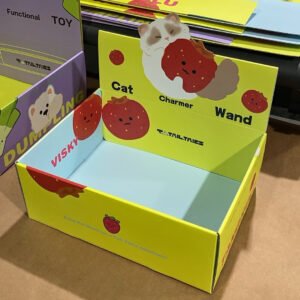
Digital printing has changed how brands approach short-run packaging, prototypes, multiple SKUs, and frequently changing artwork. Instead of creating a physical printing plate for every design, digital presses reproduce artwork directly from digital files, allowing packaging manufacturers to move from approved artwork to printing with much less conventional prepress setup.
For packaging buyers, however, the real question is not simply whether digital printing is “faster” than conventional printing.
The more useful questions are: When does digital printing make economic sense? How does it compare with offset printing? Which packaging materials can be digitally printed? Can it reproduce brand colors accurately? And when should a short digital run eventually move to conventional production?
Quick Answer: Digital printing is a plate-free printing process that transfers artwork directly from a digital file to the printing substrate. It is particularly useful for short runs, prototypes, multiple SKUs, variable-data packaging, and projects requiring frequent artwork changes.
Its biggest advantage is flexibility rather than universally superior print quality or lower cost. For larger, stable production runs, conventional processes such as offset printing may provide better production economics.
Digital Printing at a Glance
| Factor | Digital Printing |
|---|---|
| Printing Plates | Not normally required |
| Typical Color Workflow | CMYK; expanded-gamut and additional inks depend on equipment |
| Best Suited For | Short runs, prototypes, multiple SKUs, personalized packaging |
| Artwork Changes | Fast because new conventional plates are not required |
| Variable Data | One of its strongest advantages |
| Setup Cost | Generally lower than plate-based printing |
| Unit Cost at High Volume | Often higher than conventional printing |
| Substrates | Paper, paperboard, labels, corrugated and selected synthetic/rigid materials depending on press |
| White Ink | Available on some digital systems |
| Special Effects | Depends heavily on the press; some systems can produce white ink or raised/textured effects |
| Color Matching | Strong CMYK reproduction; exact spot-color capability depends on the press and workflow |
| Typical Packaging Applications | Samples, folding cartons, labels, sleeves, corrugated packaging, limited editions |
What Is Digital Printing?
Digital printing is a family of printing technologies that produces images directly from digital artwork without using the conventional printing plates required by processes such as offset, flexographic or gravure printing.
This distinction changes the economics of the entire production workflow.
With conventional printing, producing a new artwork version may require new plates and another press setup. With digital printing, the production file can usually be changed electronically and sent to the press again.
That makes digital printing especially valuable when packaging quantities are small or when a project contains many different artwork versions.
But digital printing is not one single printing technology.
Depending on the equipment and application, digital printing may use technologies such as:
- electrophotographic printing,
- toner-based printing,
- inkjet printing,
- UV inkjet printing,
- or other digital imaging systems.
The exact print quality, substrate compatibility, white-ink capability, production speed and finishing compatibility therefore depend on the machine being used.
This is why asking only:
“Can you do digital printing?”
is usually not enough for a packaging project.
A better question is:
“Which digital printing system is suitable for my material, artwork, quantity and required finish?”
How Does Digital Printing Work?
A simplified digital packaging workflow looks like this:
Digital artwork → RIP / color processing → digital imaging → ink or toner transfer → curing or fusing → finishing → die cutting and converting
Unlike offset printing, there is normally no need to create a separate conventional printing plate for each color separation before the artwork can enter production.
This substantially reduces preparation requirements for small jobs.
It also makes something else possible:
the printed image itself can change from one piece to another.
That ability becomes particularly important for multiple SKUs and variable-data packaging.
Why Digital Printing Works Well for Short-Run Packaging
The economics of digital printing are largely determined by what happens before the first sellable sheet is printed.
Conventional processes require setup that must be distributed across the production quantity. Digital printing removes much of the plate-related setup.
Imagine a brand needs only 100–300 boxes for a product launch.
Creating printing plates and completing conventional press makeready for such a small quantity can represent a disproportionately large part of the printing cost.
Digital printing avoids much of that fixed preparation.
This makes it particularly useful for:
- startup packaging,
- product launches,
- packaging prototypes,
- test-market production,
- limited editions,
- seasonal campaigns,
- influencer or event packaging,
- small regional runs,
- and low-volume replacement packaging.
However, plate-free does not mean the unit cost keeps falling indefinitely.
Digital presses still consume ink or toner, machine time, and other production resources on every printed piece. At sufficiently high quantities, conventional printing can therefore become more economical.
There is no universal crossover quantity because box size, sheet utilization, ink coverage, material, press type, finishing, and the number of SKUs all affect the calculation.
Digital Printing for Multiple Packaging SKUs
This is one of the areas where digital printing can offer much more than simply “small quantity printing.”
Suppose a skincare brand launches:
- 6 products,
- 4 shades per product,
- and 200 boxes per shade.
The total order is 4,800 boxes, but each individual artwork requires only 200 pieces.
If each version requires separate conventional plates and setup, production complexity increases quickly.
Digital printing can handle these artwork variations more efficiently because the files can be changed electronically.
This makes digital printing particularly attractive for brands with:
many SKUs + relatively low quantity per SKU.
Therefore, packaging buyers should not evaluate print quantity only by total order volume.
The more useful calculation is often:
quantity per artwork version.
Variable Data Printing: A Major Advantage of Digital Printing
Variable Data Printing (VDP) allows selected elements within the artwork to change automatically from one printed package to another while the overall design remains consistent.
For example, each package can contain a different:
- serial number,
- QR code,
- promotional code,
- customer name,
- geographic message,
- language,
- image,
- batch identifier,
- or personalized graphic.
This is fundamentally different from conventional plate-based printing.
A conventional printing plate reproduces the same image repeatedly. Digital imaging can change selected information between impressions without replacing a physical plate.
Common Packaging Applications
Personalized packaging
Different names, messages, or images can be printed across the same campaign.
Traceability
Individual packages can carry unique identifiers or serialized codes.
Promotional campaigns
Different QR codes, offers, competitions, or regional campaigns can be incorporated.
Multiple-language packaging
Smaller quantities can be divided between different language versions.
Limited editions
Packages can be individually numbered or differentiated.
For brands using packaging as part of a digital marketing or traceability system, variable data can be one of the strongest reasons to choose digital printing.
CMYK and Color Reproduction in Digital Printing
Most packaging buyers associate digital printing with CMYK reproduction.
Cyan, Magenta, Yellow and Black are combined to reproduce photographs, gradients and multicolor artwork.
Modern digital presses can produce excellent commercial results, particularly for photographic and complex full-color designs.
But it is important not to assume:
CMYK file = identical color on every machine and every substrate.
The final result is influenced by:
- press technology,
- ink or toner system,
- color profile,
- calibration,
- substrate whiteness,
- substrate absorbency,
- surface smoothness,
- coating,
- and finishing.
This is why physical proofing remains important for color-critical packaging.
Can Digital Printing Match Pantone Colors?
Sometimes closely, but not necessarily exactly.
Many digital presses reproduce brand colors by converting them into the machine’s available process-color gamut. Some higher-end digital systems use additional inks beyond standard CMYK, allowing them to reproduce a wider range of colors.
But this should not be confused with physically printing every Pantone spot ink.
If a specific corporate color is critical, the packaging manufacturer should evaluate:
- the target Pantone color,
- the digital press’s available gamut,
- the actual production substrate,
- the acceptable color tolerance,
- and whether a conventional spot-color workflow would be more appropriate.
This is one reason offset printing remains important for repeat packaging projects requiring dedicated spot-color printing.
The Substrate Still Matters in Digital Printing
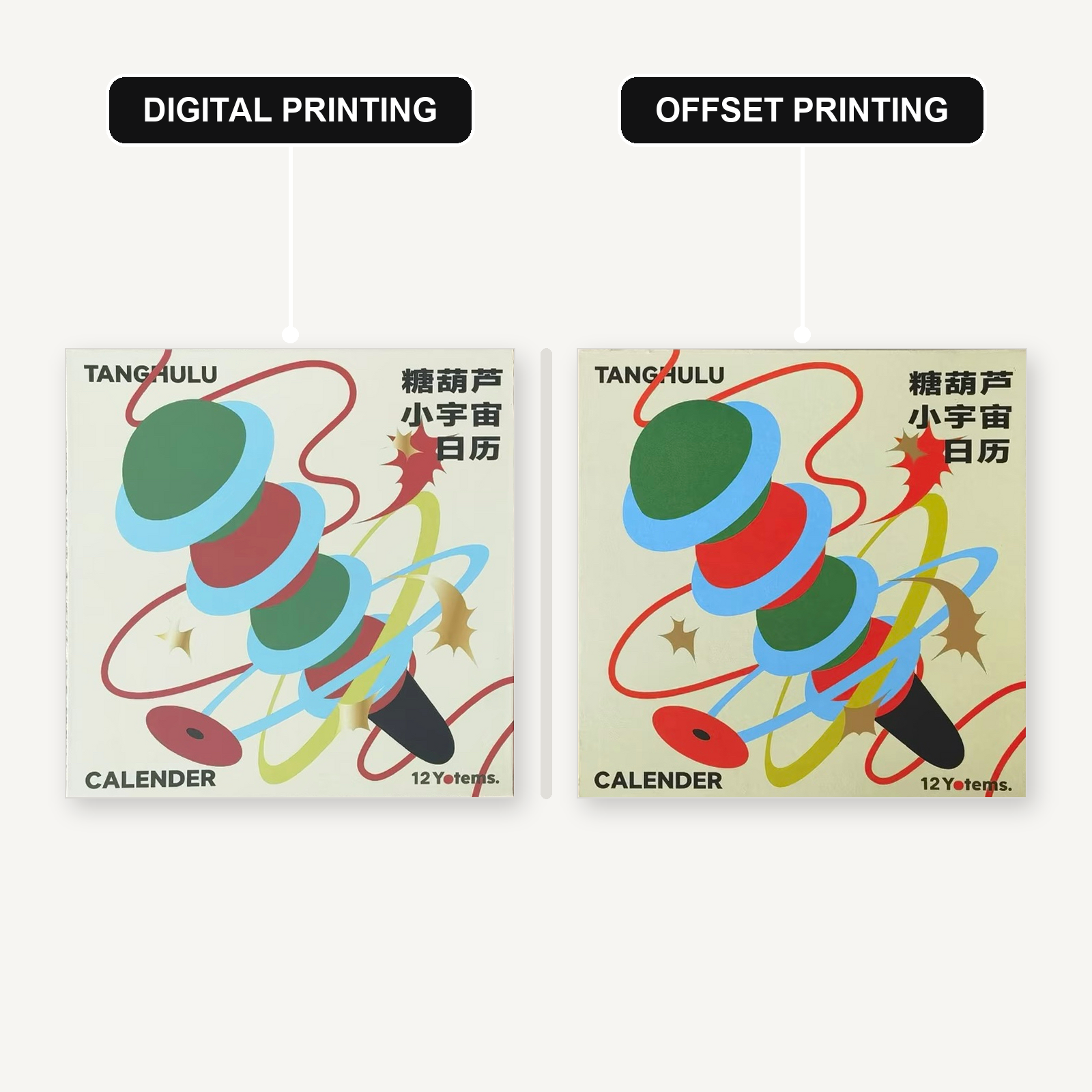
One of the most useful lessons from physical printing samples is that removing printing plates does not remove the influence of the material.
The same digital artwork printed on different papers can produce visibly different results.
Whiteness
Bright white board provides a different color foundation from cream, gray, brown kraft, or another colored material.
Absorbency
More absorbent materials can change ink behavior and perceived color density.
Surface Smoothness
Smooth coated stocks reproduce images differently from rough or heavily textured papers.
Surface Treatment
Coatings, primers, and other surface treatments can influence adhesion and color appearance.
Material Color
The substrate itself becomes part of the optical result unless an opaque layer separates it from the printed colors.
This leads to an important packaging-production principle:
No plates does not mean no production variables.
Material selection still matters.
White Ink in Digital Packaging Printing
White ink becomes especially useful when printing on:
- kraft paper,
- colored paper,
- dark substrates,
- transparent materials,
- metallic substrates,
- or other non-white surfaces.
Without white ink, CMYK inks interact optically with the color beneath them.
For example, yellow printed directly onto brown kraft does not appear the same as yellow printed onto bright white coated board.
A white underbase can reduce the influence of the substrate.
A typical construction may therefore be:
substrate → white ink → CMYK artwork
White ink can also be used selectively. Some areas can remain transparent, kraft-colored or metallic while other areas receive white underneath the CMYK artwork.
This creates additional design possibilities.
Importantly, white is not simply a neutral background. Its opacity, thickness and uniformity can directly affect the appearance of colors printed above it.
UV Digital Printing for Packaging
UV digital printing uses inks that are cured rapidly using ultraviolet energy.
Depending on the equipment, UV inkjet systems can print on a broader range of rigid or relatively non-absorbent materials than many paper-focused digital presses.
Potential substrates can include selected:
- paperboard,
- corrugated board,
- synthetic sheets,
- plastics,
- acrylic,
- wood,
- metal,
- and other rigid materials.
Compatibility should still be tested because surface energy, coatings, primers, flexibility, adhesion requirements, and final use conditions vary.
Raised and Textured Digital Effects
Some UV flatbed systems can build multiple ink layers to create localized raised areas.
For example:
white ink buildup → color printing → raised visual/tactile element
This can create dimensional graphics without conventional embossing tooling.
However, raised UV printing should not automatically be treated as equivalent to embossing.
Embossing physically deforms the substrate using pressure and tooling, whereas raised UV builds printed material on top of the surface.
The visual and tactile results are therefore different.
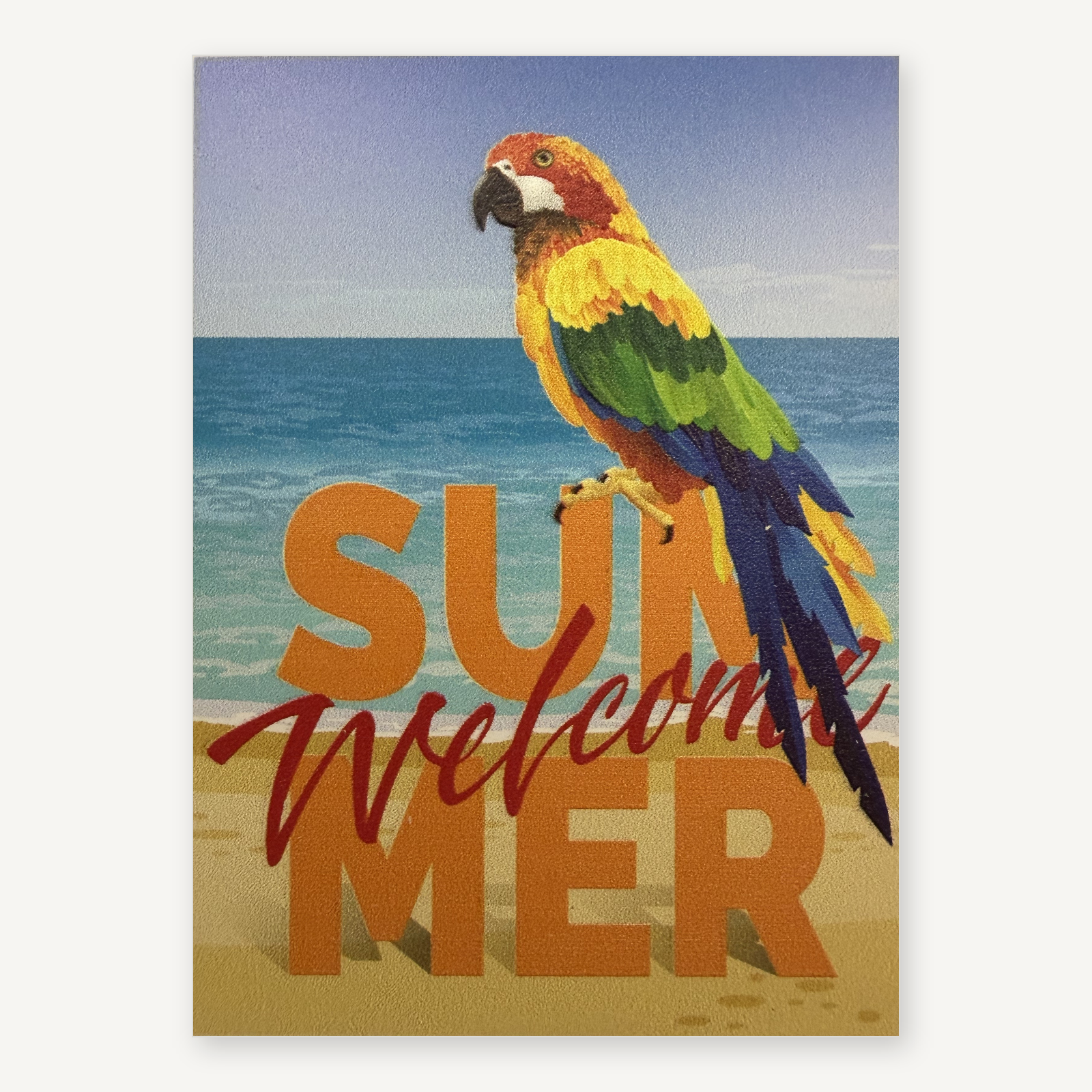
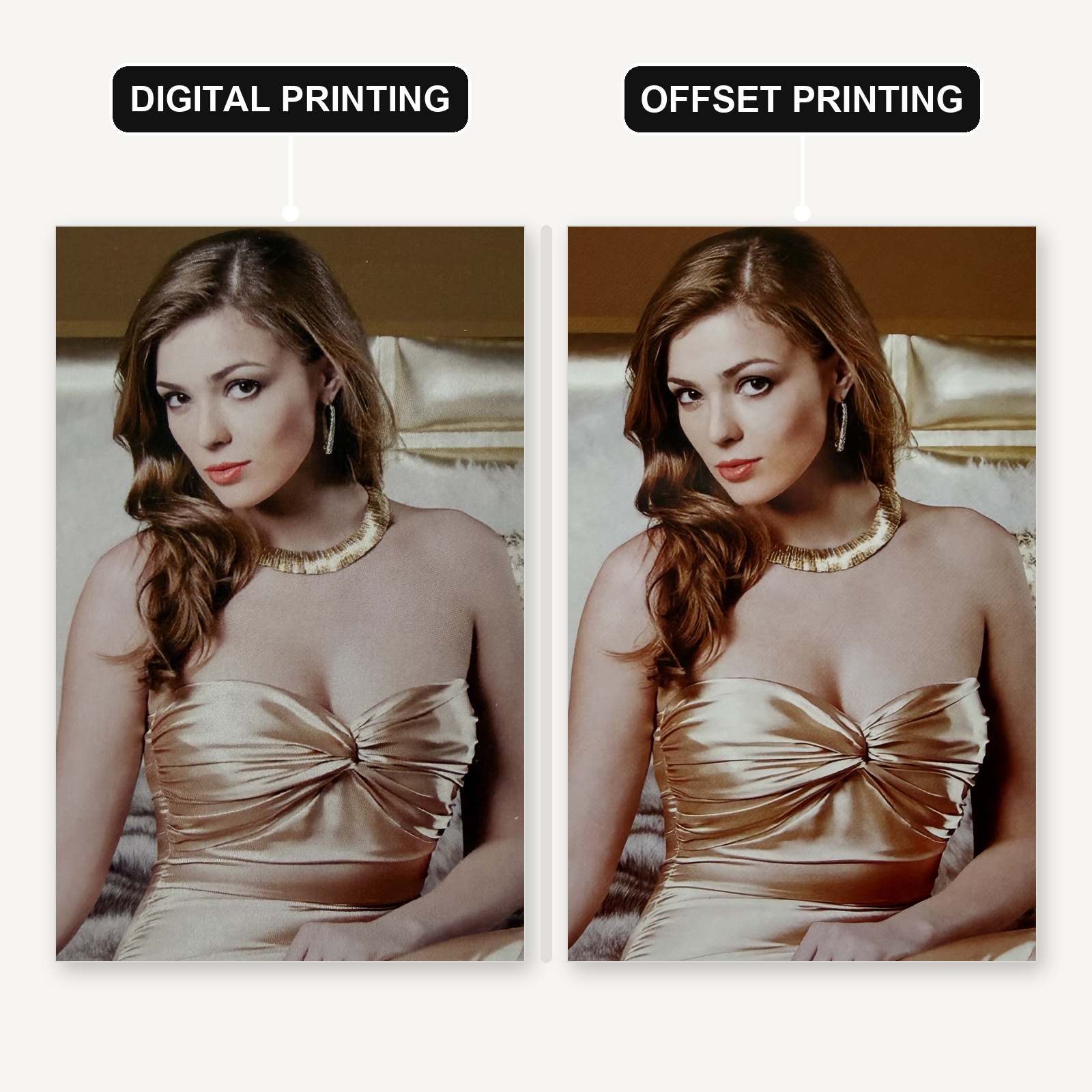
Digital Printing vs. Offset Printing
This is one of the most common questions packaging buyers ask, but there is no universal winner. Digital and offset printing solve different packaging production needs, and factors such as quantity, substrate, SKU count, variable data, and finishing requirements can change the best choice. If you are still choosing a packaging printing process, our complete guide compares digital printing with offset, flexographic, and screen printing.
| Factor | Digital Printing | Offset Printing |
|---|---|---|
| Printing Plates | Usually not required | Required |
| Setup Cost | Lower | Higher |
| Short Runs | Excellent | Usually less economical |
| Large Runs | Unit cost may remain relatively high | Usually increasingly economical |
| Artwork Changes | Easy | New plates may be required |
| Multiple SKUs | Strong advantage | More setup required |
| Variable Data | Excellent | Not native to conventional plate workflow |
| Photographic CMYK | Excellent with suitable equipment | Excellent |
| Spot Colors | Equipment-dependent | Strong conventional spot-color capability |
| Material Compatibility | Press-dependent | Broad for suitable sheet-fed substrates |
| Production Speed | Strong for short jobs | Strong once press is running at volume |
| Best Use | Flexible, short, changing jobs | Stable medium-to-large production |
The useful distinction is not:
Digital = low quality
Offset = high quality
Modern digital printing can produce very high-quality packaging.
A better distinction is:
Digital optimizes flexibility. Offset optimizes repeat production at scale.
For a more detailed comparison from the offset side, see our Offset Printing for Packaging guide.
Digital Printing vs. Screen Printing
Digital and screen printing solve different packaging problems.
| Factor | Digital Printing | Screen Printing |
|---|---|---|
| Image Creation | Digital imaging | Mesh/stencil |
| Setup | Relatively low | Screen required for each color |
| Full-Color Images | Strong | Less efficient for complex photographic CMYK |
| Solid Spot Colors | Good, equipment-dependent | Excellent |
| Ink Deposit | Generally thinner | Can be relatively heavy |
| Tactile Ink Character | Limited on conventional digital systems | Strong |
| Short Multicolor Runs | Excellent | Setup can become expensive |
| Material Range | Equipment-dependent | Very broad with suitable ink/setup |
| Personalization | Excellent | Poor |
| White Ink | Available on selected systems | Strong opaque white possible |
If the design contains photographs, gradients and many changing graphics, digital is usually easier.
If the design relies on a few bold opaque colors, heavy ink deposit or a distinctive tactile printed character, screen printing may be more suitable.
Can Digital Printing Be Combined With Packaging Finishes?
Yes.
Printing and finishing should be treated as separate but interconnected production decisions.
A digitally printed package may subsequently receive finishes such as:
Compatibility should be confirmed before production.
Digital inks and toners can create different surface characteristics from conventional offset inks. Adhesion of laminates, coatings, foil, glue, and other materials can therefore depend on the digital printing system, substrate, and subsequent process.
For premium packaging, it is better to evaluate the complete print-and-finish construction rather than printing and finishing independently.
You can compare these decorative processes in our complete Packaging Finishes guide.
When Digital Printing Is Usually the Better Choice
Digital printing becomes particularly attractive when several of these conditions occur together:
| Project Requirement | Why Digital Printing Helps |
|---|---|
| Small Production Quantity | Avoids conventional plate setup |
| Many SKUs | Artwork can change digitally |
| Prototype Required | Fast transition from artwork to physical sample |
| Frequent Design Changes | No need to remake conventional plates |
| Personalized Packaging | Supports variable data |
| Seasonal Campaign | Efficient for temporary artwork |
| Market Testing | Reduces commitment to large inventory |
| Unique QR/Serial Codes | Data can change between impressions |
| Fast Launch | Shorter conventional prepress preparation |
When Digital Printing May Not Be the Best Choice
Digital printing should not automatically be selected simply because it is newer or more flexible.
The Production Run Is Large and Stable
If the same artwork will be produced repeatedly in large quantities, the setup cost of offset or another conventional process can be distributed across many units.
Dedicated Spot Colors Are Critical
Depending on the digital equipment, certain Pantone or specialty colors may be easier to control using conventional spot inks.
The Substrate Is Outside the Press Specification
Digital presses have specific limitations relating to sheet size, thickness, surface, heat resistance, feeding, and ink compatibility.
A Specialized Ink Effect Is Required
Metallic, fluorescent, highly opaque, or other specialty effects should be evaluated according to the actual press and substrate.
Our real production case study on metallic silver printing on thick tissue paper demonstrates the broader principle: the best printing process cannot be selected independently from the substrate and required visual effect.
In that project, evaluating the material and printing method together ultimately led to a different production solution rather than forcing one printing process to meet an unsuitable visual target.
Digital Printing Cost Factors
Digital printing removes conventional plate costs, but the final packaging price still depends on many variables.
| Cost Factor | Why It Matters |
|---|---|
| Quantity | Determines total machine time |
| Number of SKUs | Digital can reduce changeover burden |
| Package Size | Affects sheet utilization |
| Ink Coverage | Heavy coverage consumes more ink/toner |
| Substrate | Specialty materials may cost more or require treatment |
| White Ink | Additional ink layers increase production requirements |
| Variable Data | Requires data preparation and verification |
| Finishing | Lamination, foil, UV, embossing etc. add separate costs |
| Die Cutting | Structural converting is separate from printing |
| Proofing | Physical production samples add preparation |
For this reason, comparing only “digital printing price per sheet” with “offset printing price per sheet” can be misleading.
The correct comparison is the total finished packaging cost.
Common Digital Printing Problems and How to Reduce Them
| Problem | Possible Cause | Practical Approach |
|---|---|---|
| Color Differs From Screen | RGB display vs print color / substrate influence | Use CMYK workflow and physical proof |
| Brand Color Is Inaccurate | Color outside press gamut | Provide Pantone target and confirm tolerance |
| Color Changes on Different Papers | Whiteness, absorbency or surface differs | Proof on actual production material |
| Weak Color on Dark Material | Substrate influences transparent process inks | Consider white underbase |
| Poor Ink Adhesion | Surface incompatible with ink | Test material / primer / treatment |
| Finish Does Not Adhere Well | Digital ink or toner surface interaction | Test complete print + finishing construction |
| Fine Text Looks Weak | Artwork or resolution issue | Supply suitable vector/high-resolution files |
| Prototype Differs From Mass Production | Different press or production process | Clarify whether sample and mass production use the same process |
A Digital Sample May Not Be the Same as Mass Production
This is particularly important for packaging buyers.
Sometimes a supplier uses digital printing to produce a physical prototype even though the final mass production will use offset printing.
The digital sample can accurately demonstrate:
- box dimensions,
- structural design,
- general artwork placement,
- text,
- graphics,
- and overall visual direction.
But it should not automatically be treated as a perfect reference for:
- final offset color,
- Pantone matching,
- metallic ink,
- surface gloss,
- ink density,
- or certain finishing interactions.
If the final production method differs from the sampling method, buyers should clarify what the sample is intended to approve.
For highly color-sensitive packaging, a production-process proof or approved color standard may still be required.
Artwork Preparation for Digital Packaging Printing
Digital printing simplifies setup, but it does not eliminate prepress requirements.
Image Resolution
Raster images should have sufficient effective resolution at their final reproduction size.
Color Setup
Artwork should follow the color workflow requested by the manufacturer, including any required CMYK or additional color channels.
Bleed
Artwork extending to the finished edge requires appropriate bleed.
Fonts
Fonts should be embedded, packaged, or converted according to the manufacturer’s prepress requirements.
Dielines
Keep structural elements such as cutting, creasing, perforations, and windows separate from printable artwork.
For more information about structural converting, see our Die Cutting for Packaging guide.
White Ink
If white ink is required, clearly define white-printing areas as a separate production layer.
Variable Data
Variable fields should be clearly identified, and the source data should be checked before production.
What to Specify When Requesting a Digital Printing Quote
For a useful quotation, provide:
| Information | Example |
|---|---|
| Packaging Type | Folding carton |
| Finished Size | 120 × 80 × 40 mm |
| Quantity | 300 pcs |
| Number of SKUs | 3 designs × 100 pcs |
| Material | 350 gsm coated paperboard |
| Printing | Full-color CMYK digital printing |
| White Ink | Required / Not required |
| Variable Data | 300 unique QR codes |
| Finish | Matte lamination + foil logo |
| Artwork | Print-ready PDF / AI file |
| Delivery Destination | Country / postal code |
The number of SKUs should always be stated separately from total quantity.
“3,000 boxes” and “30 designs × 100 boxes” may represent very different production decisions.
How to Choose Between Digital and Conventional Printing
Rather than asking which printing technology is “best,” evaluate the project in this order:
1. What material are we printing?
The substrate immediately eliminates unsuitable technologies.
2. How many units are required per artwork?
Not just total quantity.
3. Will the artwork change?
Multiple SKUs and frequent updates favor digital workflows.
4. Are there variable elements?
Unique codes or personalization strongly favor digital.
5. How strict is the color requirement?
Evaluate Pantone and brand-color expectations.
6. What finishes will be added?
Printing must remain compatible with downstream processes.
7. Will the project scale later?
Digital may be ideal for market validation, followed by offset or another conventional process once demand becomes stable.
This last strategy is particularly useful for growing brands:
Digital prototype → short market run → validate demand → conventional mass production
Digital and conventional printing therefore do not always compete.
They can be different stages of the same packaging production strategy.
Frequently Asked Questions About Digital Printing for Packaging
Is digital printing good for packaging?
Yes. Digital printing is particularly suitable for short-run packaging, prototypes, multiple SKUs, personalized packaging and designs that change frequently. The appropriate press depends on the material, package structure and required print quality.
Is digital printing lower quality than offset printing?
Not necessarily. Modern digital presses can produce excellent photographic detail and commercial packaging quality. Offset may still offer advantages for certain spot colors, substrates and large repeat runs. Quality should be evaluated against the actual project rather than assuming one process is always superior.
At what quantity should I switch from digital to offset printing?
There is no universal crossover quantity. Format, substrate, ink coverage, number of SKUs, press configuration and finishing all affect the economics. For borderline quantities, ask the manufacturer to calculate both digital and offset production rather than relying on a fixed threshold. Monk Creatives
Can digital printing reproduce Pantone colors?
Digital presses can simulate many Pantone colors within their available gamut, and some systems use additional inks beyond CMYK. Exact reproduction depends on the press, ink set, substrate and target color. Request a physical proof when brand-color accuracy is critical.
Can digital printing use white ink?
Some digital presses support white ink. It is particularly useful on kraft, colored, transparent and metallic substrates, either as an underbase beneath CMYK or as a visible design element.
What is variable data printing?
Variable data printing allows selected artwork elements—such as names, numbers, QR codes, images or promotional codes—to change from one printed package to the next without changing conventional printing plates.
Can I digitally print only 50 or 100 custom boxes?
Potentially, yes. Very small runs are one of digital printing's strongest applications, although the actual minimum order still depends on the packaging manufacturer, material, structure and finishing requirements.
Can foil stamping and embossing be added after digital printing?
Yes, in many packaging constructions. Digital printing can be followed by processes such as foil stamping, embossing, lamination and UV coating. The complete construction should be tested because adhesion and processing behavior depend on the digital ink or toner, substrate and finishing system.
Why does my digitally printed packaging look different from my computer screen?
Screens emit RGB light, while printed packaging reflects light from physical inks and substrates. Paper whiteness, surface texture, ink system, color profile and finishing can all change the appearance. A calibrated physical proof is more reliable than a monitor alone for approving critical packaging colors.
Can I use a digitally printed sample to approve offset mass production?
Use it primarily to evaluate structure, layout and overall design unless your supplier specifically confirms it as a reliable color reference. If the mass-production process changes to offset, final color and surface appearance may differ.
Choosing Digital Printing for Your Packaging Project
Digital printing has made packaging strategies practical that were previously difficult or expensive with conventional plate-based workflows: small batches, multiple SKUs, individualized graphics, rapid design revisions, market testing, and variable-data packaging can all benefit from a digital workflow.
But the real advantage of digital printing is not simply that it requires no conventional printing plates.
The key is matching printing technology + substrate + quantity per SKU + color requirements + finishing + future production scale.
For a new product, digital printing may be the right solution for 200 boxes today. If the same product later grows to 20,000 identical boxes, offset printing or another conventional printing process may become more economical.
Vigor Packaging evaluates printing as part of the complete packaging specification rather than selecting the process in isolation.
If you need help choosing the appropriate printing process, material, and finishing combination, contact us with your packaging dimensions, quantity, artwork, and project requirements.