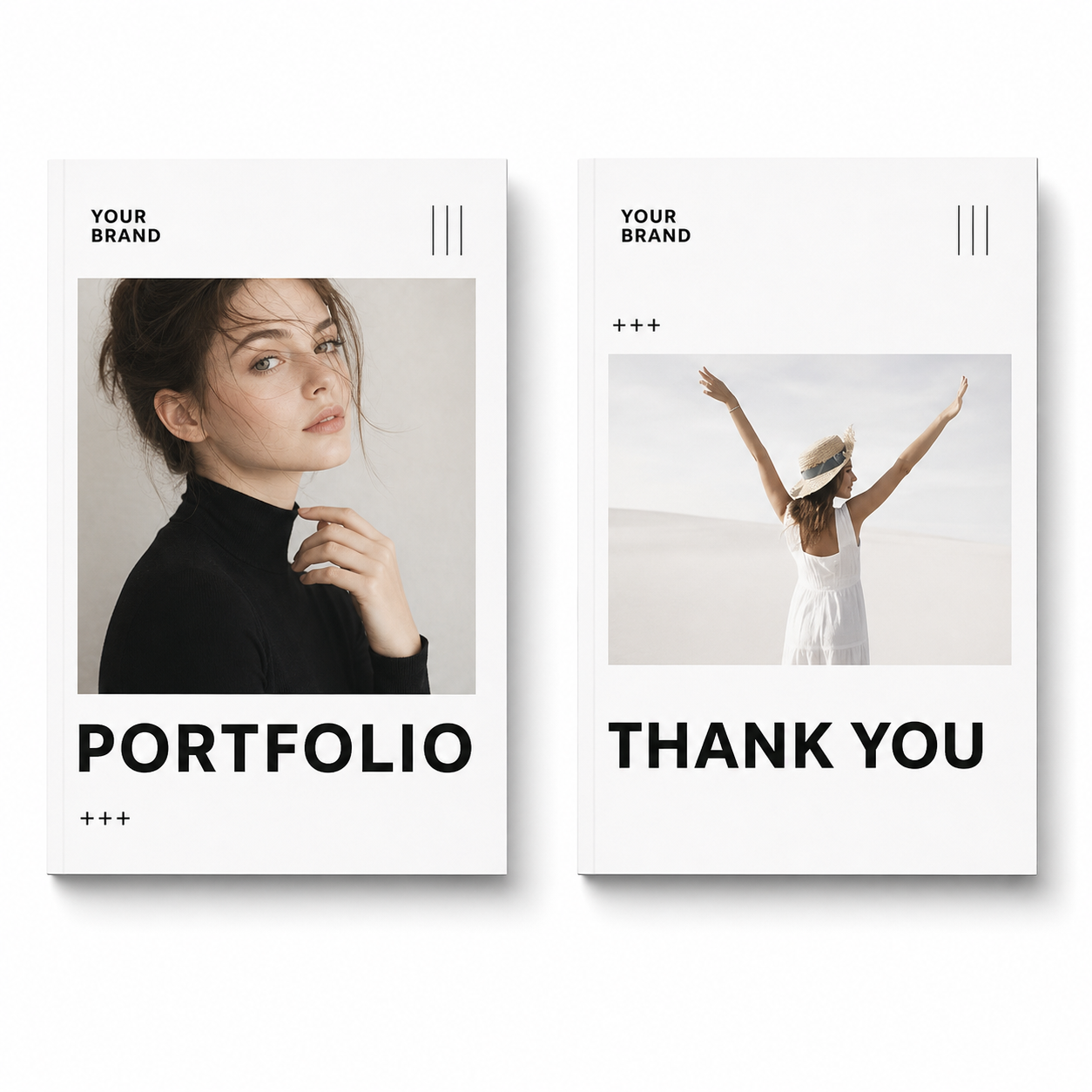
Our custom booklet printing services combine premium print quality with versatile customization, making them the perfect solution for product manuals, instruction guides, company profiles, event programs, training materials, and promotional brochures. From compact saddle-stitched booklets to premium perfect-bound catalogs, we offer a wide range of paper stocks, binding methods, finishes, and sizes to help your brand deliver professional information with exceptional presentation.
Customization Features | Service Availability |
|---|---|
Free Dieline & Artwork Check | ✔ Available (Professional booklet layout guidance, Print-ready file support) |
Graphic Design | ✔ Available (Cover design, Page layout, Typography, Branding) |
Material Customization | ✔ Available (Coated Paper, Uncoated Paper, Art Paper, Kraft Paper, Recycled Paper, Specialty Textured Paper, etc.) |
Custom Luxury Surface Finishes | ✔ Available (Glossy/Matte Lamination, Spot UV, Hot Foil Stamping in Gold/Silver/Laser effects, Embossing, Debossing, etc.) |
CMYK / Pantone / Spot Color | ✔ Available (Supports CMYK, Pantone, or CMYK + Pantone combination) |
Size & Dimensions Customization | ✔ Available (A4, A5, A6, Square, Landscape, Portrait, or fully custom dimensions) |
Binding Options | ✔ Available (Saddle Stitch, Perfect Binding, Wire-O Binding, Spiral Binding, Stapled Booklets, Sewn Binding) |
Special Printing Features | ✔ Available (Die-cut Covers, Fold-out Pages, Perforated Pages, Numbering, QR Codes, Variable Data Printing) |
Custom Packaging Requirements | ✔ Available (Individual shrink wrapping, Paper bands, Custom cartons, Export packaging) |
Versatile Application Scenarios
Designed for businesses across multiple industries, our custom printed booklets help communicate information professionally while enhancing brand recognition.
Product Instruction Manuals: Ideal for electronics, cosmetics, medical devices, machinery, furniture, and consumer products requiring user guides or installation instructions.
Corporate Brochures & Company Profiles: Present your company history, capabilities, services, and brand story during exhibitions, client meetings, and sales presentations.
Marketing & Promotional Booklets: Perfect for product launches, advertising campaigns, event handouts, tourism guides, educational materials, and promotional brochures.
Training Manuals & Educational Materials: Suitable for employee onboarding, safety manuals, operating procedures, workshops, schools, and certification programs.
Hospitality & Retail Guides: Frequently used as hotel directories, restaurant menu booklets, travel guides, luxury brand lookbooks, and retail product guides.
View more products in our [Custom Packaging Accessories] category.
Frequently Asked Questions About Custom Booklet Printing
What are custom printed booklets commonly used for?
Custom booklet printing is suitable for product manuals, instruction guides, company profiles, promotional brochures, event programs, training materials, hotel directories and brand lookbooks.
Booklets are especially useful when the information requires several organized pages but does not justify a large publication. For extensive product ranges, technical specifications or seasonal collections, custom catalog printing may provide more space and a more substantial format.
Which binding method should I choose?
The best binding method depends on the page count, paper thickness, intended use, budget and desired appearance.
Saddle stitching is economical and suitable for relatively thin booklets. Perfect binding provides a flat printed spine and is better suited to publications with enough pages to form a stable spine. Wire-O and spiral binding allow pages to open more easily and are useful for manuals, training materials and reference guides. Sewn binding may be considered for premium or frequently handled publications.
The final binding recommendation should be based on the complete paper dummy because the same page count can produce a different spine thickness when the paper weight changes.
Does the page count need to be a multiple of four?
For most saddle-stitched booklets, the total number of pages—including the front and back covers—usually needs to be a multiple of four because each folded sheet creates four printed pages.
Perfect-bound, Wire-O and other binding methods may offer more flexibility, although blank pages or production adjustments may still be required. The cover can also be produced from a different paper and counted separately, depending on the structure.
Confirm the binding method and final pagination before completing the artwork to avoid unexpected blank pages or layout changes.
Which paper should I choose for the cover and inside pages?
Coated paper is suitable for photographs, product images and saturated colors because it produces a smooth, sharp printed result. Uncoated paper has a more natural appearance and is easier to write on. Kraft, recycled and specialty textured papers can support distinctive brand positioning but may alter printed colors.
The cover is usually heavier than the inside pages to improve protection and structure. Excessively heavy inner paper can make a booklet bulky and may prevent saddle-stitched pages from closing properly.
A paper sample or blank binding dummy is recommended when thickness, opacity, flexibility and overall weight are important.
Which booklet sizes are available?
Common options include A4, A5 and A6 formats, as well as square, portrait and landscape booklets. Fully customized dimensions are also available.
The best size depends on the amount of content, image proportions, reading distance, mailing requirements and how the booklet will be packed. A compact booklet is suitable for product packaging and event distribution, while a larger format provides more room for technical diagrams or visual storytelling.
If the booklet will be inserted into a box or custom envelope, its closed dimensions, thickness and required packing clearance should be confirmed before production.
What artwork specifications are required?
A print-ready PDF is preferred. Artwork should use the final page dimensions, include bleed, maintain safe margins and contain sufficiently high-resolution images. Fonts should be embedded or converted to outlines, and colors should be prepared in CMYK or specified as Pantone colors when required.
The pages should normally be supplied as individual pages in reading order rather than manually arranged printer spreads. The printer will impose them according to the selected binding method.
Text and logos should not be positioned too close to the trim, spine, fold or binding holes. Important content should also be kept away from the center of perfect-bound spreads because some of the image may disappear into the gutter.
How do you maintain accurate colors across all booklet pages?
CMYK printing is suitable for photographs and multicolor artwork, while Pantone spot colors may be used when a specific brand color requires tighter control.
Colors displayed on a monitor may differ from the printed result due to screen calibration, paper color, ink absorption, lamination and lighting. Coated, uncoated, kraft and recycled papers can produce noticeably different results from the same digital color values.
A printed proof is recommended for color-critical projects. If the booklet must match boxes, bags or other brand materials, physical samples should be reviewed together rather than relying only on digital artwork.
Can you print multiple languages, QR codes or variable versions?
Yes. Booklets can include multiple languages, QR codes, numbering, perforated pages, different covers or other variable content.
For multilingual editions, each language should be supplied as a clearly identified, approved file. Text expansion must be considered because translated content may require more space than the original language. QR codes should have sufficient contrast and quiet space and should be tested in the printed proof.
If several versions share the same cover or internal pages, provide a version list showing the quantity and unique content for each edition to reduce production and packing errors.
Which special finishes and sustainable options are available?
Cover finishing options may include matte or gloss lamination, foil stamping, spot UV, embossing, debossing, die-cut windows and laser effects. These treatments are generally most effective on the cover rather than every internal page.
You can review our packaging finishes when selecting decorative effects. Fine details, folds, binding positions and heavily textured papers should be considered before applying foil, UV or embossing.
Sustainable options may include recycled paper, responsibly sourced paper, reduced ink coverage and appropriately sized formats, subject to material availability. Lamination, metallic effects and mixed materials should be evaluated when recyclability is a priority.
What are the MOQ, price, sample cost and production lead time?
The minimum order quantity for custom booklet printing is generally 1,000 copies per design, with prices starting from approximately US$2.00 per booklet. Final pricing depends on the finished size, page count, paper weights, binding method, printing colors, finishes, quantity and number of versions.
Custom sample production normally takes 3–7 days, with sample charges starting from approximately US$60. Sample delivery generally takes an additional 3–7 days. Mass production typically requires around 7–15 days after artwork and sample approval, although complex binding, multiple versions or high-volume orders may need more time.
Booklets can be individually wrapped, secured with paper bands or packed in custom export cartons. For an accurate quotation, please provide the finished size, page count, cover and inner paper preferences, binding method, quantity, artwork, finishes, number of versions and delivery destination. You can contact Vigor Packaging to request a customized quotation.