
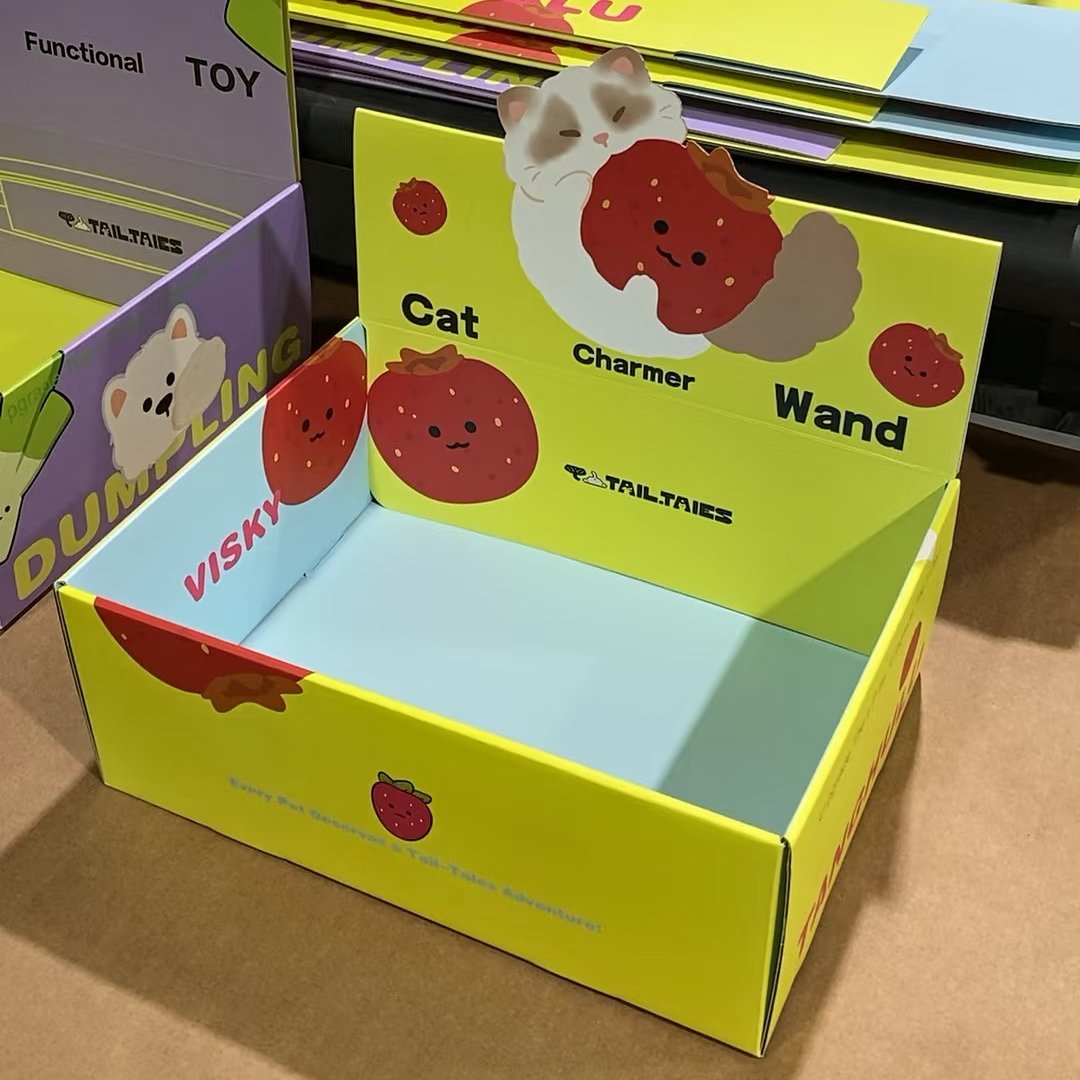
Shelf ready packaging is designed to do more than transport products from the factory to the retailer. It must protect products through distribution, open efficiently at the store, fit the allocated shelf space, and continue functioning as a stable, shopper-facing display after part of the packaging is removed.
Also known as retail ready packaging (RRP), it is commonly used for packaged foods, beverages, cosmetics, personal care products, household goods, and other fast-moving retail products.
For packaging buyers, however, the main challenge is not simply deciding whether to use SRP. The real question is how to balance transport protection, easy opening, shelf dimensions, product visibility, structural stability, replenishment efficiency, and retailer requirements in one package.
Quick Answer: Shelf ready packaging (SRP) is secondary packaging designed to move efficiently from distribution to retail display. A successful SRP should be easy to identify, open, place on the shelf, shop from, and dispose of or recycle. Its structure should be designed around the actual product, case quantity, shelf space, distribution conditions, and retailer requirements—not appearance alone.
Shelf Ready Packaging at a Glance
| Factor | Typical Consideration |
|---|---|
| Primary Purpose | Combine secondary transport packaging with retail display |
| Common Abbreviation | SRP |
| Related Term | Retail Ready Packaging (RRP) |
| Common Materials | Corrugated board and paperboard |
| Typical Opening | Perforation, tear-away panel, or removable hood |
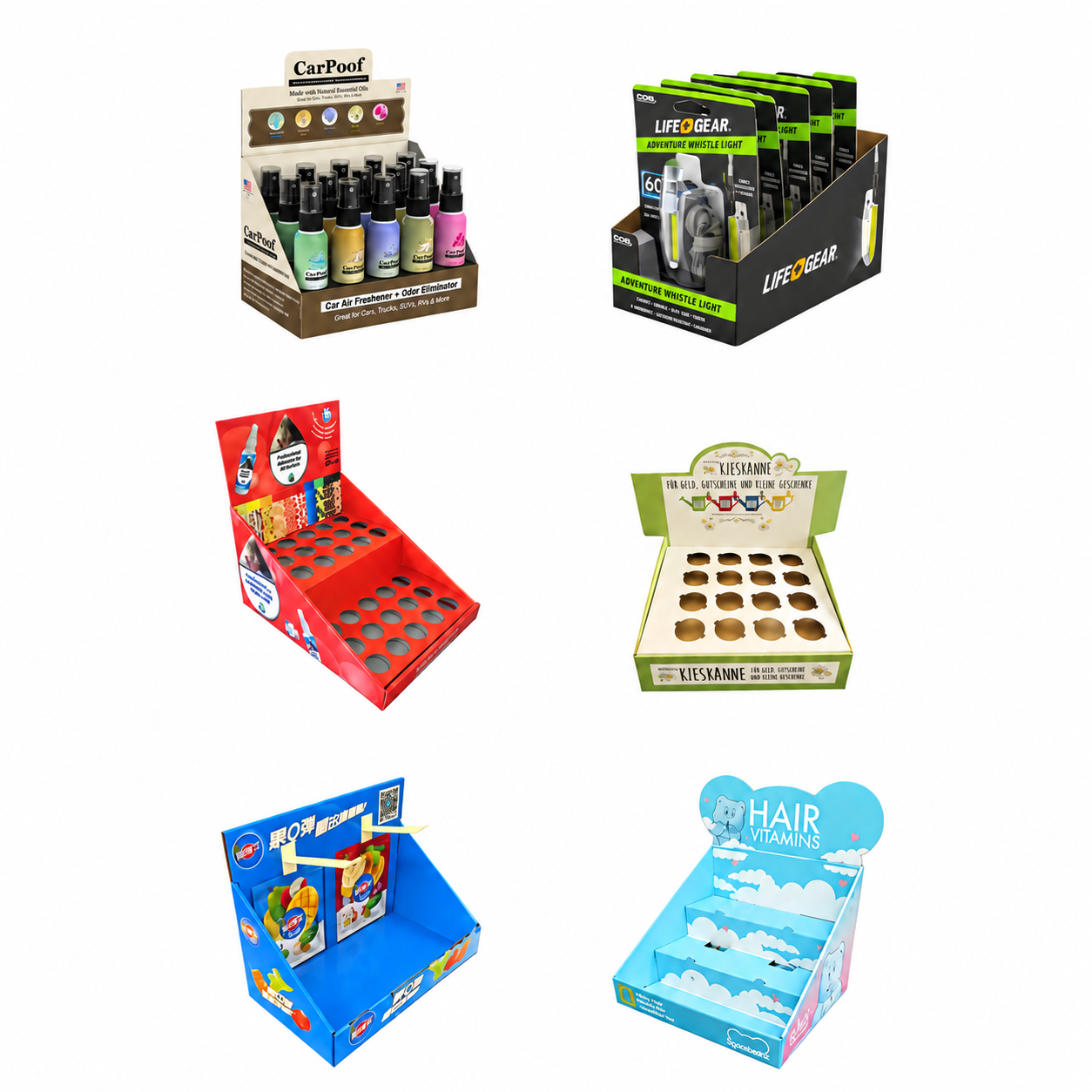
| Display Format | Tray, open-front case, dispenser, or display case |
| Key Structural Challenge | Easy opening without compromising distribution strength |
| Design Inputs | Product size, weight, case quantity, shelf space, and retailer requirements |
| Retail Function | Reduce individual handling and support efficient shelf replenishment |
| Printing | Flexographic, offset/litho-laminated, or other suitable methods |
| Validation | Product fit, opening, stacking, transport, and shelf-display testing |
What Is Shelf Ready Packaging?
Shelf ready packaging is normally a form of secondary packaging containing multiple individual retail units.
Instead of store employees opening a shipping carton, removing every product, and arranging the products individually, an SRP can typically be opened or partially removed and placed onto the shelf with the products already arranged for display.
A typical workflow is:
Packing → Distribution → Store Identification → Opening → Shelf Placement → Shopping
This dual role separates SRP from a conventional shipping carton.
A standard shipping box is primarily engineered to transport and protect its contents.
Shelf ready packaging must still provide that protection, but after arriving at the retailer, part of the structure also needs to function as a display tray.
Shelf Ready Packaging vs Retail Ready Packaging
The terms shelf ready packaging (SRP) and retail ready packaging (RRP) are frequently used interchangeably in the packaging industry.
GS1 describes Retail Ready Packaging—also known as Shelf Ready Packaging—as ready-to-sell secondary packaging that can go directly to the retail shelf without unpacking the individual products inside.
In practical usage, RRP can sometimes be used as a broader term for packaging prepared for retail merchandising, while SRP places more emphasis on packaging that can be positioned directly on the shelf.
For custom packaging projects, however, the more important issue is not terminology but the retailer’s actual structural, dimensional, identification, and handling requirements.
How Shelf Ready Packaging Can Simplify Shelf Replenishment
One of the main operational advantages of shelf ready packaging is that products can be packed in their intended display arrangement before they leave the factory.
After the case reaches the store, employees can remove the tear-away section or outer hood and place the remaining tray on the shelf without arranging every retail unit individually.
A typical replenishment workflow may look like:
Factory Packing → Distribution → Open SRP → Place Tray on Shelf → Replenish or Replace Tray
This can reduce individual product handling during shelf replenishment.
However, the benefit depends on the SRP being designed correctly.
The loaded tray should be manageable for store employees, the opening sequence should be simple, and the product arrangement should remain sufficiently stable through distribution.
This is why shelf replenishment should be considered during structural development rather than treating SRP only as a shipping box with a removable panel.
Is Your Product Suitable for Shelf Ready Packaging?
Not every retail product needs the same SRP structure.
The appropriate format depends on how the individual units are packed, how much they weigh, how shoppers remove them, and how much structural support remains necessary after the outer portion is opened.
| Product Situation | Structure to Consider |
|---|---|
| Small Snack Bags or Candy | Tear-away display case |
| Bottled Cosmetics or Supplements | Tray with removable hood |
| Individual Cartons or Soap Boxes | Display tray |
| Bagged Products | Dispenser-style SRP |
| Heavier Bottles or Jars | Reinforced corrugated tray |
| Fragile Products | Display shipper with dividers or protective inserts |
These are starting points rather than fixed rules.
For example, two bottled products with similar dimensions may require different structures if one uses lightweight plastic bottles and the other uses glass.
The structure should therefore be developed around the actual product and distribution system, rather than selected only from a standard box-style catalogue.
The Five Easies: A Practical SRP Design Checklist
A useful framework for evaluating shelf ready packaging is the industry concept commonly known as the Five Easies.
FEFCO summarizes these principles as easy to identify, easy to open, easy to get on shelf, easy to access or shop, and easy to dispose of.
1. Easy to Identify
Store and warehouse staff should be able to identify the product quickly without opening the case.
Depending on the retail program, useful information may include:
- brand,
- product name,
- variant or flavor,
- SKU information,
- quantity,
- color coding,
- barcode or logistics information.
Identification should also consider what remains visible when cartons are stacked or stored.
2. Easy to Open
The package should open intuitively without damaging the products or the display tray.
Depending on the structure, this may involve:
- tear-away perforations,
- starting tabs,
- finger openings,
- removable hoods,
- tear strips.
A package that technically has a perforation but tears unpredictably is not truly easy to open.
3. Easy to Shelf
The opened unit should fit the allocated shelf space and be manageable for store employees.
Case quantity, total loaded weight, tray dimensions, and orientation all matter.
Ideally, replenishment should require minimal handling rather than transferring products individually.
4. Easy to Shop
Once on the shelf, the tray must allow customers to see and remove the products easily.
The front wall should not unnecessarily hide important branding or make the products difficult to reach.
At the same time, reducing the wall height too far may affect product retention and structural stability.
5. Easy to Dispose of or Recycle
The removable packaging components should be practical for store staff to flatten, separate, and handle after opening.
For paper-based packaging, recyclability should be evaluated based on the complete material structure and the local recycling system, rather than assuming that every paper-based SRP is automatically recyclable.
How to Calculate Shelf Size and Product Quantity
One of the most important SRP design inputs is often overlooked:
the retail shelf itself.
Before finalizing the packaging dimensions, determine:
- available shelf width,
- usable shelf depth,
- clear shelf height,
- desired number of product facings,
- number of units behind each facing,
- product orientation,
- and the number of SRP trays expected to fit within the shelf bay.
A simplified starting calculation for tray width is:
Tray width = product width × number of facings + divider / clearance allowance
For example, if the retailer wants three products visible across the front, the internal tray width must accommodate those three units plus any required dividers and working clearance.
But the theoretical calculation is only the starting point.
The final structure should also consider:
- dimensional tolerances,
- loading and packing,
- ease of product removal,
- board thickness,
- dividers,
- tear-away geometry,
- and retailer specifications.
There is therefore no universal clearance value that should simply be added to every SRP.
Case Quantity Should Match the Replenishment Strategy
More products per SRP do not automatically mean better shelf efficiency.
A larger case quantity may reduce replenishment frequency, but it also creates a heavier tray, may require more shelf depth, and can remain partially empty for longer.
A smaller case quantity may be easier to handle and replace, but can require more frequent replenishment.
The appropriate quantity per SRP should therefore balance:
Shelf Capacity + Sales Rate + Replenishment Frequency + Loaded Weight + Product Stability
For example, increasing a tray from 12 to 24 units is not simply a purchasing decision.
It may change:
- external dimensions,
- total loaded weight,
- corrugated board requirements,
- stacking performance,
- product arrangement,
- shelf utilization,
- and the way store employees handle the package.
Case quantity should therefore ideally be considered during structural development rather than decided independently before the packaging is designed.
Check Side-by-Side and Front-to-Back Efficiency
The individual SRP dimensions should also be evaluated against the actual shelf bay.
For example:
- Can two trays fit side by side without wasting significant width?
- Can another tray sit behind the first without exceeding usable shelf depth?
- Does the retailer need one, two, or more product facings?
- Does the outer tray wall consume too much usable shelf space?
- Is there enough clearance for employees to insert and remove the tray?
A few millimeters may appear insignificant on a single package but can become important when multiple trays need to fit across a fixed shelf width.
Test the Display When Full and Partially Empty
An SRP should not be evaluated only when completely full.
As customers purchase products, the remaining units change position and the visible area of the tray increases.
The display should therefore be evaluated at different fill levels—for example:
Full → Half-Full → Nearly Empty
Check whether:
- remaining products stay upright,
- products maintain their intended facing direction,
- units slide or fall sideways,
- branding remains visible,
- empty areas make the display look disorganized,
- the tray continues to support the remaining products,
- and shoppers can still remove products easily.
A structure that looks attractive and stable when fully loaded may perform very differently after half of the products have been removed.
This is especially important for:
- tall bottles,
- narrow cartons,
- flexible pouches,
- lightweight products,
- and products arranged in multiple rows.
Shelf-ready packaging should therefore be evaluated as both a full shipping unit and a gradually depleted retail display.
The Core SRP Design Trade-Off: Transport Strength vs Easy Opening
This is one of the most important principles in shelf ready packaging design:
The package must be strong enough to survive distribution but easy enough to open in the right place at the store.
These objectives can work against each other.
A larger display opening may improve product visibility but remove structural material.
A more aggressive perforation may make the package easier to open but can also weaken the surrounding structure.
A stronger wall may improve stacking performance but obstruct products after the case is converted into a display.
Over-reducing material may also make the package look efficient on paper while creating deformation during warehousing or transportation.
And good graphics do not compensate for inadequate structural performance.
The SRP still needs to arrive at the retailer in a condition suitable for display.
This is why SRP should not be designed as:
Shipping Box First + Perforation Added Later
The transport and display functions should be considered together from the beginning.
Perforation Design: How to Open the Case Without Damaging the Tray
A tear-away opening looks simple, but its actual performance depends on the interaction between the cutting pattern, connecting points, board, and package geometry.
Perforation Strength
The balance between cut sections and connecting sections affects how easily the opening tears.
If the connection is too strong, store staff may struggle to open the case or tear beyond the intended line.
If it is too weak, the perforation may begin opening during distribution or handling.
Tear Direction
The direction of the tear relative to the corrugated structure can affect how the board separates.
This should be evaluated during structural development rather than assuming one perforation specification works for every design.
Keep the Tear Line Away From Critical Display Graphics
The perforation should also be considered during artwork development.
If an important logo, product name, promotional message, or other shopper-facing graphic crosses the tear-away area, part of the design may disappear when the package is opened.
Even worse, an irregular tear could enter the visible display area.
The structural dieline and artwork should therefore be developed together.
Display Edge
After the top or front panel is removed, the remaining edge becomes part of the visible retail package.
The tear should therefore be evaluated for:
- irregular fibers,
- ragged edges,
- accidental tearing into printed areas,
- loose paper fragments,
- and damage to the remaining tray.
The goal is not simply to make the outer section removable.
The remaining tray should still look suitable for retail display.
Product Clearance
Employees should ideally be able to initiate and complete the opening without first removing the products.
Finger openings or starting points must therefore be positioned where the products inside do not interfere.
Environmental Conditions
Paper and corrugated board respond to moisture and environmental conditions.
For demanding distribution environments, tear behavior should be evaluated under conditions representative of the intended supply chain.
Perforation is ultimately a form of structural converting, so it should be considered together with the package’s die cutting and creasing design.
Choosing the Material and Flute
Material selection depends on more than the appearance of the finished display.
The packaging engineer should consider:
Product Weight + Case Quantity + Stacking + Distribution + Shelf Display + Printing
Paperboard
Paperboard can be suitable for smaller, lighter products where the required secondary packaging does not need the same level of corrugated protection.
It can also be useful where compact dimensions and high-quality printed graphics are important.
E-Flute Corrugated
E-flute is relatively thin and can provide a useful balance between corrugated structure and a smoother presentation surface, making it relevant to some lightweight or more graphics-oriented SRP applications.
B-Flute Corrugated
B-flute is thicker and may be considered when greater cushioning, stacking, or distribution performance is required.
Double-Wall Corrugated
Structures such as EB-flute can be considered for heavier or more demanding applications.
However, increasing board thickness can also increase:
- material usage,
- package volume,
- shipping volume,
- cost,
- and the visual bulk of the display.
There is therefore no rule such as:
“Product X kg = B-flute.”
Flute profile is only one variable.
Board grade, liner and medium combination, structure, dimensions, product arrangement, stacking, transportation distance, and environmental conditions can all influence package performance.
Product Visibility vs Tray Support
The front wall of an SRP tray illustrates another important structural compromise.
A lower front wall can provide:
Better Product Visibility + Easier Shopper Access
but reducing it too far may result in:
Less Product Retention + Less Structural Support
A higher wall may improve containment but hide:
- brand names,
- product variants,
- labels,
- graphics,
- barcodes,
- or part of the product itself.
The correct front-wall height therefore depends on both the product and the shelf-display objective.
For bottles, cartons, and other upright products, it is also important to evaluate whether the remaining units continue standing correctly as shoppers remove products from the tray.
Printing Shelf Ready Packaging
SRP graphics have two different jobs.
Before opening, the outer package may need to communicate logistics and product-identification information.
After opening, the remaining tray becomes shopper-facing packaging.
The artwork therefore needs to be developed around both states of the package:
Closed Case → Logistics & Identification
Opened SRP → Branding & Shopper Communication
The Display Tray Becomes Part of the Brand Presentation
Once the outer section is removed, the remaining SRP tray becomes part of the shopper-facing presentation.
This gives the tray useful communication surfaces for:
- brand logos,
- product names,
- flavors or variants,
- promotional messages,
- color coding,
- product benefits,
- and campaign graphics.
A common artwork mistake is to design the graphics only around the closed shipping case.
After the tear-away section is removed, important logos, product names, or promotional graphics may disappear with it.
The artwork should therefore be reviewed against the opened dieline, not only a 3D rendering of the closed package.
Another useful question is:
What will the shopper see when the tray is half empty?
As products are removed, more of the tray’s internal and rear surfaces may become visible.
Those areas can therefore influence the appearance of the display even if they are not prominent when the SRP is completely full.
Choosing the Printing Method
Typical printed elements may include:
- branding,
- product name,
- variant identification,
- shelf-facing graphics,
- opening instructions,
- case quantity,
- handling information,
- and barcodes.
Corrugated SRP can use flexographic printing, while applications requiring different graphic quality or construction may use other printing approaches.
For a broader comparison of offset, digital, flexographic, and screen printing, see our Packaging Printing Methods guide.
SKU, Barcode and Retail Identification
SRP must work both in the supply chain and on the shelf.
For multiple-SKU programs, clear color or text differentiation can help reduce identification errors in storage and replenishment.
Important identification information may need to remain accessible from more than one side of the closed case, depending on the storage and distribution system.
After opening, the structure should also be checked to ensure that important information on the individual retail products is not unintentionally obstructed by the tray wall.
Case-level identification and consumer-unit identification should not be treated as the same thing.
GS1 standards distinguish different levels of trade items and packaging identification. Whether the SRP itself requires a separate GTIN, barcode, or other identification should therefore be determined according to the customer’s retail channel and applicable retailer or GS1 requirements.
What Should Be Tested Before Mass Production?
An SRP needs to perform as a product-packaging system, not simply as an empty corrugated box.
Depending on the product, distribution channel, and retailer requirements, evaluation may include:
- product fit and loading,
- tear-away opening,
- product removal,
- tray stability,
- stacking and compression,
- drop and vibration exposure,
- transport simulation,
- humidity or environmental conditioning,
- print abrasion,
- and shelf stability when full and partially empty.
ISTA develops testing protocols for packaged products and distribution environments. The appropriate test program should therefore be selected according to the actual packaged product, supply chain, and project requirements.
Changing the board grade, product weight, package dimensions, internal arrangement, or distribution route can change the performance of the complete packaging system.
Previous test results should not automatically be assumed to apply to a materially different configuration.
For SRP in particular, transport testing alone is also not the entire evaluation.
After the package has survived distribution, it still needs to:
Open Correctly → Remain Structurally Stable → Present the Product → Allow Shopper Access
That final retail state should be part of the development process.
Common Shelf Ready Packaging Problems
| Problem | What to Review |
|---|---|
| Front Tray Tears While Opening | Perforation path, board, and opening method |
| Tear Line Opens During Transit | Perforation strength and structural design |
| Ragged Edge After Opening | Perforation geometry, board, and tear direction |
| Products Fall After Some Units Are Sold | Product fit, tray support, and arrangement |
| Products Are Difficult to Remove | Internal clearance and product orientation |
| Products Move During Shipping | Fit, dividers, inserts, or case arrangement |
| Front Wall Hides Branding | Tray height and artwork positioning |
| Case Crushes During Distribution | Board grade, structure, stacking, and load |
| Barcode Becomes Obstructed | Tray height and identification layout |
| Tray Does Not Fit Shelf | Shelf dimensions and final external dimensions |
| Shelf Space Is Wasted | Case quantity, facings, tray dimensions, and arrangement |
| Tray Becomes Unstable When Half Empty | Product support and post-opening structure |
| Important Graphics Disappear After Opening | Artwork not planned around tear-away structure |
| Shipping Box Works but Display Is Unstable | Post-opening structural design |
| Packaging Looks Good but Opens Poorly | Structural development focused too heavily on graphics |
The recurring pattern behind many of these problems is that the package was optimized for only one stage of its life.
Successful SRP development should instead consider the closed transport case and the opened retail display as two states of the same package.
What Information Should You Prepare Before Requesting a Quote?
Providing the right information at the beginning can reduce repeated structural revisions and make the quotation more meaningful.
| Information | What to Provide |
|---|---|
| Product Dimensions | L × W × H of each retail unit |
| Product Weight | Weight per unit |
| Case Quantity | Number of products per SRP |
| Arrangement | Orientation and number of facings |
| Shelf Dimensions | Width × depth × clear height, if available |
| Front Display Requirement | Desired product visibility / tray wall height |
| Retailer | Retailer specification, if applicable |
| Distribution | Shipping method and stacking conditions |
| Material | Existing requirement, if any |
| Sustainability Requirement | Material or retailer requirements |
| Printing | Colors, artwork, and print expectations |
| Artwork | AI / PDF or existing dieline |
| Quantity | Expected production quantity |
| Sampling | White sample, printed sample, or testing needs |
| Destination | Country / delivery location |
If you do not yet have a finished dieline, that does not necessarily prevent structural development.
A useful starting brief is:
Product Dimensions + Product Weight + Units per Case + Product Arrangement + Shelf Dimensions + Retailer Requirements
From there, the appropriate SRP structure can be evaluated.
Frequently Asked Questions About Shelf Ready Packaging
What information do I need to get a quote for custom shelf ready packaging?
At minimum, provide the product dimensions, unit weight, quantity per case, expected order quantity, and intended retail market. If available, also provide shelf dimensions, retailer specifications, product arrangement, artwork, shipping conditions, and material requirements.
How do I choose the right shelf ready packaging structure for my product?
Start with the product format, weight, case quantity, and how customers will remove it from the tray. Lightweight bagged products, individual cartons, bottles, and heavy jars can require very different structures. Distribution conditions, shelf dimensions, replenishment method, and retailer requirements should then be considered before the structure is finalized.
What is the difference between shelf ready packaging and retail ready packaging?
The terms are often used interchangeably. Retail ready packaging can sometimes be used more broadly, while shelf ready packaging places particular emphasis on direct shelf placement. In practice, the retailer's actual structural and handling requirements are more important than the terminology.
What material should I use for shelf ready packaging?
Corrugated board is widely used because SRP often needs both distribution protection and display functionality. Paperboard may be suitable for lighter applications. The appropriate board or flute depends on product weight, case size, stacking, transportation, printing, and retailer requirements rather than product weight alone.
Should I use E-flute or B-flute for shelf ready packaging?
Neither is universally better. E-flute provides a thinner corrugated profile and may suit applications emphasizing compact structure and graphics, while B-flute may be considered where greater cushioning or structural performance is required. Final selection should be based on the complete package and distribution requirements.
How many products should go in each shelf ready tray?
Start with the retailer's allocated shelf width, depth, and height, then determine the desired number of product facings and units behind each facing. Also consider loaded case weight, sales rate, replenishment frequency, product stability, and whether multiple trays need to fit side by side.
Can shelf ready packaging reduce shelf replenishment time?
It can reduce individual product handling because products can arrive already arranged inside a display tray. The actual efficiency depends on case weight, opening method, product arrangement, shelf dimensions, and the retailer's replenishment process.
Can shelf ready packaging be custom printed?
Yes. Shelf ready packaging can carry branding, product information, SKU identification, opening instructions, and shopper-facing graphics. Artwork should be designed around both the closed shipping case and the opened display tray.
Can shelf ready packaging be used for heavy or fragile products?
It can, but the structure may require stronger corrugated board, additional tray support, dividers, or protective inserts. The complete product-packaging system should be evaluated for the intended distribution environment rather than assuming a standard SRP design is sufficient.
Do I need a physical sample before ordering shelf ready packaging?
A physical structural sample is particularly useful for SRP because it allows you to check product fit, opening behavior, tray dimensions, product visibility, and shelf stability. For new structures, heavy products, fragile products, or demanding retail programs, further performance testing may also be appropriate.
Can you design shelf ready packaging if I do not have a dieline?
Structural development can begin from the product dimensions, weight, units per case, desired arrangement, shelf dimensions, and retailer requirements. A dieline can then be developed around the selected structure before artwork is finalized.
Developing Shelf Ready Packaging for Your Product
Good shelf ready packaging is not simply a shipping carton with a tear-away top.
It has to work through several different stages:
Packing → Palletizing → Distribution → Opening → Shelf Placement → Shopping → Replenishment
A design decision that improves one stage can create problems in another.
A larger opening improves visibility but may reduce support.
A weaker perforation makes opening easier but may affect distribution strength.
A stronger tray protects the product but may obstruct the shopper.
A larger case quantity may reduce replenishment frequency but increase tray weight and reduce shelf flexibility.
And graphics that look excellent on the closed case may lose their impact after the tear-away panel is removed.
The objective is therefore to find the appropriate balance between transport protection, opening performance, shelf efficiency, replenishment, and product presentation.
If you are developing shelf ready packaging, contact us with your product dimensions, unit weight, case quantity, product arrangement, shelf or retailer requirements, and expected order quantity. We can review the information and help evaluate an appropriate structure, material, and printing solution.